Power without an expiry date?

2 days ago
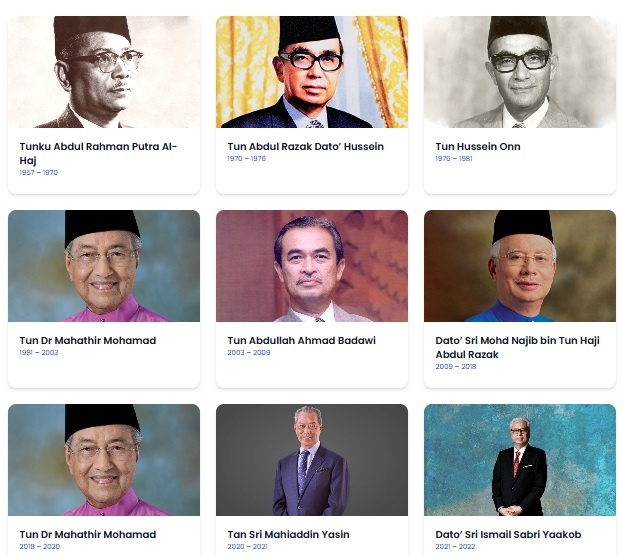
I would like to thank my Consider This team for arranging an Astro Awani interview a few months ago on limiting the prime minister’s tenure. The interview featured Professor Wong Chin Huat and Emeritus Professor Shad Saleem Faruqi.
It is unfortunate that the bill to this effect failed to pass in Parliament. What is even more disappointing is hearing some MPs oppose the bill while claiming they did not fully understand it – and then blaming government MPs for not explaining it well enough.
Their behaviour is not unpredictable. But what would have been even more surprising and amusing is if these MPs had taken the time to watch our Consider This episode, which ran for only 25 to 30 minutes.
Evidently, they did not. Perhaps the bill simply did not align with their future political ambitions should they one day return to power.
As Prof Shad said:
If power is concentrated in a single leader over a long period of time, there is danger of this power becoming personalised. I know at one time in India, they used to say, Indira is India, and India is Indira. So it was all very personalised.
So there is a danger of becoming – a power becoming personalised with resulting abuses, not just by the prime minister, but by his family, by his clan, and by his political party.
So any change or reform becomes difficult in a country like this, unless the prime minister, the authoritarian leader, desires it.
We are living in a reality where power has become deeply personalised. Regardless of whether a nation is democratic or not, politics is now personality-based. Elections have become a contest of who can speak the loudest while claiming to bring stability.
This raises a question: if stability is today’s ultimate political challenge, then governments and the people must recognise that it cannot be achieved simply by holding more elections.
Stability has become a political objective, presented as an artificially constructed solution to social and economic problems rooted in an earlier era. This was a time when governments could exercise power with far fewer constraints and remain in office indefinitely.
The same applies to the global crises unfolding now. Uncertainties are artificially manufactured so that specific parties and individuals can gain from them enormously.
This is why Prof Shad’s observation remains relevant today: “Many of the problems we are facing today are actually because of the misjudgements of the past. But because the leaders were powerful and their tenure was absolutely secure, adjustments could not be made.”
When politics becomes personalWe should remember that by the 2018 general election, the opposition coalition Pakatan Harapan had already spent years mobilising public support. They closed ranks to challenge the 1MDB scandal, one of the largest corruption scandals in modern history.
It took nearly a decade to build a broad coalition of support against corruption, with PH, led by Dr Mahathir Mohamad dislodging Barisan Nasional from power in the 2018 general election. At that moment, many in Malaysia, regardless of ethnicity or religion, were united around a common cause.
But after PH lost power two year later, Mahathir appeared to once again view politics through an ethnic lens.
Since then, I do not see the same level of genuine effort from political leaders to pursue the kind of change that emerged in 2018.
As Prof Shad noted, power eventually becomes highly personalised. Even within political parties, leaders often become synonymous with the parties they lead because they consciously present themselves that way.
Over time, the line between leaders, institutions and their parties becomes blurred. One could easily imagine a narrative such as “Anwar is Malaysia, and Malaysia is Anwar” just as similar narratives could emerge around any future prime minister.
Reform, or just politics?At times, it feels as though elections today are less about solving national challenges and more about ensuring the survival of political parties and politicians themselves.
The present government should not even talk about reform or proper governance when it is spending so much time preparing for elections. People should have seen through the fanfare surrounding the intentions behind early elections. But we are just too occupied, I presume.
Finally, I do not know who, if anyone, will take this advice: spend less time consuming the endless stream of commentary from politicians and self-proclaimed political analysts on social media. Most people do not need to follow every political argument.
Focus instead on the aspects of life you can control, on the personal problems you may have been postponing or avoiding, and on the change you can bring about in this world.
If you believe you have already reached your full potential or that nothing could go wrong in your life, then feel free to ignore this advice and carry on. That, in itself, is a form of privilege.
John FongCo-editor, Aliran newsletter10 June 2026
...


Read the fullstory
It's better on the More. News app
✅ It’s fast
✅ It’s easy to use
✅ It’s free