Gold slump tests Chinese brand Laopu's resilience as luxury upstart

9 hours ago
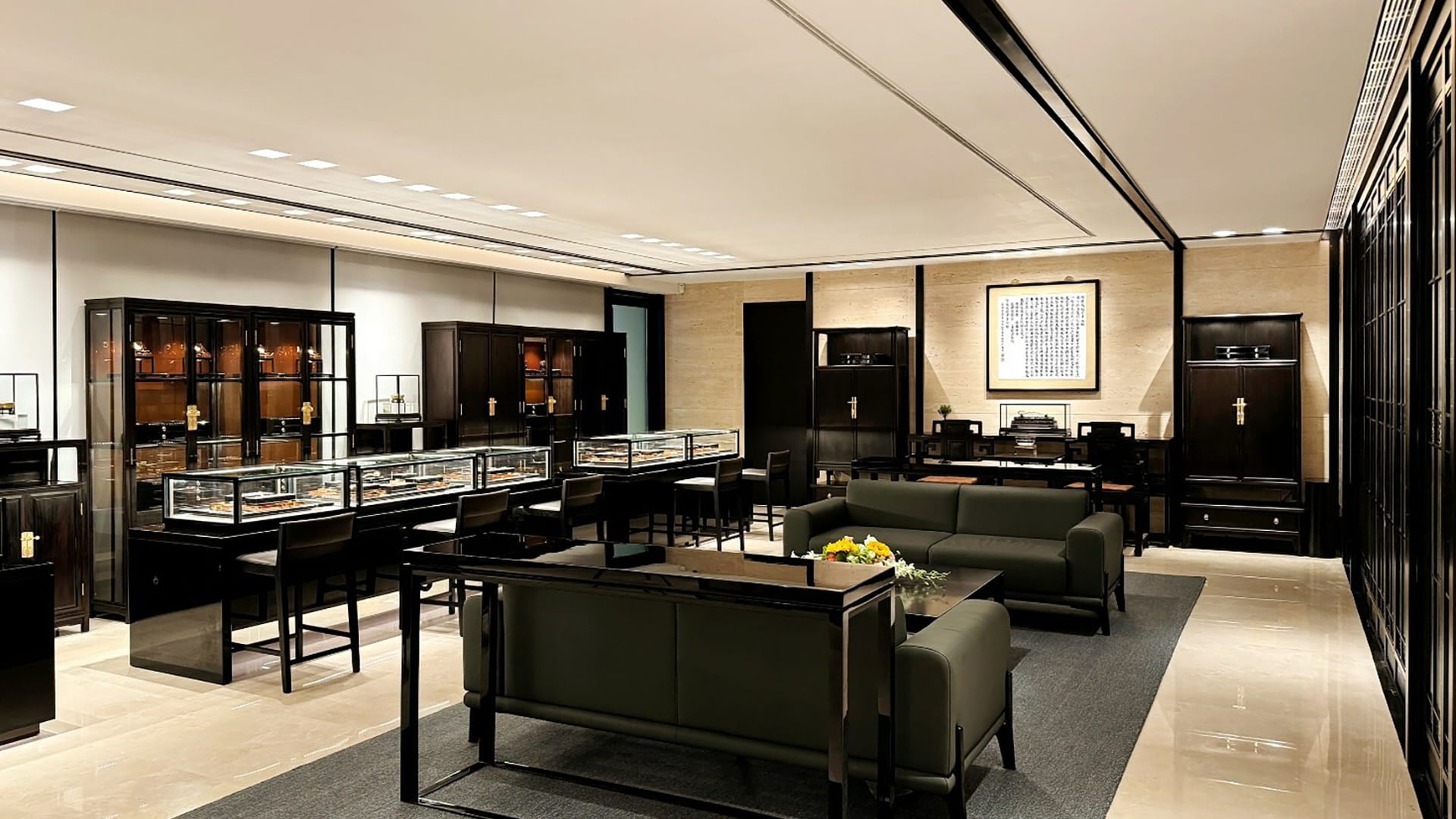
The global gold price slump and aggressive moves by emerging rivals are pressuring Chinese luxury jewelry label Laopu Gold, testing whether its brand cachet alone can sustain its premium appeal.
Since gold prices peaked in late January and began a retreat of about 30%, Laopu’s shares have plunged by around 60%. That far exceeds the stock price declines of leading Chinese gold jewelers such as Chow Tai Fook, which have been broadly in line with the metal’s sinking value.
Founded in 2009, Laopu emerged as a force in the jewelry market in recent years, earning the nickname “Hermes of gold” along the way. It blazed a trail by promoting the concept of heritage gold, using traditional Chinese materials and motifs. It also sells all products at fixed prices, unlike most major players that use weight-based pricing strategies.
The company became a phenomenon known for long lines outside its stores, despite charging a more than 50% premium over traditional gold jewelers. While brands like Chow Tai Fook adjusted their pricing as gold dipped, Laopu has not reduced its fixed prices, likely making price-sensitive customers even more cautious about purchases.
Now, analysts are tempering their target share prices for Laopu as they take a fresh look at the company’s prospects.
In a note on Thursday, Jefferies said it expects Laopu’s second-quarter revenue to take a hit from gold’s slide. At the same time, the investment bank projects that margin gains will cushion the blow, while a rollout of more affordable product lines and stronger customer incentives should help spur a sales recovery in the second half.
Jefferies cut its target share price to HKD 580 (USD 74) but maintained a “buy” rating. Laopu shares closed at HKD 360.6 (USD 46) on July 2.
Citigroup recently downgraded its target price for Laopu to HKD 700 (USD 89.3), coupled with a reduced revenue forecast due to weaker online sales during the 618 shopping festival, one of China’s biggest promotional periods which ran for over a month from mid-May. Still, the bank left the brand’s net profit forecast unchanged and kept its advice to buy the shares.
Brick-and-mortar stores generate the bulk of Laopu Gold’s revenue, while online platform sales accounted for just 17% of the company’s total revenue in 2025. A person with direct knowledge of Laopu’s online sales told Nikkei Asia that they dropped between 60% and 70% from April to June, with a further drop in June. The person stressed that the sales slump is not unique to Laopu, as it is an industrywide challenge.
Sales through the main channel of directly operated shops remain solid, people familiar with Laopu’s business plan said, without giving detailed figures and acknowledging that long lines have become less common in recent months.
At the SKP shopping mall in Beijing, considered a bellwether of China’s luxury retail sector, Laopu sales were tracking roughly 20% below last year’s levels in the quarter to date, but the figure was better than many expected, UBS said in a note last week.
UBS said the much steeper decline in Laopu’s shares, compared with its peers, suggests that investors have fully priced in sales headwinds while overlooking potential gross margin upside.
In a note on June 19, Nomura said Laopu’s significant underperformance was driven by gold’s swoon following its strong rally from mid-2023 to 2025, as well as investors’ preference for artificial intelligence stocks over consumer names. The Japanese investment bank added, however, that if gold prices stabilize in the next few months with a lasting peace deal in the Middle East, the capital market may become less pessimistic about Laopu’s sales in the second half of the year.
Laopu’s slump coincides with a broader slowdown in demand for gold jewelry across China. According to the China Gold Association, sharp swings in gold prices have dampened consumer appetite for jewelry made out of the precious metal, sending domestic gold jewelry consumption declining to 84.6 metric tons in the first quarter, down 37.1% year-on-year.
In contrast, demand for bullion continued to rise, with investors buying 202.1 tons of gold bars and coins, up 46.4% over the same period.
As pressure on sales mounts, some of Laopu’s rivals have sought to replicate parts of the playbook that made the brand a favorite among investors last year. This includes promoting heritage gold, adopting fixed pricing and focusing store openings on premium malls in China’s top-tier cities.
Shenzhen-based Jemper, for example, opened its first shop in Shanghai in early May, which drew crowds and generated RMB 6 million (USD 882,106.5) in first-day sales, according to local state media reports.
Hangzhou-headquartered Borland reportedly closed a Series A funding round worth RMB 100 million (USD 14.7 million) in December last year, drawing investors including global luxury group Kering, the parent company of Gucci that has been struggling with slipping global sales in recent years. Flush with that capital, Borland quickly announced plans to accelerate its push into China’s most prestigious retail landmarks this year, including its first store in Beijing, which opened in June.
And there is Lanzhou-based Lamchiu, which has only a handful of stores across the country. The brand says it avoids mass production and only accepts a limited number of orders each week. Chinese media reported that the company’s founder vowed to keep the store count in single digits even if it becomes super popular in China someday.
Although these emerging rivals could encroach on Laopu’s turf, UBS said the threat remains modest. Combined sales at Laopu’s three closest heritage gold competitors—Jemper, Lamchiu and Borland—accounted for just 4% of Laopu’s total revenue in 2025, according to the investment bank.
With its shares in the doldrums, Laopu is pushing to expand and upgrade stores this year. Besides opening new locations in Macao and Zhengzhou in June, the company also intends to relocate existing stores to larger, more prominent locations within shopping malls in Shanghai in the second half, according to people familiar with the plans who asked not to be named. In some cases, they said store space will double.
According to the latest count, the company has 48 stores. Apart from one in Singapore, four in Hong Kong and three in Macao, the rest are in mainland China.
Nomura suggested in its note that the drive for bigger and better boutiques will improve the brand’s recognition in the long run. At the same time, the brand aims to grow its overseas footprint, beyond its presence in Singapore.
Xu Gaoming, Laopu’s chairman, told investors in a call in April that the company will take a conservative approach to domestic store openings but will actively pursue foreign ones, starting in Southeast Asia.
This article first appeared on Nikkei Asia. It has been republished here as part of 36Kr’s ongoing partnership with Nikkei.
Note: HKD, RMB figures are converted to USD at rates of HKD 7.84 = USD 1 and RMB 6.80 = USD 1 based on estimates as of July 8, 2026, unless otherwise stated. USD conversions are presented for ease of reference and may not fully match prevailing exchange rates.
...


Read the fullstory
It's better on the More. News app
✅ It’s fast
✅ It’s easy to use
✅ It’s free






.png)