Fire safety begins with responsibility, not certification

7 hours ago
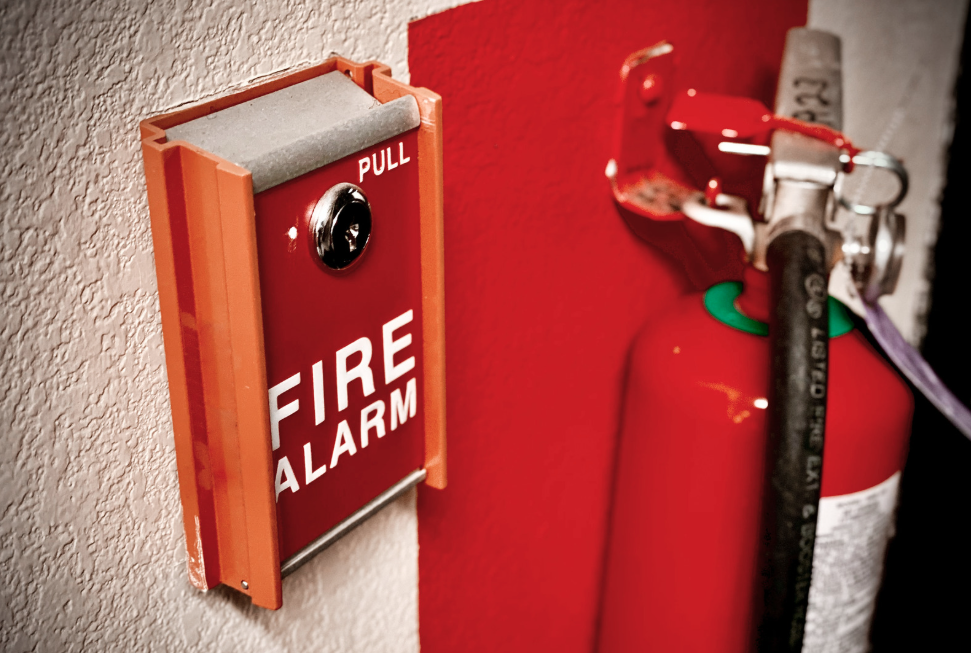
A FIRE Certificate displayed on the wall may indicate that a building has met certain fire safety requirements, but does it necessarily mean that everyone inside is prepared for an emergency?
This is a question that building owners, managers and occupiers must begin asking themselves as Malaysia moves towards a more structured approach to fire safety management.
With the planned implementation of new requirements under the amended Fire Services Act 1988 (Act 341) on April 1, 2027, owners and occupiers of designated premises must prepare to assume greater responsibility for the safety of their buildings.
The emphasis is no longer simply on satisfying regulatory inspections or renewing Fire Certificates. It is about developing the internal capability to identify hazards, manage risks and respond effectively when emergencies occur.
Under Section 27A and Regulation 6B, designated premises are expected to establish a Fire Safety Organisation (Organisasi Keselamatan Kebakaran or OKK), comprising a Fire Safety Manager (FSM) and at least three Fire Safety Officers (FSOs).
For building owners and management teams, the question is straightforward: Are you ready?
Throughout my years in the fire and rescue service, I have consistently emphasised that fire safety must be approached holistically.
I often refer to this as Total Fire Safety, a concept built around five essential elements, or the 5Es: Engineering, Education, Enforcement, Emergency Management and Economic Initiatives.
Engineering concerns how buildings are designed, constructed and equipped to prevent fires or minimise their consequences.
Education ensures that occupants understand fire hazards, evacuation procedures and their responsibilities during emergencies, while Enforcement establishes accountability through compliance with laws, regulations and safety standards.
Emergency Management focuses on preparedness, coordination and the ability to respond effectively when an incident occurs.
Economic Initiatives recognise that investing in fire prevention, maintenance and safety systems protects not only lives and property but also business continuity.
These five elements must work together. A building equipped with sophisticated fire protection systems may still be vulnerable if its occupants are unfamiliar with evacuation procedures or if its management neglects regular maintenance.
Similarly, compliance with regulations means little if fire safety is treated merely as an administrative exercise.
Total Fire Safety also depends on five critical groups: Authorities, Designers, Builders, Inspectors and Occupiers.
Each has a responsibility throughout a building’s life cycle.
Authorities establish and enforce regulations, while designers must consider fire safety from the earliest planning stages.
Builders are responsible for ensuring that construction follows approved specifications, and inspectors assess whether safety requirements are properly implemented.
Occupiers and building management, however, carry the continuing responsibility of maintaining a safe environment once the building becomes operational.
Effective fire safety management requires an understanding of a building’s architectural characteristics, surrounding environment, potential fire hazards and the behaviour of its occupants.
It also involves evaluating possible fire scenarios, establishing safety objectives and ensuring that appropriate preventive and emergency measures are in place.
Fire safety cannot be separated from the way a building is used every day.
As the implementation date approaches, owners of designated premises should begin identifying suitable candidates for the FSM and FSO positions.
The appointment process involves more than selecting names from an organisational chart.
Potential FSM candidates may include building managers, facilities managers, senior engineers and personnel experienced in occupational safety or environmental, health and safety management.
The FSM must be capable of coordinating fire safety policies, overseeing inspections, identifying risks and ensuring that corrective measures are implemented.
For FSO positions, management may consider technical officers, maintenance supervisors, safety executives and experienced members of emergency response teams.
These individuals should understand the building’s layout, operations, fire protection installations and emergency procedures.
However, experience and job titles alone do not establish competency.
Candidates must satisfy the relevant training, assessment and certification requirements prescribed by the Fire and Rescue Department of Malaysia (JBPM).
Organisations should also avoid assuming that an existing Safety and Health Officer must automatically assume these additional responsibilities.
An individual may possess the necessary qualifications but already have a demanding workload.
Fire safety appointments must therefore be based on competency, suitability and the ability to perform the required duties effectively.
One of the most important aspects of the new framework is the principle of empowerment.
Appointing an FSM and FSOs should not be regarded as merely fulfilling another legal requirement.
These individuals must have the authority, resources and management support necessary to carry out their responsibilities.
Under the Director General of Fire and Rescue’s Standing Orders Nos. 5, 6 and 7 of 2025, the OKK framework encompasses responsibilities involving Fire and Emergency Response Plans, Fire Safety Reports, inspections, hazard elimination, evacuation exercises and monitoring of fire protection installations.
These responsibilities require continuous attention.
A blocked emergency exit, defective alarm system or poorly maintained firefighting installation may appear insignificant during routine operations, but such shortcomings can have devastating consequences during a fire.
Management must empower its fire safety personnel to identify these weaknesses, recommend corrective action and ensure that problems are resolved.
There must also be cooperation between departments because fire safety is not the responsibility of one individual or unit alone.
With April 1, 2027 approaching, building owners and management teams should not wait until the implementation date to begin preparations.
They should review their premises’ requirements, identify suitable personnel, assess training needs and allocate the necessary resources.
More importantly, they must cultivate a culture in which fire safety becomes part of everyday building management.
We must remember that ensuring fire safety is not simply about fulfilling legal obligations.
It is about protecting lives, safeguarding property, preserving the environment and ensuring that businesses can continue operating without preventable disruptions.
A Fire Certificate may be renewed annually, but the responsibility for fire safety exists every single day.
Ultimately, a truly safe building is not one that merely passes an inspection. It is one where the people responsible understand the risks, know what must be done and are empowered to act before tragedy strikes.
Fire safety begins with responsibility, and responsibility must never end with certification.
Datuk Khirudin Drahman is a former Sarawak Fire and Rescue Department director. The views expressed in this article are the author’s own and do not necessarily reflect those of Sinar Daily.
...


Read the fullstory
It's better on the More. News app
✅ It’s fast
✅ It’s easy to use
✅ It’s free