Guy’s Sister Catches Him With His Secret BF, Demands He Dump Him So She Can Date Him Instead

1 hour ago
If you have a sibling, chances are you’ve had more fights with them than you’d like to admit. No matter the age gap, playful banter and harmless teasing are part of growing up together but things can quickly cross a line when boundaries are pushed.
Take one young man, for example, who grew up in a household with strict parents. Everything came to a head when his sister caught him being intimate with his boyfriend and threatened to expose them, driven in part by her own crush on him. Fearing the fallout, he and his partner carefully crafted a plan to protect themselves and shift attention onto his sister’s troubling behavior. What followed was a tense family showdown that completely changed the dynamics at home. Keep reading to see how it all unfolded.
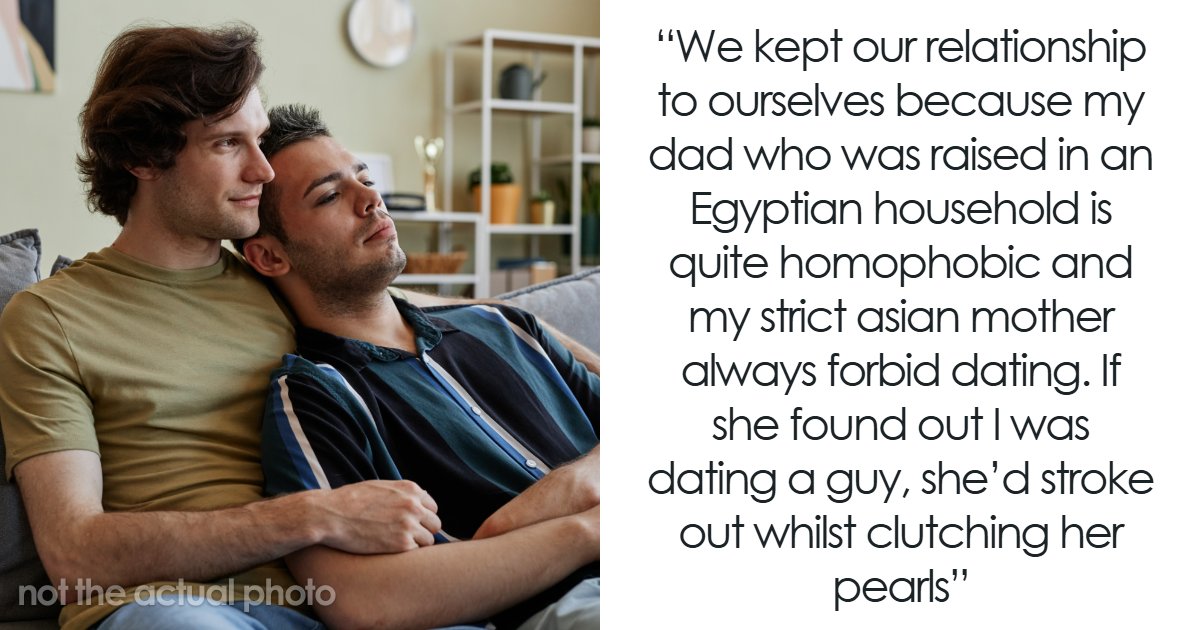
Coming out to family can be incredibly difficult, especially when you’re dealing with strict or conservative parentsImage credits: seventyfour (not the actual image)
One guy shared how his younger sister caught him with his boyfriend and then threatened to out him to their family; mainly because she had a crush on his boyfriend herselfImage credits: ArthurHidden (not the actual image)
Image credits: freepik (not the actual image)
Image credits: Im_your_life
He explained that his boyfriend had already made it very clear to the sister that he had no romantic feelings for her Many LGBTQI+ individuals still face discrimination—not just in the workplace, but also in everyday public spacesWhile our world is busy rolling out futuristic robots, mind-blowing AI, and technology that can practically order your coffee before you even wake up, there are still some very human issues we haven’t quite figured out yet. One of the biggest? Acceptance and inclusivity for LGBTQI+ communities. Progress has definitely been made over the years, and many places are becoming more open and supportive. But, the reality is that many LGBTQI+ people still face challenges every day, simply for being who they are. From awkward comments to outright discrimination, the struggle is far from over. Data and personal stories continue to highlight how widespread these experiences are. And while society loves to celebrate progress, it’s just as important to acknowledge the work that still needs to be done.
To better understand these challenges, the Center for American Progress partnered with the University of Chicago to examine the barriers LGBTQI+ adults face in the United States. Their 2024 survey paints a pretty clear picture: discrimination is still a common reality. According to the findings, LGBTQI+ people reported significantly higher rates of discrimination compared to non-LGBTQI+ individuals. And this wasn’t limited to just one setting. Respondents described negative experiences across multiple areas of daily life. From workplaces to public services, the data suggests that bias can show up in places where people should feel safe and supported. In short, the numbers confirm what many in the community already know from experience.
Many of these incidents occur in environments that are supposed to be welcoming, like health care, employment, and schools. Imagine going to a doctor or applying for a job and feeling judged before you even say a word. For LGBTQI+ people, that anxiety can be very real. The survey also revealed that discrimination isn’t experienced equally within the community itself. LGBTQI+ people of color often report even higher rates of bias compared to their white peers. Similarly, disabled LGBTQI+ individuals face additional barriers that make everyday interactions more difficult. These overlapping identities can create layers of challenges that many people never even think about. It’s a reminder that inclusivity isn’t just one-size-fits-all.
Workplaces are often talked about as spaces of progress, and many companies today proudly promote diversity and inclusion policies. That’s definitely a step in the right direction. But for many LGBTQI+ individuals, the reality on the ground can feel very different from the corporate slogan on the website. Some people report struggling just to get hired, worrying that their identity could affect how employers view them. Even when they do land a great job, the challenges don’t always stop there. Colleagues might make insensitive jokes, ask intrusive questions, or create an environment that feels uncomfortable. Sometimes it’s subtle, sometimes it’s obvious—but either way, it can make a workplace feel far less welcoming than it should be.
It’s important to listen, understand, and support your loved ones when they finally find the courage to come out to youSchools can present similar challenges, especially for younger members of the community who are still figuring out who they are. For many LGBTQI+ students, school isn’t just about homework and exams; it can also be about navigating bullying, exclusion, or misunderstanding. Even casual remarks from classmates can make someone feel like they don’t belong. Teachers and administrators are increasingly trying to create safer spaces, but there’s still work to do. And it doesn’t stop at school doors. Public places can also become uncomfortable environments when people face stares, comments, or unfair treatment. These everyday moments may seem small to outsiders, but they can add up quickly.
Because of these experiences, some LGBTQI+ adults take precautions in their daily lives just to avoid potential discrimination. That might mean avoiding certain conversations, changing how they introduce a partner, or choosing carefully what personal details they share. In some cases, people even hide their relationships in professional or public settings. Imagine constantly having to calculate how much of yourself you can safely reveal—that kind of emotional effort can be exhausting. It’s not about being secretive for the sake of it. Instead, it’s often about protecting oneself from uncomfortable or harmful reactions. For many, it becomes a strategy for navigating environments that don’t always feel safe.
All of this can take a serious toll on mental health. A study by Stonewall found that about half of LGBTQI+ people have experienced depression at some point in their lives. Even more striking, three in five reported dealing with anxiety. Those numbers highlight how deeply social experiences can affect emotional well-being. When people regularly face rejection, judgment, or exclusion, it naturally impacts how they feel about themselves and the world around them. Mental health struggles in the community aren’t just random statistics; they’re often connected to real-life experiences of discrimination. And recognizing that connection is an important step toward meaningful change.
The good news is that support from friends, family, and communities can make a huge difference. And sometimes, the most meaningful gestures are the simplest ones. If someone comes out to you, for example, try not to overwhelm them with a rapid-fire list of questions. Give them space, listen, and show that you’re there for them. Educating yourself about LGBTQI+ issues is another powerful step because understanding leads to empathy. Being supportive doesn’t require grand speeches or perfect knowledge. Often, it’s about patience, kindness, and a willingness to learn. In a world that’s still figuring things out, those small actions can go a very long way.
In this particular case, it seems like the author’s sister was acting out. Not only was she unsupportive of her brother’s identity, but she was also harassing his boyfriend, which made the whole situation even more complicated. Sometimes, behavior like this can point to deeper issues or emotions that someone might be struggling to process. Thankfully, their parents eventually decided to take her to therapy so she could get the help she needed. What do you think about this situation?
Many readers were concerned for him and suggested that he and his boyfriend consider taking action He further revealed that he had come up with an elaborate plan to convince their parents of a different version of eventsImage credits: Getty Images (not the actual image)
Image credits: syda_productions (not the actual image)
Image credits: pe_jo (not the actual image)
Image credits: Im_your_life
The author shared a bit about his relationship with his parents While many people were relieved that the sister was finally getting professional help, others pointed out that repairing the sibling relationship might take a long time ...


Read the fullstory
It's better on the More. News app
✅ It’s fast
✅ It’s easy to use
✅ It’s free