New Photography Guidelines For Women’s Sports Turn Internet Into Battleground Over Real Motive For Change

1 hour ago
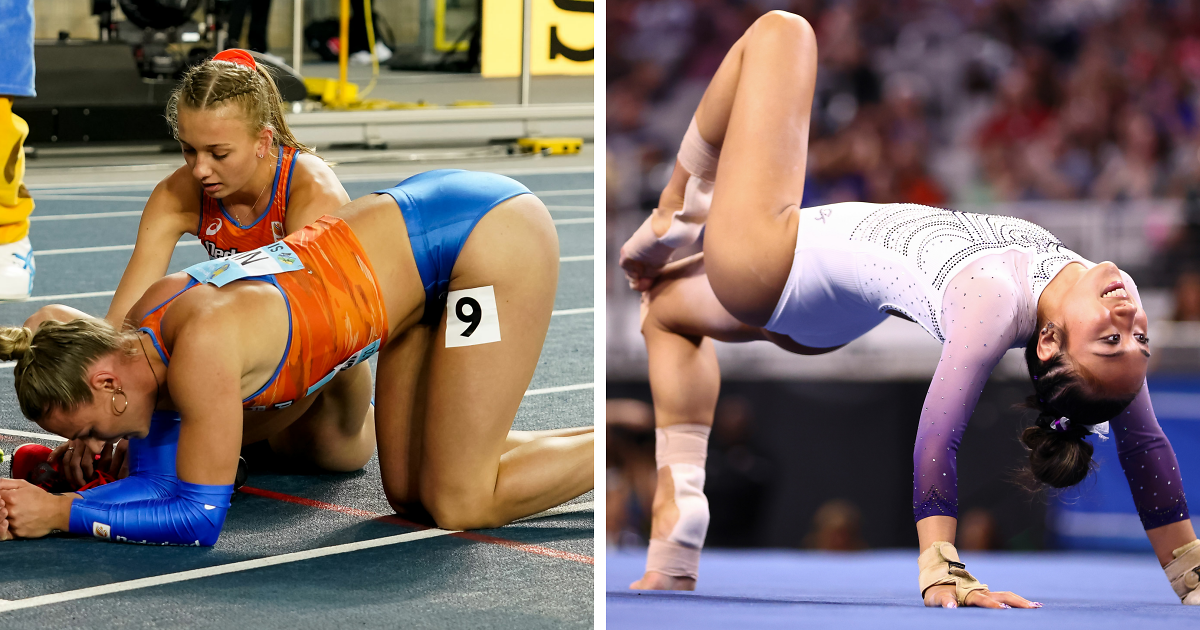
It was an absolute mayhem of mockery, criticism, and heated debate after the European Broadcasting Union (EBU) and European Athletics announced their new guidelines on how female athletes are filmed.
The two organizations released a 23-page document titled Raising the Bar, outlining how photographers and videographers should capture female track and field athletes during broadcasts to avoid overly revealing or suggestive footage.
The news sparked a heated discussion online, with one saying, “Earlier, very few people used to watch women athletics, now no one will watch it.”
A heated debate erupted after new guidelines were released on how female athletes are filmedThe European Broadcasting Union (EBU) and European Athletics released their 23-page guidelines in June to prevent female athletes from being “s**ualized.”
The document asked broadcasters to avoid camera angles and slow-motion replays of athletes during sporting events.
Instead, production teams were asked to focus on the performance, technique, and the sport itself.
The guidelines said there were certain filming styles that could steal the attention away from an athlete’s performance. And to avoid this, photographers and videographers were asked not to use lingering close-ups of body parts like the chest or butt.
During events like the pole vault, high jump, long jump, and sprint races, the guidelines asked people behind the camera to steer clear of low-angle shots from behind or underneath the athletes.
Recommendations were provided on how broadcasters could avoid overly suggestive and compromising footage of athletesComing to slow-motion replays, which are a staple in sports broadcasts, the guidelines asked broadcasters to avoid them altogether except when explaining an athlete’s technique or sharing an important part of the story.
EBU Executive Director of Sports Glen Killane spoke about why the changes in the coverage of female sports were necessary.
“The s**ualization of women athletes through selective camera angles and editing choices continues to be a significant concern,” Glen said.
The guidelines sparked a wave of sharply divided reactions online, with critics and supporters clashing and questioning the intention.
“The typical male reaction to the female body is very different from the female reaction to the male body,” one commented onlineSome felt the guidelines were an overcorrection. Others questioned why the female body should be treated as something that needs to be managed or concealed in the first place.
Others believed it was a reasonable step toward ensuring athletes are presented primarily for their performance in the sport and not their appearance.
“With all due respect why not just give female athletes longer shorts,” one said, while another claimed, “You basically k*lled any interest in female sports.”
One said, “Volleyball viewership is gonna go down by 90%.”
“Coming soon: black rectangles over all the naughty bits,” another wrote.
One snarked, “Those camera angles are how they got most of the viewers…”
The guidelines were released after considering feedback from female athletes and Olympians like Holly Bradshaw, Ivana Spanovic, and Blanka Vlasic, who spoke about how the placement of cameras affected them while competing.
Olympic pole vaulter Holly Bradshaw spoke about how she has seen inappropriate videos of herself from broadcasts of her eventsBritish pole vaulter Holly Bradshaw, who won Olympic bronze at Tokyo 2020, said athletes may lose their concentration when certain cameras are positioned in uncomfortable places.
She also said the manner in which their sporting events are broadcast can be “incredibly powerful yet sometimes harmful to the women competing and the women/girls watching.”
“I first-hand have received social media ab*se and witnessed inappropriate videos online of myself and colleagues when slow-motion content of us competing is captured,” she said.
“Athletes want to enjoy themselves doing the sport they love without feeling uncomfortable or anxious about the footage being shown live,” she continued.
The guidelines triggered sharply divided reactions online ...


Read the fullstory
It's better on the More. News app
✅ It’s fast
✅ It’s easy to use
✅ It’s free