Samsung’s Smart Fridge Now Reads Food Labels With Cloud AI

1 hour ago
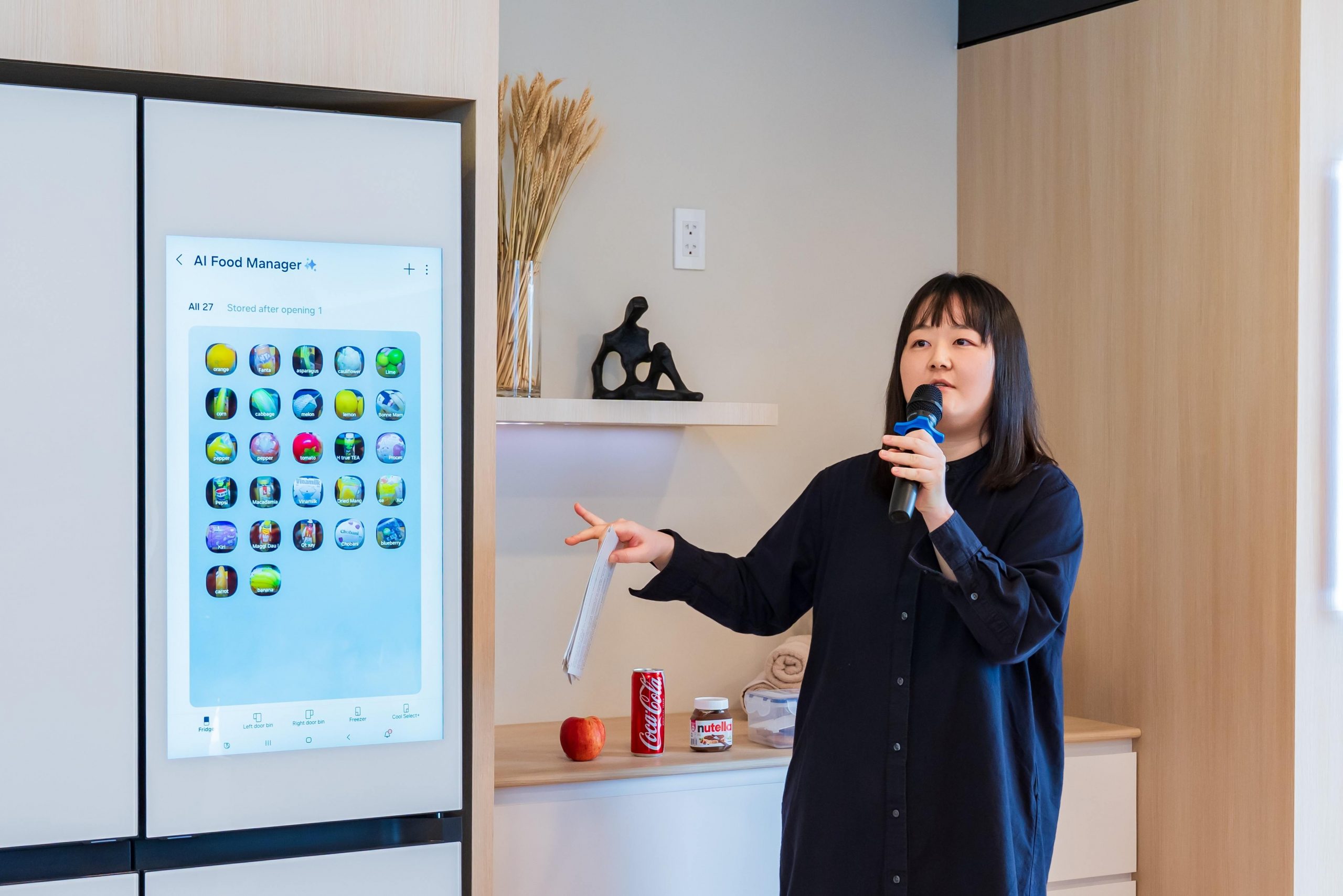
At its regional showcase in Hanoi, Vietnam, Samsung’s consumer appliance narrative made one thing clear: the modern home is not being overhauled with radical hardware reinventions, but rather through iterative software upgrades and cloud-backed data.
Headlining the consumer side of The Brief 2026, the company’s Bespoke AI Refrigerator Family Hub was once again presented as the nerve centre of the home, this time leaning on cloud-backed vision models.
The headline update focuses on an undeniable weak point in earlier Family Hub generations: internal cameras that struggled to identify what was sitting on the shelves. By offloading image processing to cloud intelligence, Samsung’s AI Vision can recognise a broader selection of fresh groceries as they move in and out.
To get around the issue of mystery leftovers, the system can now read written labels on containers; during demo runs, placing a translucent tub with “cookies” written across the lid was enough for the camera to catalogue the item correctly. Yet practical physical limitations remain.
While the internal wide-angle lens watches the main shelves, it cannot see what is stored in the door bins. Everyday condiments, milk cartons, and beverages tucked into the door shelves remain complete blind spots for the camera.
Smart Apps vs. Disconnected Voice ControlsThat interior shelf inventory feeds directly into SmartThings Food, which matches ingredients on hand with potential recipes. Working alongside it is a new widget called FoodNote, designed to track consumption patterns over time. By noting how frequently a household finishes staple items, the software automatically drafts replenishment lists before the next grocery run.
On paper, this creates a clean pipeline: the fridge monitors what is inside, tells you what you need, and recommends a meal you can prepare immediately. In practice, however, a noticeable barrier between software and voice control persists.
While the Family Hub screen runs dedicated apps that show which ingredients you have and what you need to buy, you cannot use Bixby to ask for those cooking recommendations hands-free. Although Samsung has updated Bixby’s natural language processing to make general conversations more fluid, the assistant still lacks the bridge to pull data from the fridge’s own inventory apps.
Ask Bixby what to eat, and it can recommend local restaurants to dine out, but it cannot check your shelves and tell you what to make with the vegetables on hand. For a hands-busy environment like the kitchen, having to stop prep work and tap through a 20-plus-inch touchscreen slightly undercuts the convenience of a smart assistant.
“Samsung’s ambition has always been to deliver new innovations and we have demonstrated how technology can truly add value through our broad range of AI-enabled products and solutions for consumers and businesses,” said Bernard Ang, Regional Head of Home Appliances and Vice President at Samsung Electronics Southeast Asia and Oceania.
“Our line-ups are designed to meet real-user needs and as we continue to introduce new innovations, we will focus on expanding the reach of products to benefit more customers, enhance AI experiences for further convenience and personalisation, and strengthen the reliability and durability of appliances.”
The Seven-Year Software CommitmentBehind the feature rollouts sits the software longevity problem. Traditional white goods are expected to last eight to ten years, whereas connected displays and digital interfaces often feel dated within two or three.
Samsung addressed this gap in Hanoi by highlighting its policy of offering up to seven years of software updates for eligible Wi-Fi-connected appliances produced since 2024. To illustrate that this is not just a future promise, the brand pointed to an over-the-air firmware push rolled out globally in September, which delivered the upgraded AI Vision features and a Now Brief summary screen to existing Family Hub hardware.
Similarly, post-purchase maintenance is handled via Samsung’s Home Appliance Remote Management (HRM) service, which supports connected models dating back to 2019. When hardware issues crop up, the system runs remote diagnostics to guide homeowners through step-by-step fixes or transmits error logs to service teams in advance so technicians arrive on-site with the correct replacement components in hand.
A First Look at Samsung’s 2027 Air Conditioner DesignBeyond the kitchen, the air-conditioning showcase largely recapped existing ecosystem integrations rather than rolling out brand-new tech. Samsung re-demonstrated its WindFree Wearable Good Sleep feature on the Bespoke AI WindFree Pro air conditioner, a capability introduced last year that connects room cooling directly to a user’s wearable.
The concept behind it is practical: replacing arbitrary overnight timer curves with dynamic cooling that responds to physiological sleep stages.
However, it also remains a locked-in ecosystem feature. Taking advantage of biometric cooling requires an entire Samsung hardware chain: a Samsung smartphone running One UI 4.0 or later paired with a compatible Galaxy Watch 4 or newer, Galaxy Fit 3, or Galaxy Ring. For households mixing different device brands, the automated sleep feature stays inaccessible.
The only distinct physical hardware previewed at the event was an early look at Samsung’s upcoming 2027 room air conditioner. Stepping away from utilitarian glossy plastics, the prototype features a softer, rounded profile, a split lower blade, and an exterior wrapped in a fabric-like texture designed to blend into residential furnishings, alongside compatibility with Samsung’s AI Energy Mode.
Ultimately, Samsung’s Hanoi showcase revealed a consumer roadmap focused on iterative software refinement rather than revolutionary hardware redesigns.
...


Read the fullstory
It's better on the More. News app
✅ It’s fast
✅ It’s easy to use
✅ It’s free