Erdogan and the great betrayal to the Palestinian cause

1 天前
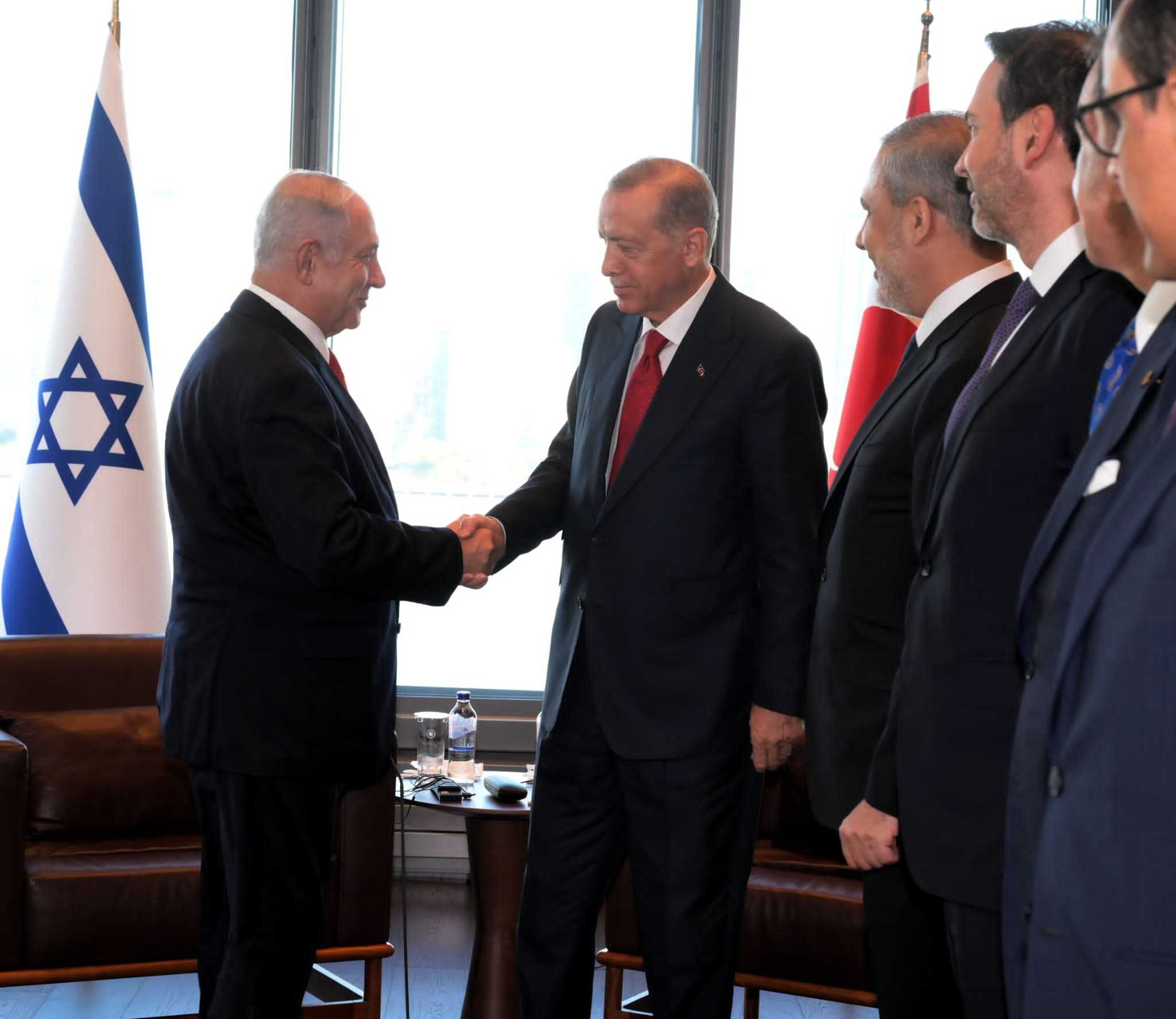
When Recep Tayyip Erdogan rose to power, Islamists around the world erupted in euphoria, celebrating his victory as a symbolic 'second coming of the Caliphate".
However, after assuming office, Erdogan focused on consolidating power and gradually evolved into an authoritarian ruler.
He served as Turkey’s 25th prime minister from 2003 to 2014 as part of the Justice and Development Party (AKP), which he co-founded in 2001. He then amended the constitution to shift Turkey from a parliamentary to a presidential system and has served as the country’s 12th president since 2014. Earlier, he was the mayor of Istanbul from 1994 to 1998.
Since coming to power in 2002, Erdogan has been the de facto leader of Turkey. In recent years, his rule has been marked by increasing authoritarianism, democratic backsliding, widespread corruption, aggressive expansionism, and a crackdown on dissent—including censorship, imprisonment of critics, and banning of opposition parties.
How Erdogan helped Israel in the Gaza war
Erdogan has been a vocal critic of Israel’s actions in the Gaza conflict, who frequently condemned its military operations and accused it of committing genocide.
However, despite his strong anti-Israel rhetoric, there is evidence suggesting that Turkey, under Erdogan’s leadership, indirectly supported Israel through continued economic and military ties during the Gaza war, which began after Hamas’s attack on Oct 7, 2023. This duality reflects the hypocrisy of the so called Islamist whose words and deeds are opposite.
Erdogan’s public stance has consistently framed him as a champion of the Palestinian cause. He has praised Hamas as a “liberation group,” hosted its political leaders in Istanbul, and called for international action against Israel, even suggesting Turkey might intervene militarily, citing past interventions in Libya and Nagorno-Karabakh.
His fiery rhetoric, including comparing Israeli Prime Minister Benjamin Netanyahu to Adolf Hitler, has resonated with his domestic base and positioned him as a leader in the Muslim world. However, these statements often appear tailored to appeal to his Islamist supporters rather than translating into concrete actions that directly challenge Israel.
Despite halting official trade with Israel in May 2024, citing the humanitarian crisis in Gaza, reports indicate that Turkish goods continued to reach Israel, sometimes under the guise of being destined for Palestine.
This continued trade indirectly supported Israel’s economy during the conflict, as goods from Turkey, a significant regional trade partner, helped sustain Israel’s market needs.
Militarily, Turkey did not directly engage in the Gaza conflict but maintained strategic relations that indirectly benefited Israel. Turkey’s role as a NATO member and its military presence in Syria, where it coordinates with Israel to avoid conflicts, ensured regional stability that aligned with Israel’s security interests. For instance, Turkish-Israeli deconfliction mechanisms in Syria prevented escalations that could have complicated Israel’s operations in Gaza.
The data indicates that specific goods recorded particularly high increased in 2024 compared to 2023.
For example, steel exports to Palestine surged 8,722% in the first eight months of the year, increasing from US$430,000 to US$37.9m. In August alone, the rise was 125,437% year-on-year, from a mere US$17,400 to US$21.8 million.
The exports of chemicals jumped 3,388% in August year-on-year, from US$428,000 to US$16 million, while mining products increased 62,174% to US$6.2 million. Similar trends were seen among exports of iron, fruits and vegetables, and air conditioning units, reported Middle East Eye
Erdogan’s diplomatic efforts also included calls for a Gaza ceasefire and humanitarian aid, with Turkey delivering 50,000 tonnes of aid, positioning it as a leading contributor. While this aid primarily supported Palestinians, it also aligned with Israel’s interest in stabilising Gaza to prevent further escalation.
Erdogan’s meetings with regional leaders and offers to mediate, such as in hostage negotiations, further indicate a pragmatic approach that, while critical of Israel, avoided direct confrontation.
Azerbaijan's oil for Israel through Turkey
Azerbaijan supplies oil to Israel, with a significant portion reaching the country via Turkey. The Baku-Tbilisi-Ceyhan (BTC) pipeline transports Azerbaijani oil through Georgia into Turkey, from where it is shipped to various destinations, including Israel, said a report.
Özlem Zengin, an AKP member of parliament, disclosed during a parliamentary session that the BTC pipeline contributes $1.27 per barrel to Turkey’s revenues. The revelation has sparked outrage among critics and fueled accusations of hypocrisy, as Turkey profits from Israel’s crude oil imports while publicly condemning its actions.
Erdogan’s hypocrisy exposed
The most glaring example of Erdogan’s hypocrisy is Turkey’s continued trade with Israel. Despite official claims of suspending trade in protest against Israel’s actions in Gaza, investigative journalist Metin Cihan and others exposed that commerce between the two countries has not fully ceased.
Allegations even emerged that Erdogan’s son was involved in trade with Israel after Oct 7.
In reality, Turkish goods have continued to reach Israel, often under the guise of being destined for Palestine. This revelation—unsurprising to those familiar with Ankara’s political maneuvering—underscored how geopolitical interests were prioritised to avoid direct economic consequences.
Erdogan’s worst betrayal to Palestinians
It took Iran two decades and over US$20 billion to build an "Axis of Resistance" aimed at encircling the Zionist regime of Israel with a "ring of fire" comprising Syria, Lebanon, Yemen, and Iraq.
In December 2024, during the Israel-Gaza war — when Israel was facing an existential crisis and coming under attack not only from Hamas but also from Hezbollah and the Houthis — Erdogan betrayed the Palestinian cause by installing Ahmed Hussein al-Sharaa, a former al-Qaeda operative.
This broke the supply chain of the "Axis of Resistance", pushing Hezbollah into an existential crisis.
Al-Sharaa had been captured and imprisoned by American forces from 2006 to 2011. After his release, he founded the al-Nusra Front in 2012 with al-Qaeda’s support, to fight the Assad regime in the Syrian civil war.
One can argue that Bashar al-Assad was a dictator — and yes, he was. But there are other Arab dictators who are equally oppressive and yet remain in power. The difference is that Assad was an anti-Zionist dictator, while the others are in lockstep with Zionist interests, thats why he was punished.
Ironically while Erdogan strongly criticised Israel in his speeches, his government continued trade and strategic coordination that indirectly supported Israel’s economy and security during the Gaza war. This shows a careful balancing act—gaining political support at home while quietly maintaining ties with Israel despite public criticism.
This article was first published by Muslim Mirror, a New Delhi-based online news site.
...


Read the fullstory
It's better on the More. News app
✅ It’s fast
✅ It’s easy to use
✅ It’s free