Can IPO-bound FJDynamics turn its European traction into investor confidence?

17 小时前
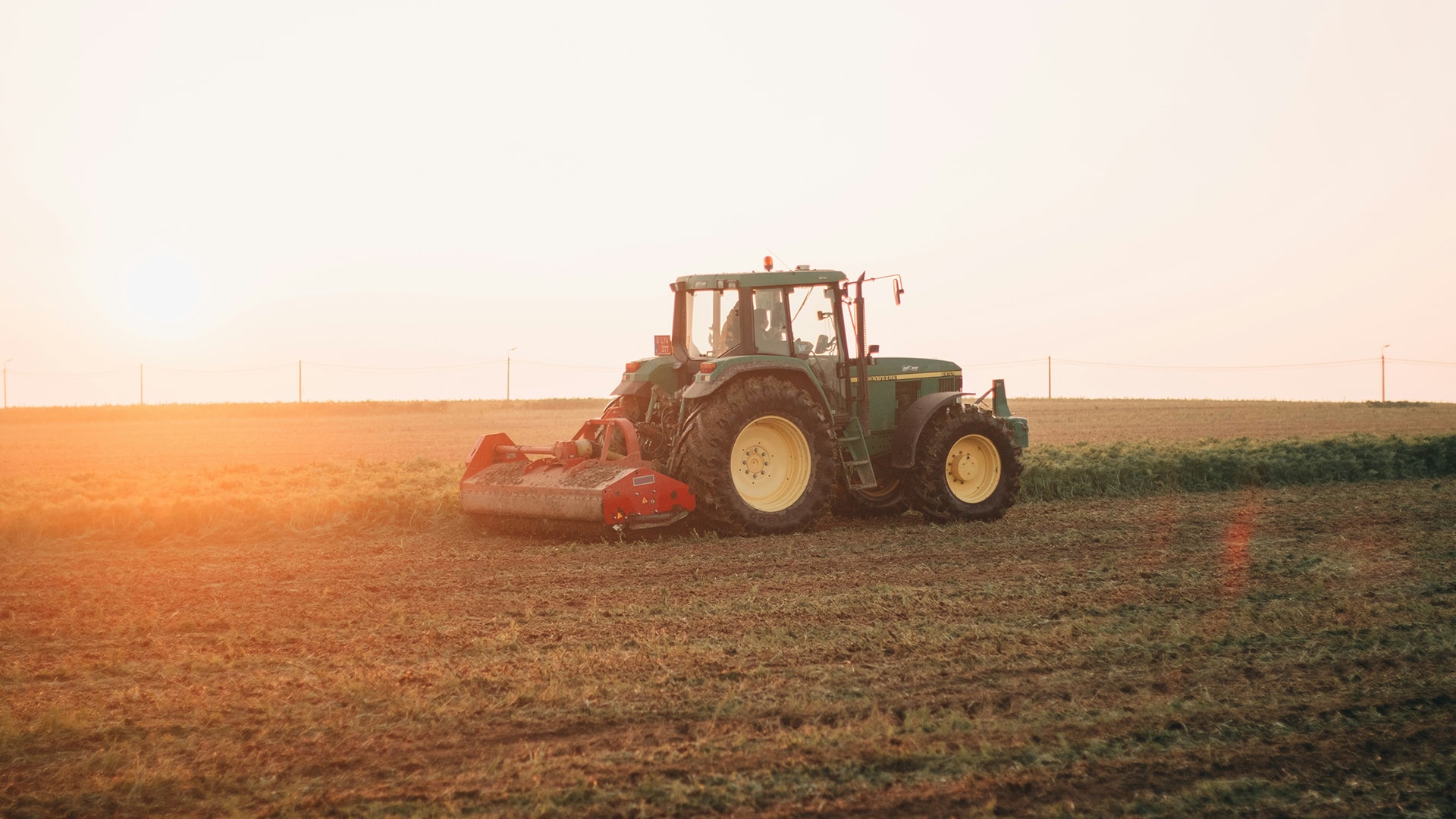
Founded by former DJI chief scientist Wu Di, agricultural robotics company FJDynamics is preparing to go public on the Hong Kong Stock Exchange.
Before starting his own venture, Wu worked as vice president of systems engineering at Coresonic AB in Europe, where he was involved in 4G communications chip development. After returning to China in 2012, he joined Spreadtrum as system director, and in 2016 moved to DJI, where he led industrial automation and smart hardware initiatives. Drawing on his background in communications and drones, Wu turned his attention to agriculture.
Rather than pursuing the more common path of agricultural drones, he took a contrarian approach by focusing on the automation of traditional farm machinery.
Today, FJDynamics’ product lineup includes autonomous navigation systems for agricultural machinery, livestock robots, construction control systems, and cleaning robots, all aimed at digitizing and automating labor-intensive, low-efficiency tasks.
Its flagship offering is an autonomous driving and navigation system sold as a retrofit solution. Installed on conventional agricultural equipment, the system adds smart capabilities for plowing, planting, field management, and harvesting. Once deployed, it enables tractors to steer automatically, plan optimized routes, and reduce overlaps and missed areas.
Since its founding in December 2017, FJDynamics has built a global footprint in under eight years.
Citing industry data, 36Kr reported that FJDynamics ranks as the world’s third largest supplier of agricultural auto-navigation system kits by shipment volume, with an estimated 8.5% market share in 2024. It is also the second largest supplier of retrofit navigation kits for agricultural machinery, with a 16.9% market share.
Beyond agriculture, FJDynamics has begun expanding into construction and property management.
From 2022 through the first half of 2025, agriculture and livestock operations accounted for 94.7%, 88.8%, 77.8%, and 73.3% of revenue, respectively, indicating a steady decline. Over the same period, revenue from construction and property management rose from 1.8% in 2022 to 13.1% in the first half of 2025. Property management alone contributed 2.5%, 2.4%, 5.6%, and 9.5% across those periods.
China slows, Europe acceleratesAgriculture remains one of the most mature applications for robotics. According to market research by 36Kr, the global agricultural robotics market is projected to expand from RMB 8.9 billion (USD 1.2 billion) in 2024 to RMB 74.9 billion (USD 10.5 billion) by 2029, implying a compound annual growth rate of 53.3%.
FJDynamics’ revenue growth, however, has lagged that pace.
From 2022–2024, and in the first half of 2025, the company reported revenues of RMB 504 million (USD 70.6 million), RMB 530 million (USD 74.2 million), RMB 570 million (USD 79.8 million), and RMB 358 million (USD 50.1 million), respectively. Year-on-year growth stood at 5.16% in 2023 and 7.55% in 2024, both in the single digits. Growth accelerated in the first half of 2025, with revenue rising 49.17% year-on-year.
The modest overall growth masks a sharp regional shift. FJDynamics’ core business has pivoted from China toward Europe.
Revenue from Chinese customers fell from RMB 276 million (USD 38.6 million), or 54.7% of total revenue, in 2022 to RMB 73.7 million (USD 10.3 million), or 20.6%, in the first half of 2025. Over the same period, European revenue climbed from RMB 97.4 million (USD 13.6 million), or 19.3%, to RMB 200 million (USD 28 million), accounting for 56.1%.
In China, declining grain prices have compressed farmers’ incomes, weakening demand for equipment upgrades. FJDynamics’ autonomous navigation kits typically cost RMB 5,000–10,000 (USD 700–1,400) after subsidies and regional adjustments, a significant expense for rural households whose per capita disposable income in 2024 averaged RMB 23,119 (USD 3,236.7). Many farmers opt to rely on manual labor rather than invest in automation.
Europe presents the opposite challenge. Labor shortages are acute, as agricultural work is seasonal, weather-dependent, and labor-intensive, making automation more economically attractive.
According to the company’s prospectus, European wheat farmers using FJDynamics’ AT2 system reduced overlaps and missed areas, cutting harvesting time from two days to one and improving efficiency by 25–40%.
This demand, combined with competitive pricing, has helped FJDynamics gain traction overseas. But in agriculture, where machinery operates in harsh conditions and downtime during harvest can be costly, dealer networks are critical.
The company said 95% of its revenue is generated through dealers. Its dealer network expanded from 1,462 partners in 2022 to 2,088 in 2023.
Industry estimates show that FJDynamics’ sales and administrative expense ratio averages between 52–60%, higher than that of domestic rival XAG, which reports a ratio of 40–48%.
From losses to profits, margins improveAccording to its prospectus, FJDynamics had accumulated losses of RMB 2.162 billion (USD 302.7 million) as of June 30, 2025. From 2022 through the first half of 2025, the company recorded losses of RMB 333 million (USD 46.6 million), RMB 471 million (USD 65.9 million), RMB 334 million (USD 46.8 million), and RMB 151 million (USD 21.1 million), respectively.
Adjusted profit turned positive in the first half of 2025, reaching RMB 21.93 million (USD 3.1 million).
R&D remains one of the company’s largest cost centers, reflecting its insistence on full-stack, in-house development. From 2022–2024, R&D spending totaled RMB 234 million (USD 32.8 million), RMB 270 million (USD 37.8 million), and RMB 232 million (USD 32.5 million), with the R&D ratio peaking at 50.9% in 2023, well above the industry average.
Sustained investment has strained cash flow. Operating cash outflows totaled RMB 391 million (USD 54.7 million) from 2022–2024. The first half of 2025 saw a modest inflow of RMB 77.5 million (USD 10.9 million), though this has yet to offset earlier deficits.
Balance sheet pressure remains. As of June 30, 2025, net debt stood at RMB 1.501 billion (USD 210 million), nearly double the RMB 685 million (USD 95.9 million) recorded at the end of 2022. With cash equivalents of RMB 179 million (USD 25.1 million), the company’s cash-to-debt ratio is roughly 9%, underscoring near-term repayment risks.
Even so, overseas expansion has significantly lifted margins. Gross margin rose from 29% in 2022 to 53.6% in 2023, 64.5% in 2024, and 65.7% in the first half of 2025, surpassing levels reported by peers such as camera maker Insta360.
The inflection in 2023 coincided with FJDynamics’ aggressive push into Europe and North America. Competitive pricing and solid performance helped it gain traction quickly.
Unlike China’s more saturated market, Europe remains relatively underpenetrated in smart agriculture. According to Mordor Intelligence, Europe’s agricultural machinery market is expected to grow from USD 43.34 billion in 2025 to USD 50.97 billion by 2030, with telematics adoption likely to increase as sustainability reporting becomes more data-driven.
European farms, particularly in Western Europe, tend to be large-scale and highly mechanized. Farmers in countries such as Germany, France, and the Netherlands are often willing to pay a premium for technology that improves efficiency and reduces labor costs.
Legacy manufacturers such as John Deere and Claas dominate in hardware, but their software development cycles are slower than those of newer technology firms. FJDynamics and other Chinese players benefit from advantages in algorithms, cost efficiency, and faster iteration.
As a result, FJDynamics’ products are often priced 20–30% below comparable Western offerings while maintaining competitive performance. Yet, whether this overseas advantage can sustain growth and ultimately drive a broader turnaround remains an open question.
KrASIA Connection features translated and adapted content that was originally published by 36Kr. This article was written by Song Wanxin for 36Kr.
...


Read the fullstory
It's better on the More. News app
✅ It’s fast
✅ It’s easy to use
✅ It’s free