Study Confirms Safety of Antibiotic Treatment for Stony Coral Tissue Loss Disease

11 小时前
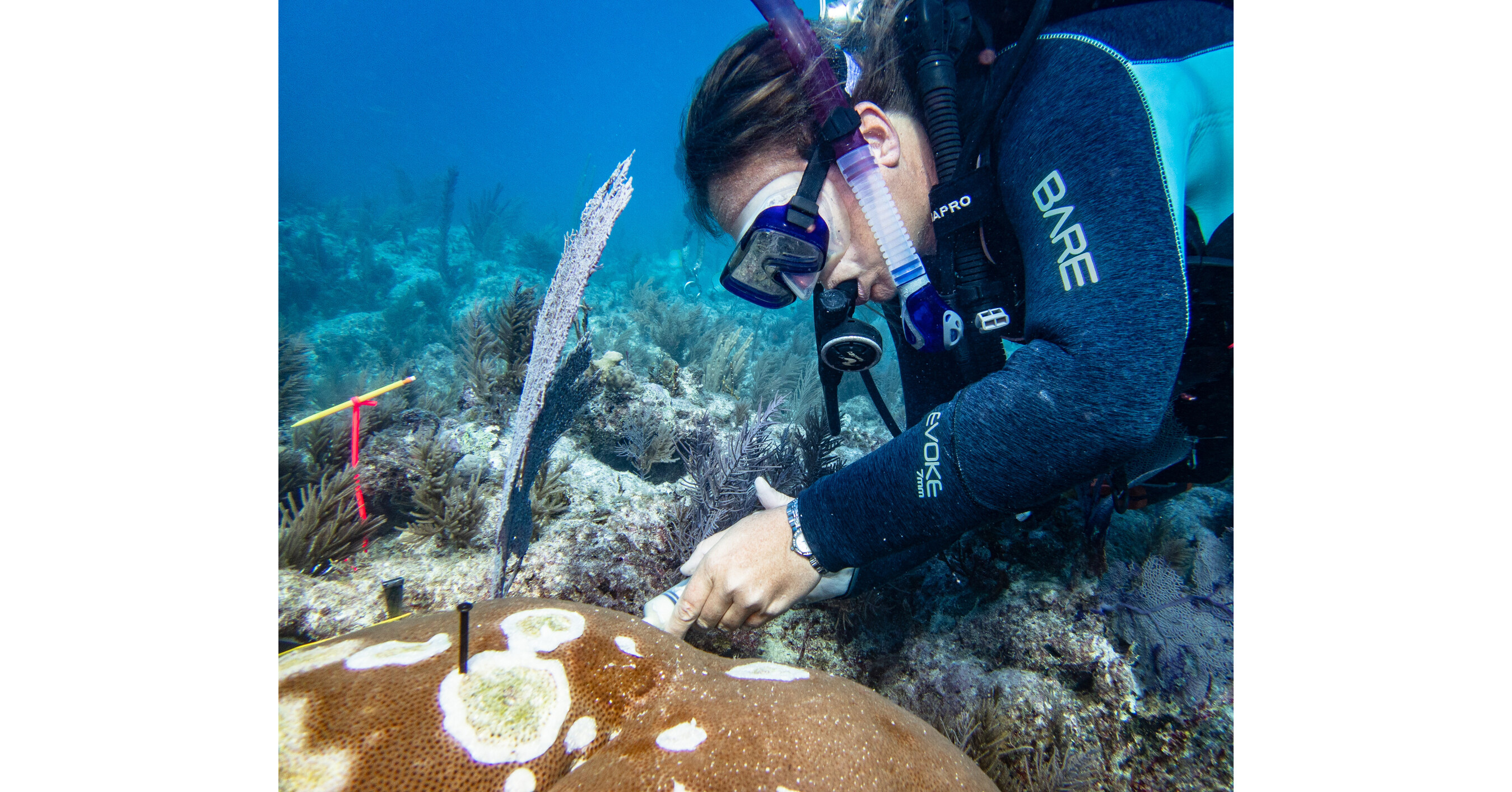
FORT LAUDERDALE, Fla., March 3, 2026 /PRNewswire/ -- A groundbreaking antibiotic treatment used in many parts of the Caribbean and on Florida's Coral Reef to combat stony coral tissue loss disease does not exhibit negative side effects, scientists at Nova Southeastern University, in collaboration with researchers from the University of Florida and the U.S. Geological Survey (USGS), have confirmed.
Beginning in 2019, NSU scientist Karen Neely and her team were among several groups that began applying an in-water topical antibiotic paste on diseased lesions on wild corals in Florida. The treatment resulted in extremely high coral survival and preservation of living coral tissue. As of May 2025, more than 31,000 corals have been treated using the paste in Florida's Coral Reef, the only barrier reef system in the continental United States.
The use of antibiotics in a wild setting initially raised concerns that such an application could increase antibiotic-resistant genes in corals and possibly disrupt the microorganisms that live within and on corals. However, the latest research results show no disruption to the microbial community and no changes in antibiotic-resistant genes following treatments.
"We now have evidence that this treatment not only saves corals, but does so safely," Neely said. "That's critical as scientists look for tools to slow the loss of reefs."
Stony coral tissue loss disease has greatly affected stony coral species in the Caribbean, including more than 20 of the about 45 species of reef-builders and five of the U.S. endangered species-listed Caribbean coral species. Since emerging in South Florida in 2014 and spreading through most of the Caribbean since 2017, the disease has caused mortality rates of 67 to 100 percent of some species, leading to significant losses in coral cover, biodiversity, and ecosystem function.
Coral reefs, often called the "rainforests of the sea," play vital ecological and environmental roles in protecting coastlines, supporting fisheries, and sustaining tourism economies. Beyond their ecological importance, coral reefs also provide significant economic value. According to the USGS, U.S. reefs provide about $1.8 billion annually in flood protection benefits alone.
The findings validate disease intervention strategies used on Florida's Coral Reef. As scientists and managers continue to work to protect reef systems, NSU researchers say the study offers evidence of science-based solutions that can help preserve coral reefs for future generations, ecosystem services, and economic value.
About Nova Southeastern University
Nova Southeastern University (NSU) is the largest private research university in Florida and a top employer in the state, with more than $6.7 billion in projected economic impact. NSU is classified as an R1 institution by the Carnegie Foundation among universities with the highest level of research activity. Visit www.nova.edu.
SOURCE Nova Southeastern University
...


Read the fullstory
It's better on the More. News app
✅ It’s fast
✅ It’s easy to use
✅ It’s free