Rising tensions in Middle East to push transport and food costs higher
.png)
1 天前
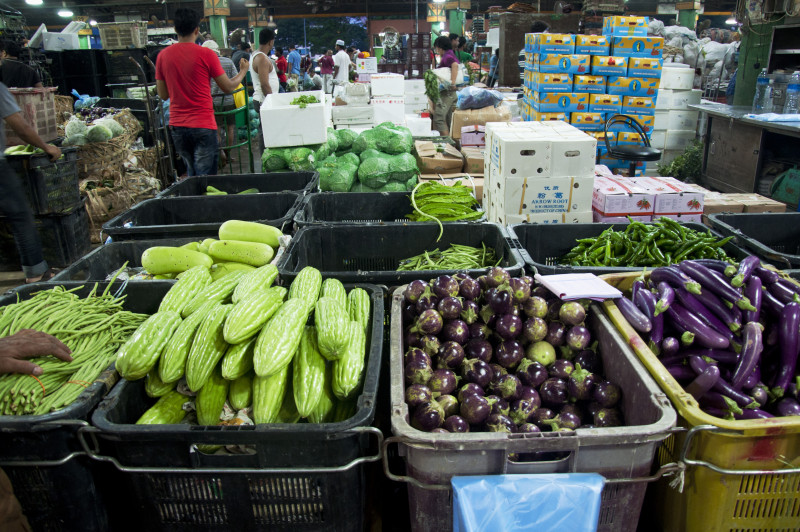
RISING geopolitical tensions in the Middle East are expected to place the heaviest and most immediate pressure on transport and food prices in Malaysia, according to local economists.
IPPFA Sdn Bhd Director and Strategic Investment and Economic Analyst Mohd Sedek Jantan said sectors linked to transportation typically react first in periods of global conflict, owing to rapid adjustments in logistics, fuel operations, and commercial transport costs.
“Food prices generally follow as higher expenses for fertiliser, livestock feed, and distribution are gradually passed along the supply chain,” he explained.
Malaysia’s overall inflation currently stands at 1.6 per cent year-on-year, with transport at -0.7 per cent and food and beverages at 1.5 per cent.
Sedek forecasts inflation rising to approximately 2.2 per cent by year-end, largely reflecting sustained, moderate pressures in food and transport-related services.
Global investors exercised caution on Sunday following US military action in Iran, which has heightened geopolitical risk and could influence crude oil prices, the ringgit, and trade flows.
Mohd Sedek noted that crude oil prices below US$90 per barrel would likely generate only moderate inflationary pressures. Meanwhile, ringgit trading between 3.90 and 4.00 against the US dollar should help mitigate imported inflation.
“Transportation inflation is expected to normalise gradually from negative territory to slightly positive, while food inflation could rise to between 2.5 and 2.7 per cent as production and logistics costs increase,” he said. Utilities, however, are less sensitive in the near term as tariff adjustments do not immediately reflect short-term fluctuations in oil prices.
He added that secondary effects are likely to emerge across the wider economy as businesses face higher logistics, packaging, imported inputs, and operating costs.
“These pressures will not trigger widespread or sudden price hikes but will manifest gradually, especially in food service establishments, processed food items, delivery services, and sectors with narrow profit margins,” he said.
On household preparedness, Sedek advised Malaysians to anticipate a year of slightly higher prices, particularly in food and service sectors, rather than sudden spikes in fuel or electricity costs.
He urged households to review spending patterns and maintain small cash buffers to manage short-term uncertainties.
Highlighting government responsibility, Sedek said fiscal support should focus on containing costs at the source, especially in logistics and agriculture.
“Stabilising fertiliser prices and providing targeted support throughout the food supply chain is more effective in preventing broad-based inflation than direct cash transfers. Monitoring prices and maintaining current fuel subsidy structures will also help stabilise expectations without straining fiscal space,” he explained.
Regarding RON95 petrol subsidies, he cautioned that their sustainability depends on Brent crude oil prices and the ringgit’s exchange rate.
Maintaining RON95 at RM1.99 per litre is manageable if Brent remains around US$80 per barrel, but costs rise sharply as prices approach US$90 or beyond, becoming increasingly difficult to sustain above US$95 to US$100 per barrel, particularly with a weaker ringgit.
To manage adjustments, Sedek recommended a gradual corridor-based pricing mechanism that incrementally adjusts petrol prices when global oil exceeds certain thresholds.
Such phased adjustments would preserve fiscal discipline while minimising shocks to households and markets.
Prime Minister Datuk Seri Anwar Ibrahim recently affirmed the government’s intention to maintain RON95 at RM1.99 per litre for Malaysians despite global market volatility.
“Insya-Allah, for the people of Malaysia, I will try to defend against any petrol price increases. We will hold the line as much as possible, but if circumstances are beyond our control, we cannot guarantee stability,” he said.
Echoing the Prime Minister, Minister of Economy Akmal Nasrullah Mohd Nasir stated yesterday that the government has no plans for drastic policy or price changes at present.
On monetary policy, Sedek expects Bank Negara Malaysia to maintain the current overnight policy rate of 2.75 per cent, despite controlled inflation.
He warned that easing too early amid geopolitical uncertainty could weaken the ringgit and raise imported inflation.
“The central bank must remain vigilant against secondary effects and take measures to prevent erratic inflation expectations,” he said.
Economist Prof Dr Geoffrey Williams similarly urged caution, noting that current conditions are influenced more by geopolitical uncertainty than by actual price or growth expectations.
He anticipates interest rates will remain steady, with reductions considered only if growth concerns intensify.
“Inflation remains low, the ringgit relatively strong, and import prices stable. Malaysia’s trade benefits from high oil prices, though domestic political and market uncertainties require careful attention,” he added.
Williams observed that small and medium enterprises are largely shielded, given their focus on domestic markets.
He advised policymakers to act calmly, cautiously, and avoid abrupt policy shifts, expressing confidence that the geopolitical crisis will eventually ease. - March 4, 2026
...


Read the fullstory
It's better on the More. News app
✅ It’s fast
✅ It’s easy to use
✅ It’s free