Malaysia’s innovation shortfall stems from a structural phenomenon
.png)
16 小时前
Murray Hunter
THE core causes of the lack of innovation, such as rent-seeking dominance, policy distortions, institutional weaknesses, cultural barriers, and brain drain, track closely with observable economic patterns.
Other nations that achieved a high innovation economy, like Japan in the 1980s, South Korea in the 1990s–2000s, and more recently China, were able to shift from commodity/OEM dependence toward proprietary technology, branding, process excellence, and dense private-sector ecosystems.
It is clear that Malaysia has not been able to make that transition yet.
Malaysia’s Core Economic Structure
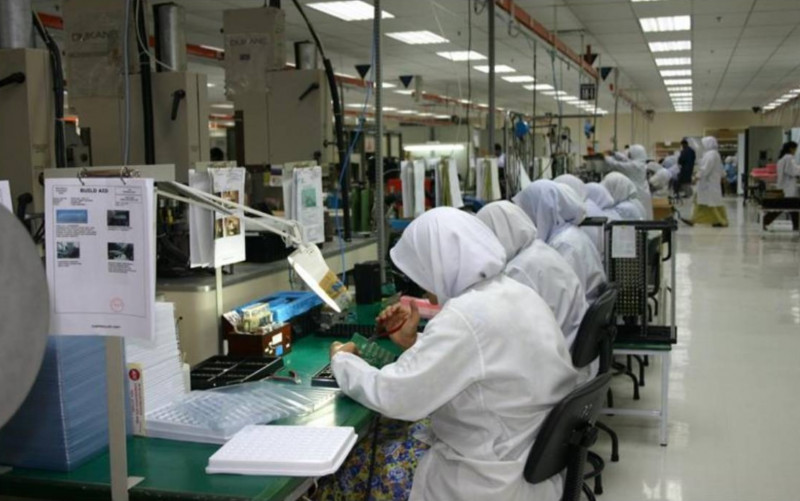
Malaysia’s GDP is still heavily weighted toward government and household consumption, commodities (palm oil, petroleum, rubber), and OEM/electronics assembly exports.
Government-linked companies (GLCs) control large swathes of banking, utilities, plantations, and infrastructure, where many operate with soft budget constraints and political mandates rather than pure commercial pressure.
This crowds out private risk-taking. The informal sector is substantial and under-measured, while the roughly one million MSMEs are mostly low-productivity, family-run operations focused on local trade or basic services rather than scalable product or process innovation.
Industry 4.0, AI, and “new frontier” rhetoric appear in official five-year plans, yet the country consistently underperforms peers on actual technology adoption, venture scaling, and high-value IP commercialisation.
Brain drain is well-documented, with skilled talent and startup founders relocating to Singapore, Australia, the US, or Europe, citing opportunity, rule of law, and less bureaucratic friction.
Patents and academic publication counts are imperfect proxies. They reflect research funding volume more than commercial impact.
More telling indicators are total factor productivity growth, share of high-tech exports that are Malaysian-owned brands or IP, venture-capital exits of domestic origin, and the density of firms that iteratively improve products and capture global margins.
Policy and Institutional Barriers
Equity rules, which include the controversial 30% Bumiputera equity requirement in certain sectors and licensing preferences, raise the cost of capital and reduce founders’ control over ownership and governance.
For capital-intensive or talent-driven startups, the ability to choose investors and align incentives is a very important consideration for technopreneurs.
Any government mandate that constrains that choice acts as a disincentive to any experimentation.
Similar protectionist licensing, quota, and oligopoly arrangements in logistics, distribution, professional services, and other sectors raise barriers to entry relative to more open markets.
Direct-selling and multi-level marketing regulations, for example, are tighter than in many comparator economies.
Corruption and weak intellectual-property enforcement compound the problem.
When ideas can be appropriated with limited recourse, or when contracts and permits depend on political connections, the expected return on genuine innovation falls.
Tall-poppy dynamics and high power-distance cultural norms further suppress the open challenge of hierarchy that is common in high-innovation environments.
Education, Culture, and Human Capital
The current education system emphasises rote learning and exams over sustained critical inquiry and creative problem-solving. Combined with hierarchical workplace norms that discourage subordinates from proposing ideas the boss did not originate.
This produces fewer people willing or able to drive incremental technical and commercial improvement. Psychological safety, i.e., the willingness to take interpersonal risk, is lower when status competition and envy are strong.
Racism, Diversity, and Innovation Evidence
Cross-disciplinary research does show that systemic exclusion of talent reduces the size of the invention pipeline (“lost Einsteins”), that reduced psychological safety wastes cognitive resources, and that homogeneous teams underperform cognitively diverse ones on complex problem-solving.
Historical US data on the effects of racial violence and segregation on patenting rates (Lisa Cook and related work) is clear. At the same time, the causal pathway is primarily through blocked access to education, capital, networks, and safety rather than some abstract “racism score.” Cultural creativity under adversity is real, yet commercial scaling and IP capture still require open institutions.
Malaysia’s post-independence ethnic preferential policies were designed as a response to colonial-era imbalances and 1969 communal violence.
They have produced measurable gains in Malay participation in the formal economy and higher education, but they also create ongoing distortions in capital allocation, firm ownership, and talent selection.
The net effect on aggregate innovation capacity is negative when the policies raise the cost of starting and scaling high-potential firms or push talent abroad. Treating the entire society as a single “racist” unit is less precise than examining the concrete mechanisms like equity quotas, licensing preferences, public-sector hiring patterns, and informal networks. These mechanisms effectively allocate economic opportunity.
What Successful Transitions to Innovation Economies Look Like
Japan, South Korea, and later China combined have showed the most important chrematistics of an innovation economy are:
An export discipline that forced continuous quality and cost improvement.
A heavy private investment in applied R&D and process engineering, not just academic papers.
Relatively open capital markets for high-growth firms and willingness to let unsuccessful firms fail.
Education systems that, over time, raised technical competence and, in the Korean and Chinese cases, increasingly rewarded performance over pedigree, and Institutions that, imperfectly, protected IP and contracts enough for firms to capture returns.
Malaysia still possesses advantages that can be leveraged upon.
These include strategic location, English proficiency among elites, existing electronics clusters, and fiscal resources.
Converting those into sustained innovation requires reducing rent-seeking opportunities, lowering ownership and licensing barriers for startups, strengthening IP enforcement, reforming education toward problem-solving and technical depth, and making the country a place where high-ability people of any background prefer to build rather than leave.
Without changes in those structural incentives, the economy risks remaining in the commodity-OEM-consumption equilibrium while others pull further ahead on proprietary technology and branding. – October 9, 2026
...


Read the fullstory
It's better on the More. News app
✅ It’s fast
✅ It’s easy to use
✅ It’s free