Do our MRT and LRTs actually break down… MORE often than you think

1 month ago
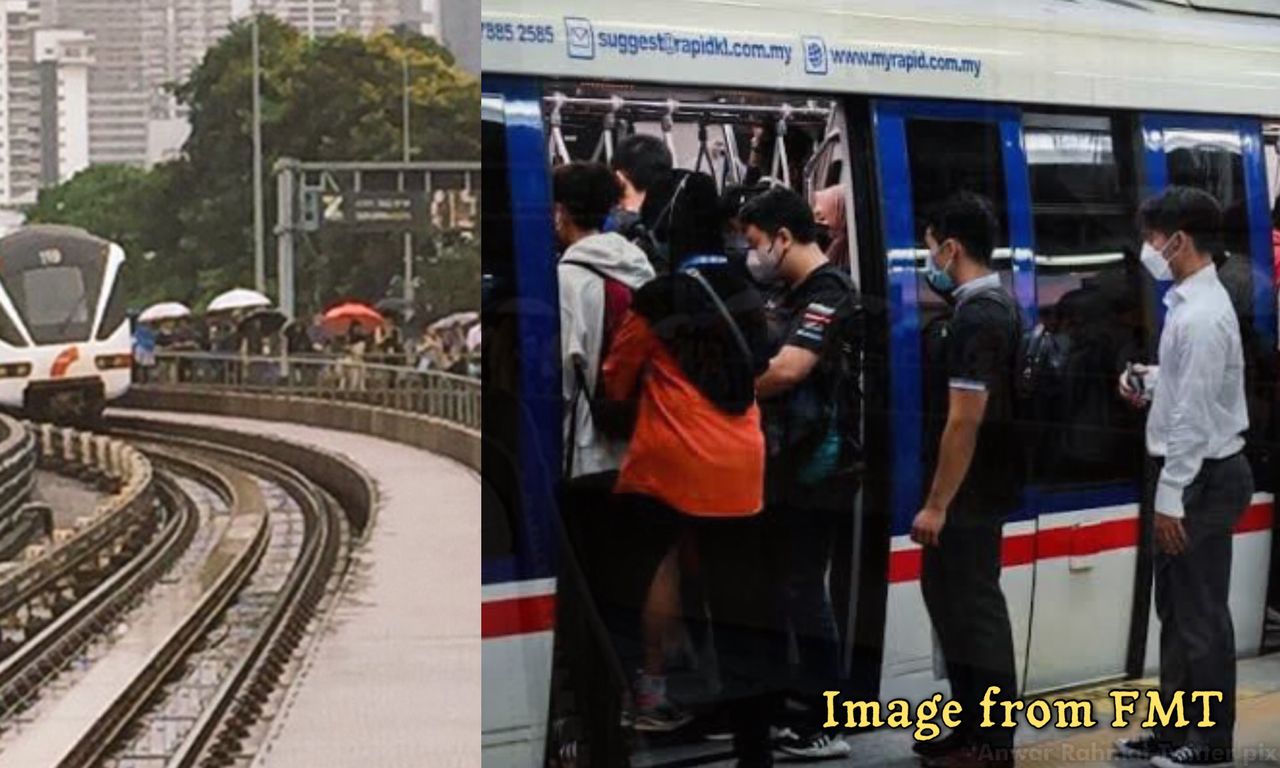
If you use public transport around KL, chances are you’ve had at least one morning derailed (literally and emotionally) by a delayed train. Maybe it happened right before work. Maybe it was raining. Maybe the LRT decided to buat hal again. Whatever it is, by now it kinda feels… normal?
So we started wondering, are our trains actually that unreliable, or do we just remember every breakdown because we were sweaty, stressed, and late?
To find out, we dug through every disruption announcement on Rapid KL’s official Twitter over the last three years, from November 2022 to October 2025 across all five major train lines. We logged the reasons behind each delay and the times they most frequently happened. From there, we uncovered some pretty interesting findings, such as…
How often do our trains break down?Across MRT Putrajaya, MRT Kajang, KL Monorail, LRT Ampang, and LRT Kelana Jaya, we counted 272 disruption announcements in three years, about 7 to 8 issues a month, or one to two breakdowns every week.
Surprisingly, the roughest month in the entire three-year period wasn’t some distant past, it was this October. There were 18 disruption announcements in just one month, and Putrajaya Line alone contributed eight of them, making it the biggest troublemaker.
The second half of October was especially messy. The Putrajaya Line had three back-to-back signalling issues on the 25th, 26th and 27th. Then on the 31st, things doubled up: first, someone ceroboh the tracks, causing a delay… and barely an hour after that got sorted out, a track switch fault popped up and slowed everything down again.
But it’s not always this dramatic. There were periods where the system behaved surprisingly well, like August 2023, which only logged one signalling issue on the Kelana Jaya Line, and September 2024, where there were literally zero reported problems. We even checked the news just to be sure… and the only breakdown we found that month happened in Singapore.
And if you break things down by day of the week, the pattern gets even more interesting. It turns out Mondays aren’t the worst after all. The real “unluckiest” day to ride? Tuesday, with 58 out of 272 reported issues, so if your Tuesdays always feel cursed, now you know why. Friday comes in second with 46 incidents, which honestly tracks… even the trains are ready to clock out early. Meanwhile, Saturday is the safest bet, with only 26 issues recorded over the past three years.
Which line breaks down the most?The Kelana Jaya Line takes the crown, logging 90 incidents over the past three years, about a third of all reported disruptions. It’s one of the highest ridership among them all, so the strain definitely shows.
In second place is the Kajang Line with 74 issues, which is surprising considering it’s much newer and started in 2016. But it also has one of the highest riderships, so the heavy daily use might be catching up to it.
The Ampang Line, despite being the oldest operated in 1998, comes in third with 45 incidents, roughly half of Kelana Jaya’s total.
The calmest of the bunch are the Putrajaya Line (33 incidents) and the KL Monorail (30 incidents). Putrajaya is still new, and the Monorail is much shorter, so their numbers stay relatively low.
So yeah, the line that most KL folks rely on is also the one that acts up the most. Love that for us.
What’s causing all these disruptions?When we dug into why these breakdowns happened, the numbers painted a pretty clear picture. The most common cause was anything related to the trains themselves, like faulty components, brake and air pressure issues, stubborn doors, or trains that just refused to move until they were towed away. These made up 61 cases, about 22% of all disruptions.
Close behind were track-related problems, also 60 cases (22%). This covered everything from faulty track switches and obstruction alarms to trees falling onto the tracks… and yes, even the occasional commuter who decided to walk across them.
Next were signalling issues, with 51 cases (19%). When the signalling system acts up, trains move slower and stop longer, which naturally causes a ripple of delays.
After that, the numbers drop. Platform door issues and power supply problems each accounted for 8%, while disasters like fires or lightning were rare, making up under 3%. Then, at less than 2% of the time, were delays caused by maintenance like upgrading works or trimming branches. And finally, there were 47 cases (17%) where the cause was vague or not specified at all, just labelled “technical issue,” leaving everyone guessing.
Put together, all these reasons make up the 272 disruptions recorded over the past three years.
How long do these delays last?To get a sense of how long disruptions last, we compared the first tweet announcing an issue with the tweet confirming it was resolved.
Most incidents actually get sorted out pretty quickly. Out of the 272 disruptions, 149 cases, or about 55%, were fixed within an hour, and of those, 39 were resolved in under 15 minutes. The rest usually wrapped up within a few hours.
Of course, there were exceptions. The Kelana Jaya Line faced a nightmare stretch in November 2022, when a recurring signalling fault forced trains to run manually for seven days, slowing the line significantly.
Meanwhile, the Ampang Line had a massive crisis from January to May 2023. A cracked viaduct near Bandaraya station not only forced some stations to close but also blocked depot access, leaving the line running with just two trains at one point until temporary repairs were completed.
Timing also makes a big difference. Peak hours are by far the worst: 5 to 9 a.m. saw 94 incidents, about a third of all disruptions, while 5 to 9 p.m. recorded 73 cases, roughly a quarter. Midday, from 9 a.m. to 1 p.m., had 43 incidents, and the afternoon slot between 1 p.m. and 5 p.m. saw 44. Late evenings, 9 p.m. to midnight, were the quietest, with only 18 reported disruptions.
So, if you’ve ever felt personally victimised by bad timing on your commute, the data proves it’s not just you.
Is RapidKL improving anything?RapidKL tracks train performance using something called MKBF, or Mean Kilometers Between Failure, which measures how far a train can travel before encountering a technical issue that causes it to stop for more than five minutes. The higher the MKBF, the more reliable the line.
The targets are ambitious: the Kelana Jaya, Ampang, and Kajang lines are aiming for 1 million kilometers, while the KL Monorail, being shorter, has a target of 150,000 kilometers. As of October 2024, only the Monorail had exceeded its goal, reaching around 240,000 kilometers. The Ampang Line came close with roughly 800,000 kilometers, Kajang at about 520,000 kilometers, and Kelana Jaya lagged behind at around 400,000 kilometers. While the older lines are still far from their targets, the trend shows gradual improvement.
Meanwhile, the Putrajaya Line stood out with a staggering 2.8 million kilometers MKBF, far surpassing the others. Interestingly, this happened despite multiple disruptions in October, which highlights that not every delay counts as a full technical failure, sometimes the trains are moving, just a little slower than usual.
Will our trains stop breaking down anytime soon?Fixing these issues is a long-term process. Upgrades take time, including the major signalling overhaul on the Kelana Jaya Line, which is expected to extend the line’s lifespan by another 20 years.
The good news is that RapidKL is aware of the problem areas, actively monitoring them, and gradually improving overall reliability. For commuters, that’s at least better than having more cars jamming the roads during peak hours.
Until things get fully sorted, you might want to keep this article handy, perhaps to show your boss the next time the LRT makes you late. Here’s hoping your next commute is smooth, or at least a little less sweaty.
...


Read the fullstory
It's better on the More. News app
✅ It’s fast
✅ It’s easy to use
✅ It’s free