Chery Tiggo 7 PHEV Review: Shifting The Paradigm
_1652931074_9592.jpg)
1 day ago
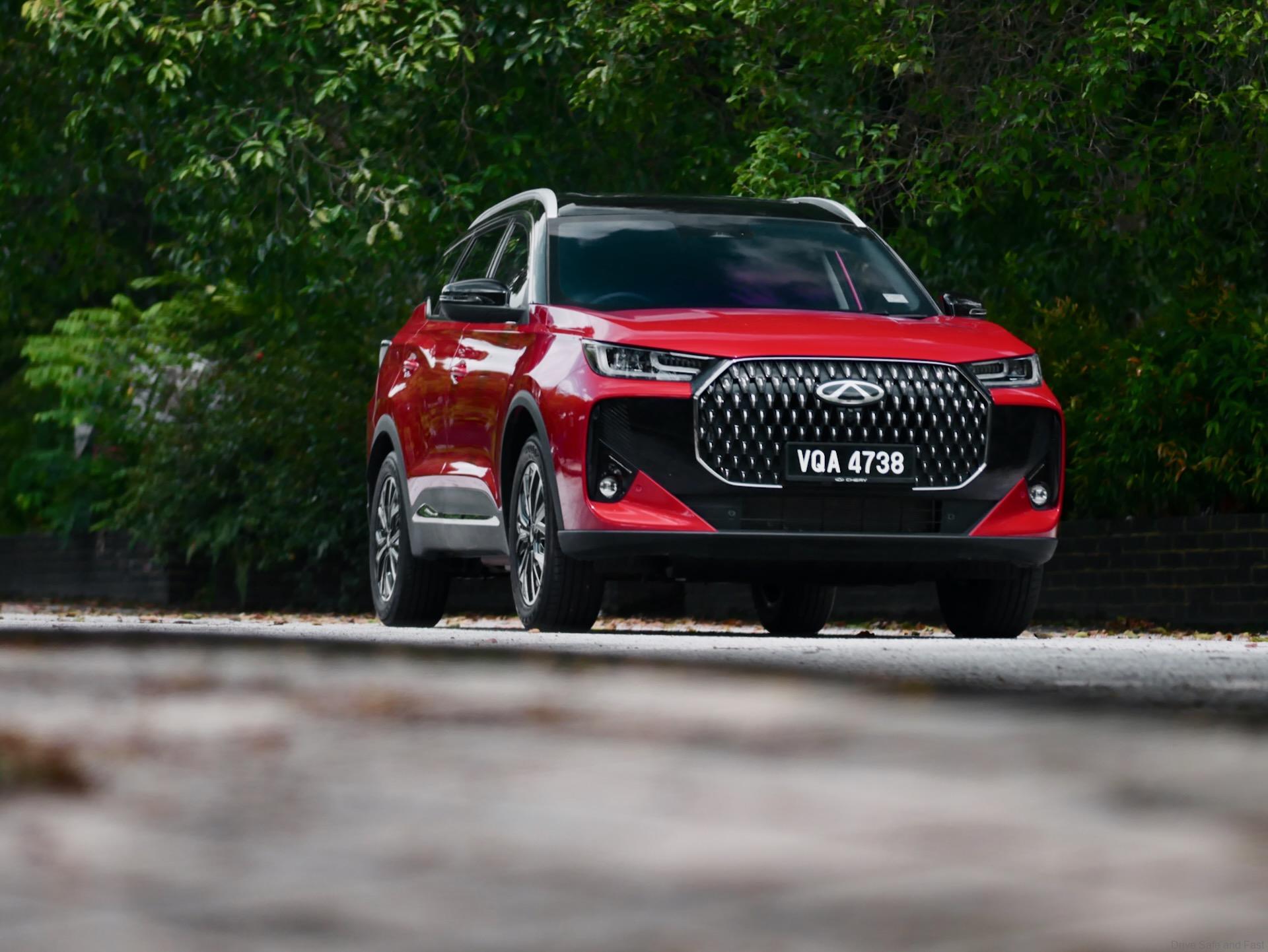
The Chery Tiggo 7 PHEV is going to change the way we think about plug-in hybrids.
Malaysia is no stranger to plug-in hybrid electric vehicle (PHEV) technology. Ten years ago we got the Volvo XC90 T8 Twin Engine at just over RM400,000 and that was considered good value at the time. Since then, PHEVs have fallen by the wayside. This is partially because EVs took the spotlight when they became excise duty and import tax free in 2022. Related to this is the fact that PHEVs did not become accessible to the mainstream car buyer until earlier this year, thanks to Chery Automobile’s Jaecoo J7 PHEV in March 2025.
While the J7 PHEV opened the door, it’s the Chery Tiggo SUVs that are now walking in with real value in the mass market. The Chery Tiggo 7 PHEV and Chery Tiggo 8 PHEV were introduced in October 2025 with very aggressive pricing – they’re essentially priced like replacements to their petrol counterparts though Chery Malaysia confirms that the petrol models are still very much available now at lower prices due to ongoing promotions.
Compared to the original Tiggo 7 Pro we got here in 2024, the PHEV model is a mild facelift. Visually, you’ll find the new model has new bumpers, new lights, a new grille, new rims and a new blood red two-tone paint job.
The interior changes are more subtle – new steering buttons and some PHEV specific animations and buttons are all we could make out to be new. Equipment is mildly tweaked too with new tyres, a tyre repair kit replacing the spare, an additional front-centre airbag bringing the final count to 8, the removal of Tiptronic-style gear selection. Essentially, some things have changed, but it’s more a shift towards hybrid-centric equipment rather than an upgrade or downgrade.
You still get a tonne of equipment on this single variant including a hands-free powered tailgate, all LED lighting, sequential front turn signals, a full-fledged ADAS system with Intelligent Cruise Control and rear-cross traffic alert included, a panoramic sunroof, double glazed acoustic glass to name a few choice pieces. We even found an in-car perfume with 3 scents – something only offered by Maybach less than a decade ago.
When we drove the Chery Tiggo 8 PHEV on a single tank of petrol and a fully charged battery more than 1300km back in November across the country and were impressed with its fuel efficiency. However the omission of a powered tailgate to that more expensive SUV seemed odd. No such weird equipment omissions here.
Now, let’s zoom into the Chery Tiggo 7 PHEV – the subject of this review. Priced at just RM129,800 it’s now the most affordable PHEV in the market. It feels like a very earnest effort on the part of Chery Malaysia considering the petrol model launched at RM123,800 just last year. While we liked the petrol version of this SUV, the public probably didn’t see enough differentiating it from its chief rival, the Proton X70. With this new Tiggo 7 PHEV model, Chery finally has an X factor.
The powertrain here is completely different to what we got before. The high output 1.6L 4-cylinder has been replaced with a 1.5L 4-cylinder. This engine runs the Atkinson cycle and is more fit for purpose as it has a very high claimed thermal efficiency of 44.5%. A relatively large and fast charging 18.3kWh lithium iron phosphate (LFP) battery is also present, mounted under the vehicle. A dual motor Dedicated Hybrid Transmission (DHT) enables seamless switching between the system’s Multi-Mode driving capabilities.
All PHEVs are a little complicated in theory but in operation are relatively straight forward to operate. For the most part, you can use it like your typical petrol vehicle, just fill it up with RON95 when the tank is empty. If you just do it this way you might find that you’re only filling up half as often as you normally would. This is how most customers will end up using it, as many don’t pick the habit up of charging their vehicles, but they really should.
That is because charging a PHEV at home unlocks a lot of savings and is better for the environment. You can plug the Tiggo 7 PHEV into a 3 pin socket overnight using the supplied adapter. The battery in here is medium sized – not as large as a typical EV – so it only takes about 6-8 hours to fully charge. You’ll only get about 90km of pure electric range and you’ll only get to drive using pure electricity as long as there’s more than 20% of charge in the battery remaining. This is how the Chery Super Hybrid system was designed to be used – plugged in at home overnight so that short town commuting can be done emissions-free.
If you’re diligent with your charging, chances are you’ll only have to refuel once a month or less.
There are systems in place that ensure the petrol engine still comes on to burn off some petrol, so you won’t be able to run the Tiggo 7 PHEV as an electric vehicle forever. This is necessary as keeping fuel in a tank for too long causes it to go ‘bad’. Again, you don’t have to worry about this, as it’s all automated.
The only manual control you really have is a couple of buttons that lock the vehicle in HEV or EV mode, which you can only control when the battery is sufficiently charged. We’d advise just leaving it in HEV mode. In HEV Mode, the system can decide based on conditions whether it should act like an electric vehicle, ask both the electric motor to drive the wheels while the petrol motor charges it in tandem, or get both motors to power the wheels in parallel, or have the petrol motor directly drive the wheels. It’s similar to Honda’s e:HEV system in theory but with a large battery that you can charge up yourself if you like the extra electric range. It’s also good that the battery doesn’t eat into the cargo or passenger compartments.
One final note about the powertrain: Chery even equips the car to take on AC and DC fast charging, so you can actually top the battery off in a matter of minutes if you like. However, we don’t see anyone really making use of this as it does cost more than it’s worth. It’s more relevant in markets where petrol is really pricey. Maybe Malaysian households with an installed AC charger at home may use it when their BUDI95 quota has run out for the month.
Overall there are plenty of good things to say about the Tiggo 7 PHEV. For now it’s pretty unique in the market. A chief rival will come from Proton later this month in the form of the e.MAS 7 PHEV. While that will be a more ‘modern’ vehicle built on the same bones as its EV sibling, some may actually prefer the more conservative Tiggo 7’s petrol roots as it influences much of the vehicle’s design and design philosophy. Instead of a slippery exterior, you get rugged lines. Instead of a minimalist interior, you get a mix of buttons and touch interfaces. Instead of a low slung crossover, you get an emulation of an off-roader. The list goes on.
It’s also worth pointing out that most manufacturers would exploit being the first in market by pricing their product higher than need be. The Tiggo 7 PHEV feels like it’s priced just high enough to leave a gap for the petrol model to continue being sold. As far as earnestness in pricing goes, that’s about as good as it gets in Malaysia, really.
I’m also happy to report that it’s relatively comfortable and responds progressively to steering and throttle inputs. There’s no unintended lurching, no extreme body roll. It’s not very dynamic and not the last word on comfort, but it delivers a decent driving experience that’s free of complaints. All this despite weighing quite a bit more than most SUVs in its class.
Besides that, build quality and perceived quality are relatively high for the price point.
That’s a given on most Chinese SUVs these days, but still worth noting as long as our market still receives subpar ASEAN-spec vehicles.
What’s the catch? With the car itself, the biggest issue was that you have to fully depress the brake pedal in order to shift the car into Drive or Reverse. It’s not enough to just bring the car to a halt with the brake pedal before shifting. Instead, you need to push that pedal in with some degree of pressure before the e-shifter registers a gearshift.
Essentially it feels like the engineers errs on the side of caution. We also heard a little creaking from the sunroof area one ‘colder’ morning when driving over rough roads, but this disappeared on subsequent drives over that same stretch. You’ll probably also hear complaints about the battery reducing ground clearance over the petrol model, but the Chery Tiggo 7 was never touted as an off-roader and doesn’t even come with AWD. Not really a valid complaint in this case.
Subjectively speaking, there are some design choices here that are just plain tacky on the exterior. The front fog lamps features a little badge reading ‘PERFORMANCE’ on each side. I can’t imagine why Chery’s head of design would go through all the trouble to pen such a conservative and generally handsome looking SUV only to leave THAT in.
The other badges are okay, though the ‘Plug-in Hybrid badge is a little large. These two issues I have with the exterior are user-solvable with some de-badging and a wrap.
Conceptually there are only a couple of downsides. One: if you’re looking for the last word on dynamism or pure interior space, you’ll have to look elsewhere. Two: PHEVs in the premium space don’t command very good resale value in comparison to their petrol-powered alternatives, so the market may use that same yardstick when it comes to these mass market PHEVs.
These two conceptual ‘problems’ are easily countered though – bigger, better SUVs in this space are also more expensive addresses point one. The benchmark in this segment, Honda CR-V e:HEV, is RM70,000 more expensive. When it comes to point two, it could be argued that resale value today is barely even guaranteed on all but the most conservative, mainstream offerings. Love it or hate it, the market has moved on and perhaps 2026 will be the year PHEVs become the mainstream.
2025 Chery Tiggo 7 PHEV Specifications
Engine: 1.5L 4-cylinder Atkinson Cycle petrol engine
Capacity 1498cc
Transmission: Dedicated Hybrid Transmission
Max Output: 279PS combined
Max Torque: 365Nm combined
Price: RM129,800
...


Read the fullstory
It's better on the More. News app
✅ It’s fast
✅ It’s easy to use
✅ It’s free