Plug-In Hybrids Under Scrutiny: Major Study Finds Serious Disconnects in Theory vs Reality

14 hours ago
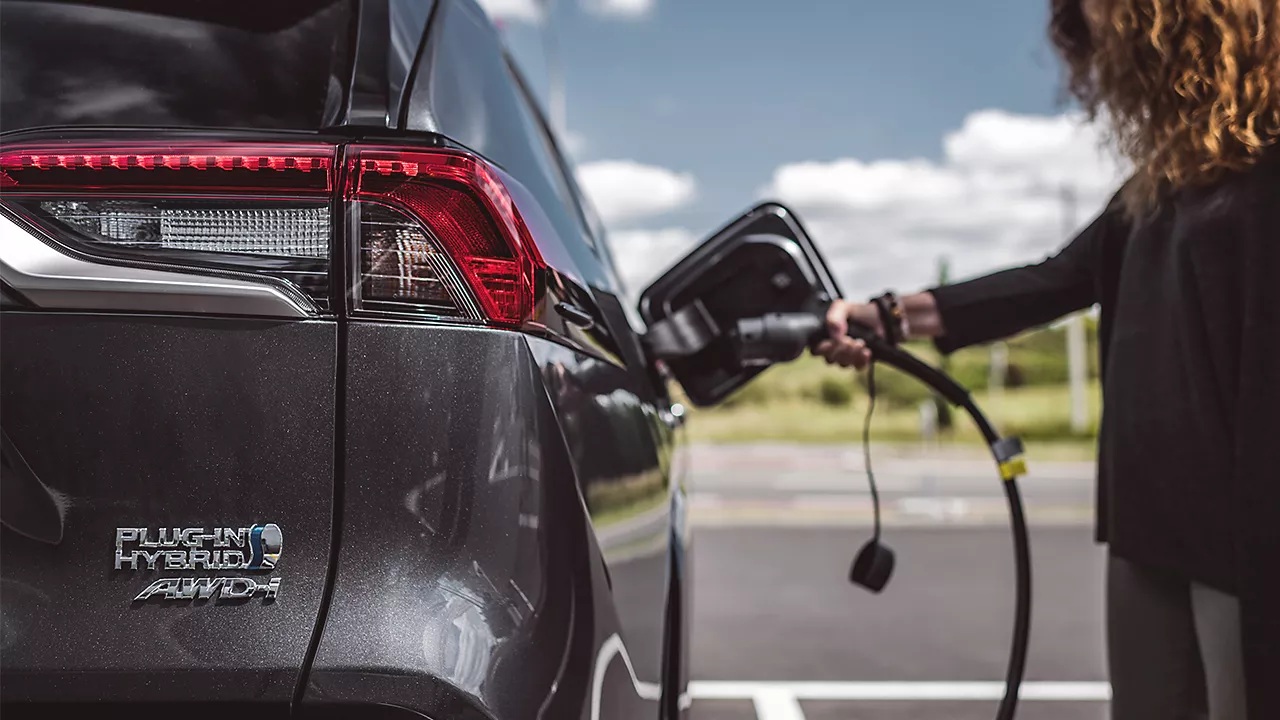
Plug-in hybrid electric vehicles – or PHEVs – have long been positioned as the sensible compromise in the transition from petrol to battery-electric motoring. The pitch is straightforward: run on electricity for short daily trips, switch to internal combustion for longer journeys, and enjoy the best of both worlds.
On paper, it is an elegant solution. In practice, it appears far messier.
A new study from the Fraunhofer Institute for Systems and Innovation Research (ISI) in Germany suggests that many plug-in hybrids are falling significantly short of their official efficiency and emissions claims. Drawing on real-world data from 981,035 PHEVs built between 2021 and 2023, the research is among the most comprehensive examinations of plug-in hybrid performance to date.
Rather than relying on surveys or small samples, researchers used on-board fuel consumption monitoring (OBFCM) data transmitted wirelessly from vehicles across multiple manufacturers. This allowed them to compare laboratory certification figures under the EU’s WLTP testing regime with how the cars were actually driven on the road.
The gap between theory and reality was, to put it mildly, huge.
PLUG-IN HYBRIDS ARE MISSING THE MARK… BUT WHY?Under WLTP testing, the average plug-in hybrid in the study was rated at 1.57 litres per 100 kilometres. In real-world use, that figure rose to 6.12 litres per 100 kilometres – almost four times higher.
Even in so-called “charge-depleting” mode, where the car is intended to prioritize battery use, fuel consumption averaged 2.98 litres per 100 kilometres, nearly double the official combined figure.
Differences between brands were notable, as well. Some high-end German models ranked among the most fuel-hungry in real-world conditions. Certain Porsche plug-in hybrids, for example, averaged around 7 litres per 100 kilometres. At the other end of the spectrum, lower-priced models from brands such as Kia, Toyota, Ford, and Renault often recorded dramatically lower fuel use under comparable conditions.
When approached for comment, Porsche stated that its published figures comply with EU testing procedures and that variations reflect differing usage patterns and driving conditions. The European Commission declined to comment, while Germany’s automotive industry association defended the reliability of existing testing frameworks.
The study identified four primary factors behind the discrepancy, but one dominated the rest: simply put, owners are not plugging in often enough.
WLTP calculations assume that plug-in hybrids will operate electrically for roughly 70 to 85 percent of their driving. In reality, private owners drive electrically only 45 to 49 percent of the time. For company cars, that share falls dramatically to between 11 and 15 percent.
Separate analysis of the same vehicle data showed that grid electricity accounted for less than a third of total energy use across the sample. In extreme cases, some drivers barely charged at all. The study found that certain high-end models were effectively operating as conventional petrol vehicles, despite carrying sizeable batteries.
Without regular charging, the central premise of a plug-in hybrid collapses. The battery depletes quickly, the combustion engine takes over, and the vehicle is left hauling hundreds of kilograms of additional (and unused) hardware. Unsurprisingly, efficiency drops accordingly.
There are additional complications, too.
A BRIDGE, BUT ONE THAT FEW ARE CROSSINGReal-world electric range often proves shorter than advertised. Cold weather, motorway speeds, elevation changes, and cabin heating demands all reduce battery performance. In some models, the petrol engine may start automatically to provide heating or extra power under heavy acceleration.
Patrick Plötz of the Fraunhofer Institute told German broadcaster SWR that engines appear to engage more frequently than many drivers expect, even when they assume the vehicle is running purely on electricity.
Battery size is another constraint. Many PHEVs sold in recent years offer meagre electric-only ranges of roughly 30 to 50 kilometres. Earlier models provided even less. Regulators and manufacturers have proposed extending that range in future designs, hoping that larger batteries will encourage more frequent charging.
Yet range alone does not guarantee behavioural change. If drivers lack convenient access to home or workplace charging – or simply do not see the benefit – plugging in may remain an afterthought.
For years, policymakers and manufacturers described plug-in hybrids as a transitional technology. Drivers would become accustomed to charging at home while retaining the reassurance of a petrol engine. By the time they were ready to switch to a fully electric vehicle, charging networks would be more mature and range anxiety would be diminished.
The new data challenges that assumption. If many owners rarely plug in, they are not building the habits that were meant to smooth the shift to battery-electric vehicles in the first place.
There are environmental consequences, too. Previous research has indicated that PHEVs may produce roughly 3.5 times more emissions in real-world use than official ratings suggest. The Fraunhofer study helps explain why: if most energy comes from fossil fuel rather than the grid, the emissions benefit narrows significantly.
Meanwhile, drivers bear the complexity of dual drivetrains. Plug-in hybrids carry both a combustion engine and an electric motor, along with associated cooling systems, electronics, and software. That complexity can translate into higher purchase prices, additional maintenance, and greater weight.
TESTING CONDITIONS PLAY A PARTIt is worth noting that laboratory tests are designed to provide standardised comparisons, not to replicate every possible driving scenario. As with any efficiency rating, outcomes depend heavily on how a vehicle is used.
A well-charged PHEV driven primarily on short urban trips can still deliver impressive results. Conversely, a plug-in hybrid that is never plugged in will perform little better than a conventional hybrid – and sometimes worse.
Regulatory assumptions are central to the issue. Both European WLTP and US EPA ratings assume regular charging behaviour. When that assumption breaks down, so too do the projected emissions reductions.
Some automakers are exploring alternative architectures. Extended-range electric vehicles (EREVs) are designed to operate primarily as battery-electric cars, with a combustion engine acting solely as a generator once the battery is depleted. Past examples include the range-extender version of the BMW i3. Ford and Stellantis have announced forthcoming EREV pickup models, though details remain limited.
Whether such designs will materially alter charging habits remains to be seen.
Plug-in hybrids were conceived as a pragmatic middle ground – a way to cut fleet emissions without demanding an immediate, wholesale shift to full electrification. In theory, they offer flexibility and reassurance. In practice, their effectiveness hinges almost entirely on human behaviour.
The Fraunhofer Institute’s analysis does not suggest that plug-in hybrids are inherently flawed. It does, however, highlight the gulf between regulatory assumptions and real-world usage. If drivers do not plug in, the environmental promise of the technology largely evaporates.
As electric charging networks continue to expand and battery ranges improve dramatically, the rationale for carrying both a combustion engine and a battery pack may weaken further. Legacy automakers, already recalibrating their electrification strategies, may face renewed pressure to reassess where plug-in hybrids fit in their long-term plans – if indeed they do at all.
For now, the message is simple. A plug-in hybrid can deliver efficiency gains – but only if it is treated like an electric car first, and a petrol car second. Without that discipline, the bridge it was meant to provide looks considerably less sturdy. For some, the confluence of real-world behaviours and a rapid rise in the numbers and quality of full-electric vehicles, along with a corresponding growth in charging infrastructure, has them asking if maybe it’s time to pull the plug on plug-in hybrids.
Sources: TechCrunch, The Guardian UK, CarScoops
...


Read the fullstory
It's better on the More. News app
✅ It’s fast
✅ It’s easy to use
✅ It’s free