Strait of Hormuz Tensions Test Global Energy Flows, but Malaysia Positioned for Stability

4 days ago
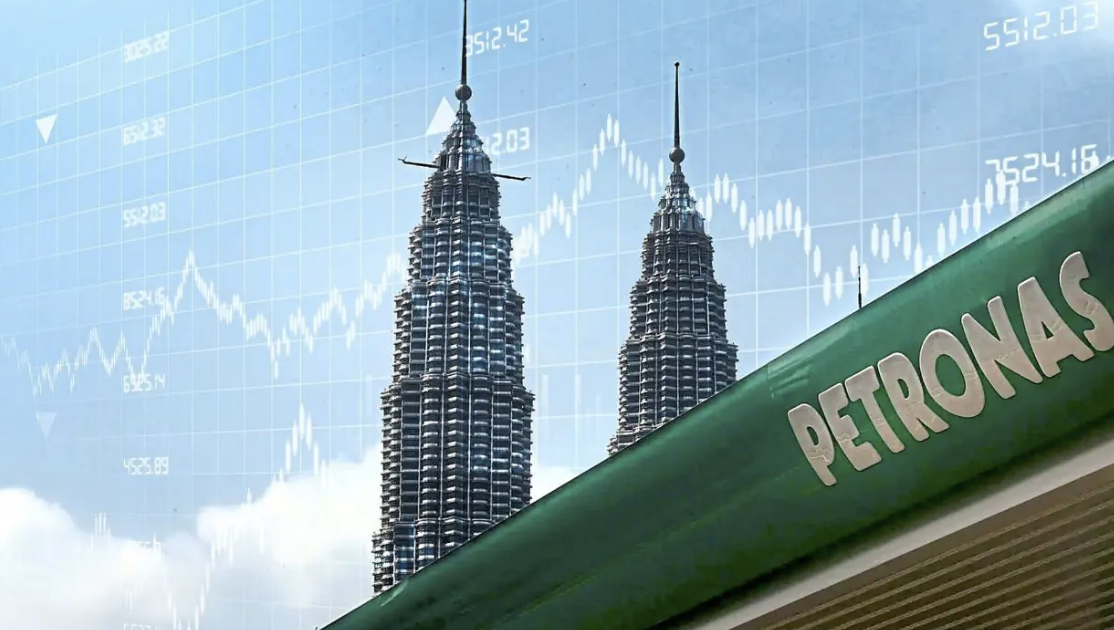
The Strait of Hormuz, a narrow maritime corridor connecting the Persian Gulf to global markets, has once again become a focal point of geopolitical tension – and has likely never enjoyed as much sustained and wide-ranging media attention as it’s getting now. Accounting for roughly one-fifth of the world’s total energy shipments, any disruption in this vital waterway sends immediate ripples across global oil markets.
Recent developments have done precisely that, pushing prices upward and forcing energy-dependent nations – particularly in Asia – into urgent diplomatic engagement. Indeed, in recent years, reports show that some 82% of all crude oil and other fossil fuels leaving the Strait of Hormuz go to Asian countries.
The latest escalation in the weeks-long conflict came early this week as US President Donald Trump issued a shocking ultimatum to Iran, threatening the entire country with catastrophic military strikes against civilian infrastructure (which many observers have noted would amount to war crimes) if Tehran failed to agree to reopen the strait within a tight deadline.
But despite the reliance in Asia on oil from the Middle East region (or West Asia, depending on your perspective), Trump’s bluster holds less sway here – especially in Southeast Asia – because even before his warning, a quieter but significant diplomatic effort had already been unfolding behind the scenes. Several countries, recognizing the strategic (and obvious economic) importance of maintaining energy flows, moved swiftly to negotiate passage for their own flagged vessels, in effect doing an end-run around the US president, who is becoming increasingly isolated on the world stage.
For many Asian economies, the stakes are especially high. Nations such as the Philippines, India, and Pakistan rely heavily on Gulf energy imports, making uninterrupted access to the strait not just an economic priority, but a national necessity. In response, these countries have pursued direct engagement with Tehran, securing varying degrees of assurance for safe passage through the contested waters.
DIPLOMACY IN MOTIONAmong the most notable developments is the Philippines’ recent agreement with Iran, which guarantees “safe, unhindered and expeditious passage” for its flagged vessels. The urgency behind this move is clearly understandable. The ASEAN country imports a staggering 98% of its oil from the Middle East and was among the first to declare a national energy emergency after prices surged dramatically in the immediate wake of the conflict.
Elsewhere, Pakistan confirmed that Iran had permitted 20 of its ships to transit the strait, while India has similarly benefited from diplomatic engagement. Indian officials have pointed to sustained dialogue as the key factor enabling their tankers to continue operations. China, maintaining long-standing ties with Tehran, has also seen some of its vessels pass through, underscoring the role of established relationships in navigating the current crisis.
Yet, despite these developments, a significant degree of uncertainty remains. Analysts note that even the scope and durability of these agreements are unclear. It is not known whether assurances apply broadly to all vessels under a national flag or are granted on a case-by-case basis. Beyond that, nobody can be confident in how long such arrangements will hold amid ongoing military tensions in the region, particularly if a wider war should break out.
WHAT WE STILL DON’T KNOWEven as some ships continue to pass through the strait, a few key questions persist. The precise conditions under which safe passage is granted remain rather nebulous. We simply don’t know what triggers unfettered passage for some, but not for others. There is speculation that some vessels may be subject to informal arrangements or fees, although shipping companies have largely declined to comment on the specifics.
Recent reports of a Japanese liquefied natural gas carrier successfully navigating the strait highlight both the possibilities and the ambiguities of the current situation. While the vessel and its crew reached their destination safely, details of how that passage was secured have not been disclosed.
There is also the broader issue of consistency. Iran has suggested that the strait remains open to most countries, with notable exceptions, but the practical application of this policy appears uneven. This raises concerns for global shipping operators, many of whom rely on flags of convenience such as Panama or the Marshall Islands – jurisdictions that have not publicly secured passage guarantees.
MALAYSIA’S MEASURED POSITIONAnd that brings us to Malaysia. Quite fortunately – particularly against this uncertain backdrop – Malaysia stands out for its relatively stable position. While the country does rely on Gulf imports for a significant portion of its oil – roughly two-thirds – it has so far avoided the more acute pressures faced by some of its regional peers.
Part of this resilience can be attributed to proactive diplomacy. Malaysian-flagged tankers have already been granted passage through the Strait of Hormuz, with Prime Minister Anwar Ibrahim publicly acknowledging Iran’s cooperation in facilitating safe transit. Transport Minister Anthony Loke has similarly pointed to strong bilateral ties as a key factor in securing these assurances.
Crucially, however, Malaysia’s position extends beyond short-term diplomatic wins. The country benefits from a broader framework of energy security anchored by Petroliam Nasional Berhad, or PETRONAS, which has cultivated extensive relationships with oil-producing nations over decades. This network has proven invaluable in ensuring continuity of supply, even amid global uncertainty.
Equally important is the diversity of Malaysia’s energy sources. While Gulf imports remain significant, the country supplements its needs through domestic production and alternative supply channels. Liquefied natural gas, in particular, is sourced not only locally but also through imports from countries such as Australia and Canada, providing an additional layer of security.
ANWAR: LIKELY NO SUPPLY CRISIS ON THE HORIZONIn contrast to the more urgent concerns seen elsewhere in Asia, Malaysian authorities have been clear in their assessment: there is no imminent risk of a supply crisis. While acknowledging that global oil prices may fluctuate in response to ongoing tensions, the government has emphasised that physical supply remains stable.
Prime Minister Anwar Ibrahim has underscored this point, noting that Malaysia’s energy ecosystem is well-positioned to withstand short-term disruptions. The country’s dual status as a net exporter of crude oil and natural gas and net importer of certain refined products – combined with its ability to source from multiple partners – provides a buffer that many other nations lack.
This distinction is important. While countries like the Philippines have faced immediate and severe impacts from price spikes and supply constraints, Malaysia’s challenges are more likely to be felt at the pump rather than in availability. In practical terms, consumers may see modest increases in fuel costs, but widespread shortages are not expected.
LOOKING AHEADThe situation in the Strait of Hormuz remains quite volatile, to say the least. Diplomatic conversations, while encouraging and certainly welcome, are not a permanent solution. As analysts have noted, these arrangements represent a temporary easing of tensions rather than a resolution of the underlying conflict. And, as always, Donald Trump remains a wild card in any hand that may be dealt. A growing chorus of observers, including mental health professionals and even members of his own coalition, have openly posed serious questions about Trump’s apparent cognitive decline and erratic, dangerous behaviour. Many observers, both in the US and around the world, are discouraged by the lack of resolve in other branches of the US government to rein in the president, whose decidedly unpresidential comments and actions are genuinely threatening global stability.
For Malaysia, the priority will be to maintain its current and admittedly rather enviable position. This will likely involve continued diplomatic engagement, as well as ongoing efforts to diversify energy sources and strengthen domestic capabilities.
At the same time, the crisis serves as a reminder of the interconnected nature of global energy markets. Even countries with robust supply chains are not entirely insulated from external shocks. Price volatility, in particular, remains an unavoidable consequence of geopolitical uncertainty. When that uncertainly explodes into open conflict and disruption, virtually no country that has any reliance on oil and gas will be exempt from impact.
Nevertheless, Malaysia’s experience in recent weeks offers a case study in effective energy management. Through a combination of strategic diplomacy, institutional strength, and supply diversification, the country has managed to navigate a challenging situation with a degree of confidence that stands in contrast to the more precarious positions of some of its neighbours.
As the conflict in Iran persists, that measured approach may prove to be one of its greatest assets. Now, if the government can just fully sort out their subsidy rationalization policies and bolster the leakage prevention and enforcement mechanisms, Malaysia might be better-positioned than almost any other country in Asia to weather the current storm.
Sources: BBC; New Straits Times via Paul Tan’s Automotive News; Bernama; Reuters
...


Read the fullstory
It's better on the More. News app
✅ It’s fast
✅ It’s easy to use
✅ It’s free