From Heritage Restorations to Wellness Retreats, These Five Boutique Hotels Redefine Luxury Stays in Penang

8 hours ago
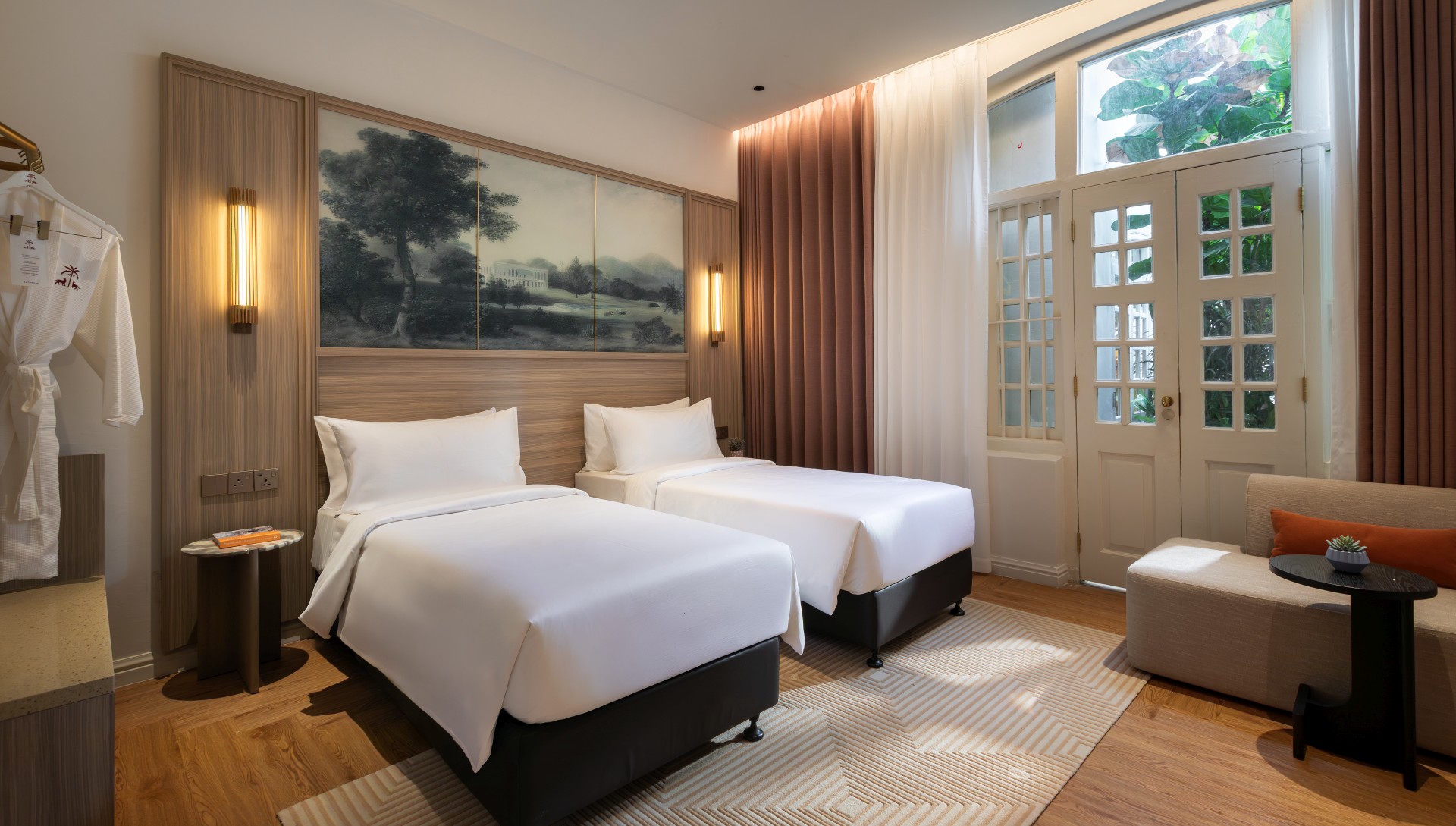
Since George Town earned UNESCO World Heritage Site recognition alongside Melaka in 2008, Penang’s capital has steadily transformed into one of Southeast Asia’s most compelling heritage tourism destinations. Beyond its famous hawker food, clan jetties, and shophouses, the island has also emerged as a showcase for thoughtful adaptive reuse, with some historic buildings being restored and given a second life as boutique hotels.
Yet while heritage conservation remains central to Penang’s tourism identity, the island’s hotel scene is no longer focused solely on preserving the past. New openings increasingly combine restoration with wellness, contemporary design, gastronomy, and experiential travel, creating accommodations that appeal as much to modern luxury travellers as to heritage enthusiasts.
From colonial-era mansions and Arts and Crafts terrace houses to a revitalized centenary landmark and even a modern wellness retreat on the mainland, these standout properties reflect the many different directions Penang hospitality is now taking.
THE QING SUITESFew buildings in Penang are as iconic as the famous Blue Mansion, the indigo-hued residence built in the late 19th century by merchant Cheong Fatt Tze, often called the “Rockefeller of the East.” Painstakingly restored in the 1990s under conservation architect Laurence Loh, the mansion later received UNESCO’s prestigious Most Excellent Project award under the Asia-Pacific Heritage Awards programme.
Directly opposite the mansion sits one of George Town’s newest heritage accommodations – The Qing Suites. Opened in late 2025, the boutique property occupies five restored terrace houses originally built in 1904 as servants’ quarters for the mansion household.
Led by Shen Loh-Lim, son of Laurence Loh, the restoration retained a remarkable amount of original material, including aged terracotta tiles, salvaged timber flooring, and reused clay roof tiles incorporated into garden courtyards. Decorative Chien Nien sculptural reliefs and Cai Hui painted detailing were completed by artisans who also worked on the Blue Mansion restoration.
The property’s 13 suites are divided into several categories, ranging from courtyard-facing Garden Suites to rooftop Terrace Suites. Interiors feature bespoke furniture crafted by Penang makers including Dad’s Wood and Pirates Studio, while black timber-framed windows preserve views towards the Blue Mansion itself.
Adding another layer of historical continuity is Virtue TCM, the on-site wellness space offering treatments rooted in Traditional Chinese Medicine, fittingly linked to the fact that Cheong Fatt Tze’s father was reportedly a TCM practitioner.
THE MILLEN PENANG, AUTOGRAPH COLLECTIONPenang’s famed Millionaire’s Row along Jalan Sultan Ahmad Shah – formerly Northam Road – has long been associated with colonial mansions and affluent merchant families. Today, one of the area’s most visible hospitality transformations is The Millen Penang, operating under Marriott’s Autograph Collection.
Occupying the former Northam All-Suite Hotel building, the property has undergone a major redesign under Kuala Lumpur-based Bluwater Studio. While the exterior now carries a polished modern appearance, the hotel still nods subtly to Penang’s layered history through curated artworks, locally inspired interiors, and references to the island’s colonial-era prestige. The overall effect is genuinely impressive, and The Millen is arguably one of Penang’s most design-forward hotels, blending modern luxury with plenty of nods to the storied past of the street on which it sits.
Rooms are notably spacious by Penang standards, beginning at 56 sq m and extending to expansive suites overlooking either the Straits of Malacca or Penang Hill. A stylish soaking tub set against a floor-to-ceiling window (with what we are assured is a strictly one-way view) is a highlight of every guest room. Neutral palettes are accented with dark wood and rich blue tones, while bathrooms feature those highly Instagrammable freestanding bathtubs and custom organic toiletries scented with nutmeg – once one of Penang’s defining export crops.
The hotel’s public spaces also function almost like a mini gallery. Pamela Tan’s Bloom Totem sculpture anchors the lobby, while works by artists including Aboud Fares, Loh Chee Peng, and Thomas Powell appear throughout the property.
Dining is another highlight. Good Society transitions from coffee salon to cocktail venue as the day progresses, while Lili focuses on Malaysian cuisine and, up on the hotel’s ninth floor, the upscale Blacklinen specializes in charcoal-grilled premium meats and seafood.
ARGUS RESIDENCETucked discreetly behind the historic Church of the Assumption on Farquhar Street, Argus Residence offers one of George Town’s more intimate heritage stay experiences.
The row of terrace houses dates to 1928 and was originally built for Eurasian Catholic families connected to the church community. Restored under the direction of hospitality entrepreneur Chris Ong, the project departs from his more Peranakan-focused properties such as Seven Terraces and instead embraces British colonial and Eurasian domestic influences.
Warm yellow façades reflect historically accurate colours once shared with the neighbouring church, while interiors blend Edwardian furnishings, William Morris fabrics, vintage record players, and salvaged architectural carvings sourced from old Penang buildings.
Each residence spans roughly 2,000 sq ft and can accommodate up to six guests, with separate bathroom pavilions, clawfoot bathtubs, and four-poster beds contributing to the nostalgic atmosphere.
The experience feels more like staying in a beautifully preserved private home than a conventional hotel, which is very much part of its appeal.
1926 HERITAGE HOTELAmong Penang’s newest openings, few properties perhaps capture the island’s ongoing heritage evolution as elegantly as the newly relaunched 1926 Heritage Hotel.
Located along Jalan Burma, the property marks its centenary in 2026 after an extensive restoration that carefully preserved much of its original architectural identity. Originally constructed in 1926 as official residences for British administrative officers, the compound now stands as both a luxury boutique hotel and a living piece of George Town’s colonial-era story.
The restoration, led by Singapore-based Office Of_, retained substantial portions of the original masonry, timber staircases, wrought-iron balustrades, and deep-set windows designed specifically for Penang’s tropical climate. The resulting atmosphere feels authentic rather than overly polished, striking a careful balance between conservation and modern hospitality.
The hotel’s understated white-and-beige façade reflects Anglo-Malay transitional architecture common during the late colonial period. Inside, grand double doors open into a reception space anchored by an intricate French-inspired straw marquetry feature wall depicting the hotel’s palm tree-and-panther emblem – a motif repeated throughout the property.
Guest rooms range from Heritage Rooms to the expansive Straits Suite, which includes separate living and study areas. One particularly attractive option is the Heritage Garden Patio Room, a 52 sq m ground-floor accommodation with a private outdoor patio and direct pool access framed by greenery.
What sets 1926 Heritage Hotel apart, however, is how thoroughly it integrates Penang’s wider cultural environment into the guest experience. Situated near Nagore Square, Lorong Burma’s temples, and the creative enclave of Hin Bus Depot, the hotel encourages visitors to explore the surrounding neighbourhood rather than remain isolated within the property itself.
Dining also forms an important part of the hotel. Root House by Gēn, the hotel’s Chinese bistro (gēn actually means ‘root’ in Chinese), is led by Chef Johnson Wong, whose acclaimed restaurant Gēn 根 returned to ‘Asia’s 50 Best Restaurants’ extended 51–100 list in 2026. Wong has become one of Penang’s most respected culinary names, routinely praised for elevating Malaysian ingredients and flavours while maintaining strong local identity.. Elsewhere, U-Bar offers relaxed drinks, while Heritage Collection by Daily Coffee serves casual all-day dining.
BERTAM WELLNESS SPA & VILLASNot every notable hospitality project in Penang revolves around colonial-era conservation. About 43 km from Penang International Airport in Kepala Batas, Bertam Wellness Spa & Villas offers an entirely different proposition, one that travellers looking for a holistic, restorative stay will find most appealing.
Part of Small Luxury Hotels of the World, the purpose-built retreat combines Moroccan riad-inspired architecture with tropical landscaping and wellness-focused programming. Lagoon-style water features, garden courtyards, and richly textured interiors create a tranquil atmosphere far removed from George Town’s bustle.
Accommodation ranges from Moroccan Villas with private pools and Jacuzzis to duplex Family Villas overlooking the lagoon. Wellness experiences include Ayurvedic rituals, sound healing, floating baths, salt chamber therapy, and even equine-assisted programmes.
The resort’s Zahraa restaurant further supports the wellness concept with menus built around organic produce and balanced dining options.
As Penang continues evolving as both a heritage destination and a modern tourism hub, properties such as these demonstrate how preservation and reinvention can coexist remarkably well. Whether travellers are seeking architectural nostalgia, wellness retreats, cultural immersion, or contemporary luxury, the island increasingly offers accommodations that tell stories every bit as compelling as the destination itself.
Unless otherwise noted, all photos are either the author’s own or have been provided courtesy of the respective hotels.
...


Read the fullstory
It's better on the More. News app
✅ It’s fast
✅ It’s easy to use
✅ It’s free