For Decades, Wives Paid A Mysterious Woman To Fix Their Marriage—Until A Guilt-Ridden Client Told Police All

10 hours ago
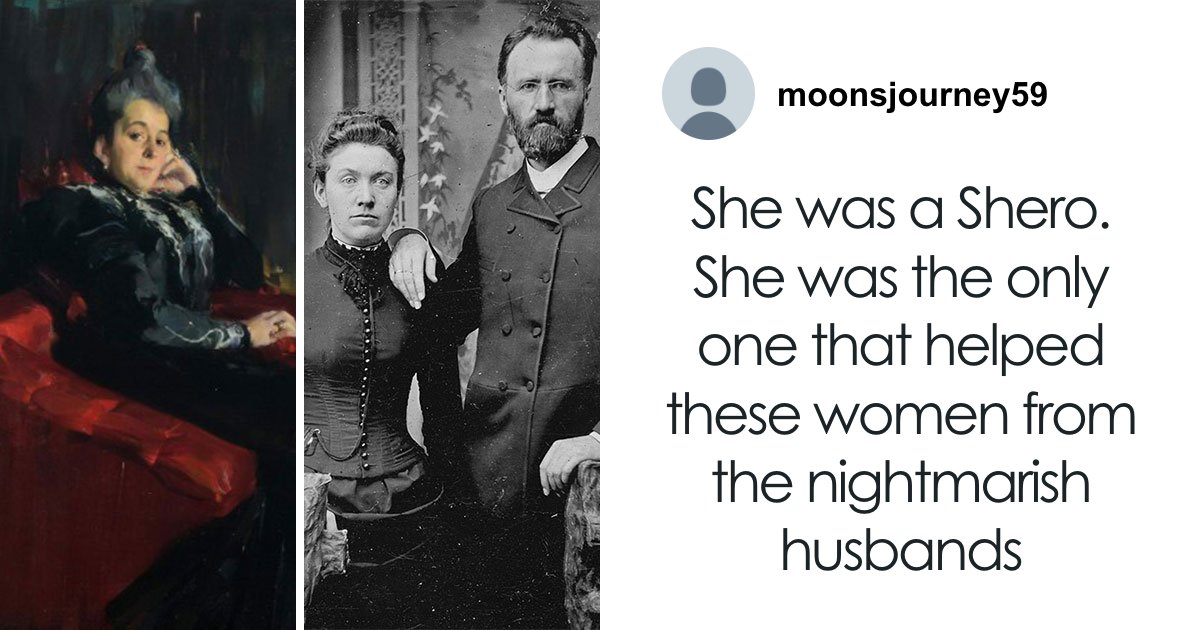
For nearly three decades, unhappy wives in late imperial Russia whispered the name of one woman when marriage had become unbearable.
She was known as Madame Popova.
The details of her early life are shrouded in mystery. Some accounts call her Alexe Katherina Popova, said to come from Samara, a city in the southwestern part of the country.
But what’s less contested is that by the late 19th century, Popova built a secret business around a brutal promise.
For a fee, she would “liberate” women from men they described as tyrants. Whether a client wanted to escape a violent marriage, was simply tired of her husband, or wanted access to inheritance money.
For the Madame, it made no difference.
Her method was quiet, cheap, terrifyingly effective, and was said to have taken the lives of 300 men.
Madame Popova’s business grew in a world where marriage could become a trapTo understand why the legend of Madame Popova took hold, it is necessary to begin with the world around her.
Late 19th-century Russia offered few easy exits for women trapped in violent or coercive marriages.
Divorce was possible in theory, but difficult in practice, shaped by church authority, class, cost, social stigma, and the burden of proof. In many households, a wife’s suffering was treated as a private family problem, not a legal matter.
The Madame presented herself, by later accounts, as a remedy for women who believed society had failed them. Her offer spread quietly through rumors and local contacts, not through any formal agency.
Moreover, Popova’s services were affordable, charging modest fees that the working class could pay. One early newspaper account said she took a nominal sum before the homicide and the remainder afterward.
According to some accounts, Madame Popova was not motivated solely by money. She also appeared to see herself as carrying out a mission, and her business model simply gave her a way to do it.
The victims were usually described as controlling husbands who subjected their wives to psychological and physical torment.
In custody, according to one account, Popova insisted she had done “excellent work in freeing unhappy wives from their tyrants.”
To her clients, she was a rescuer. To prosecutors, she was a serial criminal who had turned domestic misery into a business.
Odorless and tasteless, Arsenic gave the Madame an undetectable weaponOnce swallowed, inorganic arsenic is absorbed through the digestive tract and enters the bloodstream. From there, it spreads through the liver, kidneys, muscles, bones, skin, hair, nails, brain, and heart.
Inside the body, the element disrupts the systems cells use to produce energy. It interferes with key enzymes, damages blood vessels, increases fluid loss, and pushes organs toward collapse.
A large dose could make symptoms begin within 30 minutes to two hours. The victim could suffer severe nausea, vomiting, abdominal pain, diarrhea, dehydration, low blood pressure, confusion, seizures, coma, and organ failure.
In some cases, the victim would lose their lives within hours. In others, it could take days.
Popova’s method depended on the slower pattern.
Small repeated doses could make a man deteriorate over weeks or months. At first, the symptoms could look ordinary enough: indigestion, nausea, stomach pain. Then came worsening diarrhea, weight loss, muscle cramps, nerve pain, hair loss, and other symptoms until the victim perished.
To a 19th-century doctor, that could look like chronic stomach trouble, dysentery, tuberculosis, liver disease, or general debility.
That was the advantage.
Her method was said to begin with trust, visits, and arsenic hidden in ordinary drinksPopova’s method was simple enough to survive for years.
First, she found a marriage in crisis. Sometimes she approached the wife herself. Other times, the wife came to her through whispers, rumors, and women who already knew what the Madame was capable of.
Then came the most important part of the scheme.
Popova had to get close enough to the household for the husband to trust her.
She presented herself as a harmless social visitor, the kind of woman who could sit at a family table, share conversation, accept a drink, and wait for the moment when no one was watching.
Once inside, she could place her weapon of choice, arsenic, in food or drink and leave before suspicion had a chance to form.
Vodka became one of the easiest vehicles. A small dose of the toxin could disappear into a glass during an ordinary visit. If the husband fell ill afterward, his decline could be blamed on disease, drinking problems, bad food, or simple misfortune.
When the Madame could not enter the home herself, she gave the arsenic to the wife and explained how to use it.
That made the operation larger and harder to trace. Popova did not need to be present at every homicide. She only needed to supply the toxin, the instructions, and the confidence that the act would look natural.
A few days later, the Madame collected the rest of her fee.
After that, another wife came to her.
Her business survived for almost three decades.
By 1909, one client’s guilt finally brought police to Popova’s doorThe system collapsed, according to the best-known version of the story, because of guilt.
One of Popova’s clients had become a widow through the very service she had paid for. Her husband was gone, but the relief she expected never came. Instead, she was left with the knowledge of how he had passed away and who had made it happen.
In 1909, the woman went to the police.
Some versions say she first sent letters to authorities. Others say she made a direct confession after becoming overwhelmed by remorse. The oldest surviving newspaper version described her as a “conscience stricken” employer who made a full confession.
That was the first real break.
A squad of police was sent to Popova’s home in Samara. By then, she had built a fortune and tried to explain her wealth through a respectable cover story: buying inheritances and treating the sick with herbs.
That explanation collapsed once the client began talking.
Police arrested Popova and searched the property. The news moved quickly through the streets, and within a short time, a hostile crowd of hundreds of people had gathered outside.
They did not want to wait for a trial.
The crowd wanted Popova handed over to them to be brutalized and burned in public.
Police held the crowd back, but failed. Soldiers had to get involved in order to disperse them.
In a single day, the secrecy that had protected Popova for decades disappeared. The woman once whispered about as a solution for desperate wives had become a public monster, surrounded by people who wanted her head.
Once arrested the Madame remained prideful, defending the homicides as just acts of mercyPopova did not waste time denying what she had done.
Once she was in custody, she admitted to the homicides and tried to frame them as justice. Her argument was not that the men deserved to perish because they had made women suffer, using the power their positions as husbands gave them at the time.
She said she targeted men who treated their wives like slaves and described the homicides as “acts of charity.”
The Madame presented herself as useful. In her mind, every husband gone meant one less woman trapped in misery.
The same idea appeared in one of the most chilling quotes attributed to her: she said she had done “excellent work” freeing unhappy wives from tyrants.
Popova’s justification did little to sway the authorities. In their eyes, her crimes sat at the intersection of domestic violence, gender power, poverty, and revenge.
The Madame exploited the social fabric that left many women trapped, then turned that desperation into a business. She claimed she was defending women from cruel husbands, but she accepted payment from any client who wanted a husband gone.
Some clients may have been trapped with violent husbands. Others wanted inheritance money, freedom from a marriage they no longer wanted, or revenge for an affair.
Popova accepted them all.
The number of victims became part of the mystery, with 300 repeated but not fully provenThe most famous claim about Madame Popova is also the most uncertain.
Many modern true-crime summaries say she was responsible for more than 300 fatalities between 1879 and 1909. That number appears in lists of prolific criminals and in retellings of the case.
However, the record is not as firm as the number suggests.
Some accounts say Popova admitted to about 40 homicides. The 1909 newspaper report stated that authorities believed she had ended more than 300 men over 30 years.
The alleged scale also explains why investigators struggled to identify all the women involved.
By the time Popova was exposed, many of her clients could not be found. Some had passed away. Others had moved far from home, often without giving any clear indication of where they had gone.
Authorities believe the case going public also led many of her clients to erase their tracks.
Popova was the center of the story, but she was not the only person implicated by the logic of the crimes.
Every woman who hired her had helped set a homicide in motion.
The trial moved quickly, and the woman once known as Madame Popova was given capital punishment in 1909The incident took place in 1909 in Saint Petersburg, by firing squad. She was reportedly unrepentant until the end.
Popova’s passing closed the criminal case, but not the legend.
In 1998, Ronald M. Holmes and Stephen T. Holmes included her in Contemporary Perspectives on Serial Murder as part of their discussion of female serial criminals.
A decade later, William R. Cullen’s Is Arsenic an Aphrodisiac?: The Sociochemistry of an Element gave her a dedicated entry.
Her name also appeared in broader true-crime collections. Tom Philbin and Michael Philbin included her in The Killer Book of True Crime in 2007, and Jane Yolen and Heidi E. Y. Stemple later featured her in Bad Girls: Sirens, Jezebels, Murderesses, Thieves, and Other Female Villains in 2013.
The case eventually reached the stage.
In 2014, Talie Melnyk brought Maison des Rêves, a one-woman show about Madame Alexe Popova, to The Paradise Factory in New York as part of the Planet Connections Theatre Festivity.
The production ran from May 14 to June 8 and centered on Popova as a “crusading” figure who avenged oppressed wives.
Three years later, writers Dre Torres and Alex Valdes turned her story into Popova, a crime-drama comic that imagined a group of women waging a violent war against oppressive men.
More recently, in 2025, Italian writer Antonella Ossorio gave Popova her most direct fictional treatment with La fame del suo cuore. I delitti di madame Popova, published by Neri Pozza Editore.
“She was a savior.” The legend of Madame Popova lives on to this day ...


Read the fullstory
It's better on the More. News app
✅ It’s fast
✅ It’s easy to use
✅ It’s free






.png)