US-Iran ceasefire deal nears as Washington and Tehran move towards post-war settlement
.png)
8 hours ago
DIPLOMATIC efforts to formally conclude the war between the United States and Iran appear to be entering their final stage, with officials from both countries indicating that a preliminary agreement could be signed within days despite continuing disagreements over Tehran’s nuclear future.
A senior United States administration official said Washington and Tehran had reached agreement on a draft memorandum of understanding and expected an initial accord to be finalised shortly, raising hopes that one of the most dangerous confrontations in the Gulf region in recent years may be approaching an end.
Iranian Foreign Minister Abbas Araqchi likewise acknowledged substantial progress in negotiations, although he cautioned that modifications to the text remained possible before any formal signing.
Seeking to frame the outcome as a strategic victory for Tehran, Araqchi declared that Iran had emerged strengthened despite the conflict.
"Iran is the winner of the war with the U.S.," Reuters quoted him saying on state television.
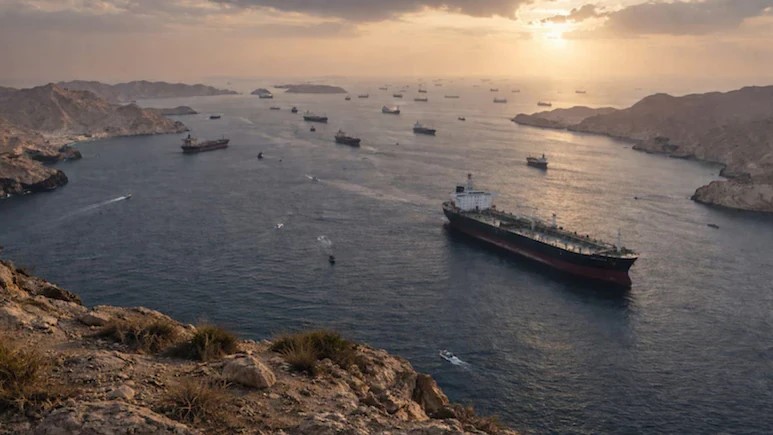
At the heart of the proposed agreement is the reopening of the Strait of Hormuz, one of the world's most important energy corridors and a maritime passage through which roughly one-fifth of global oil and gas supplies traditionally transit.
According to sources familiar with the negotiations, the agreement would require Iran to restore access through the strait and permit the lifting of restrictions affecting maritime traffic, while the United States would begin easing economic pressure through the release of frozen Iranian assets and the suspension of selected sanctions targeting Iranian oil exports.
The arrangement would postpone the most contentious issue — Iran’s nuclear programme — to a subsequent round of negotiations expected to last 60 days.
The senior American official described the framework as meeting President Donald Trump’s principal objectives and said it placed negotiations "in a very, very good place."
However, competing accounts of the draft terms have already fuelled debate over whether the emerging agreement disproportionately favours Tehran.
Several diplomatic and regional sources suggested Iran would secure significant economic concessions while retaining leverage over key strategic issues, particularly its nuclear programme and regional influence.
Trump rejected reports suggesting the deal heavily favoured Iran, insisting some characterisations of the negotiations were inaccurate.
One of the most sensitive unresolved issues concerns Iran’s stockpile of highly enriched uranium.
The United States maintains that any final settlement must result in the dismantling of Iran’s nuclear weapons capability, including the destruction and removal of highly enriched uranium stockpiles under a strict international inspection regime.
Iran, however, continues to oppose the elimination of its nuclear infrastructure.
"For Tehran, the only preferred solution for its highly enriched uranium stockpile is down-blending the material," Araqchi said.
The proposed framework has also generated conflicting claims regarding wider concessions. Sources involved in discussions said the draft includes consideration of potential war reparations for Iran and may exclude longstanding American demands for restrictions on Tehran’s ballistic missile programme.
The White House disputed those accounts.
"None of their money released until they perform. Strait of Hormuz will be open. No Iran funding of terrorist groups," the senior U.S. official said.
"This is what they have agreed to. This is a performance-based deal."
Despite progress in the talks, security concerns remain acute.
Iranian media reported explosions and warning fire near Sirik Port and Qeshm Island along the Strait of Hormuz, with local authorities attributing the incidents to Iranian forces attempting to deter vessels from crossing waters without authorisation from the Revolutionary Guards’ naval command.
The developments underscored the fragile nature of the ceasefire process even as diplomats worked to finalise the agreement.
Diplomatic sources indicated that the accord could be signed as early as Sunday, potentially by United States Vice-President JD Vance and Iranian Parliament Speaker Mohammad Baqer Qalibaf.
Geneva has emerged as the leading candidate to host the signing ceremony, although Iranian officials suggested the agreement may instead be concluded remotely before a formal public announcement.
Notably absent from the negotiations is Israel, despite its central role in the conflict.
Prime Minister Benjamin Netanyahu has made clear that Israel is not a party to the memorandum and does not consider itself bound by the emerging arrangement.
The disagreement reflects broader tensions between Washington and Jerusalem that have surfaced in recent weeks, particularly over American efforts to reduce military activity across the region as part of a wider diplomatic strategy with Tehran.
Araqchi suggested the agreement could eventually contribute to ending hostilities in Lebanon and facilitate an Israeli withdrawal from occupied areas.
Israeli officials swiftly rejected that interpretation.
Israel’s defence minister stated that no withdrawal was planned, while a senior Israeli official said the country expected to retain full freedom of action against perceived security threats.
Financial markets reacted positively to signs of diplomatic progress.
Global equity markets advanced while oil prices fell sharply amid expectations that a reopening of the Strait of Hormuz would reduce risks to global energy supplies.
Brent crude dropped more than three per cent at one stage, reaching its lowest level in nearly two months.
The conflict has become an increasingly sensitive political issue for the Trump administration as rising fuel prices and concerns over economic stability weigh on public opinion ahead of the November midterm elections.
Some Republican lawmakers have privately expressed concern that prolonged military engagement could undermine the party’s electoral prospects, while others may struggle to support an agreement perceived as offering substantial concessions to Tehran.
The negotiations also revive long-standing disputes surrounding Iran’s nuclear programme, which has remained a source of international tension for more than a decade.
Tehran has consistently maintained that its nuclear activities are intended solely for peaceful purposes and points to the 2015 nuclear agreement negotiated under former President Barack Obama as evidence of its willingness to accept restrictions in exchange for sanctions relief.
That accord collapsed after Trump withdrew the United States from the agreement in 2018, prompting Iran to accelerate uranium enrichment and expand its stockpile of nuclear material.
The proposed post-war settlement now represents the most significant attempt since then to rebuild a framework for managing one of the world's most volatile geopolitical disputes while preventing a renewed military confrontation in the Gulf. - June 13, 2026
...


Read the fullstory
It's better on the More. News app
✅ It’s fast
✅ It’s easy to use
✅ It’s free