Wine Rules Are Made to Be Broken: Why Enjoyment Matters More Than Etiquette

9 hours ago
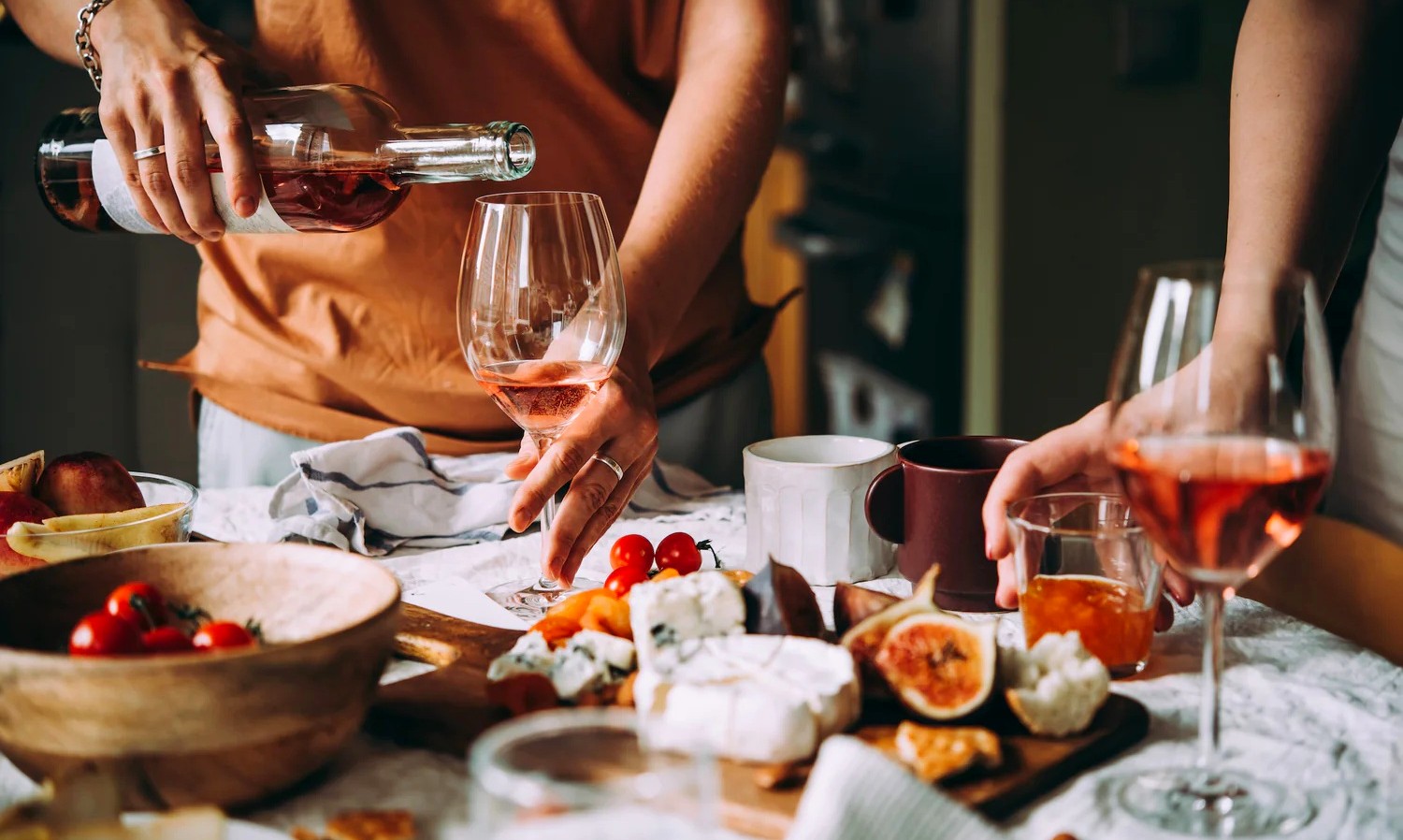
Wine has a curious ability to become simultaneously simpler and more complicated the more we learn about it.
Most people first fall in love with wine for wonderfully straightforward reasons. It tastes good. It sparks conversation. It encourages us to slow down and savour a moment. Yet somewhere along the journey, many drinkers encounter a seemingly endless list of rules. Red with meat, white with fish. Expensive equals better. Champagne belongs in a flute. Red wine must be served at room temperature.
Suddenly, something that should feel approachable starts resembling an examination.
Fortunately, many of today’s leading wine professionals are increasingly questioning these long-held beliefs. At the recent Food & Wine Classic in Aspen, award-winning sommelier June Rodil devoted an entire session to what she called “wine rules that deserve to be broken.” Her central message was refreshingly simple: if you love it, you’re probably doing it right.
As Rodil succinctly put it, and as covered in detail by Food & Wine magazine, wine should feel like joy, not homework.
RED WITH MEAT, WHITE WITH FISH? NOT NECESSARILYFew wine rules are as deeply ingrained as the idea that red wine belongs with meat while white wine accompanies fish and seafood. While the guideline can certainly work, it is hardly universal.
Rodil happily serves chilled reds alongside seafood and textured whites with steaks, believing that context and balance matter far more than colour.
Many sommeliers agree. Some argue that Champagne or mature White Burgundy often complements a richly marbled steak more effectively than a big, tannic red. The reason is fairly straightforward: acidity cuts through fat and refreshes the palate between bites.
Others suggest older Rieslings or Chenin Blanc with grilled beef. The combination may initially sound unconventional, but wines with vibrant acidity and developed aromatics can reveal flavours in food that traditional pairings sometimes miss.
Indeed, many classic European cuisines have long embraced pairings that would surprise rule-bound drinkers. In northern Italy, seafood is occasionally served with light reds, while regions of Germany have paired pork dishes with Riesling for generations.
Perhaps the real lesson is that flavour, texture, and personal preference matter infinitely more than whether the wine happens to be red or white.
CHILL YOUR REDSAnother long-standing wine myth centres on serving temperature.
Many people still insist that red wine should be served at room temperature. Unfortunately, modern room temperature bears little resemblance to the cool stone cellars where this guidance originated.
Historically, European homes often sat between 14°C and 18°C. In Malaysia, however, room temperatures can easily exceed 28°C.
At those temperatures, red wines can become unpleasantly alcoholic, heavy, and unbalanced.
Wine educator Anthony Giglio has spent years trying to correct this misconception. If a red wine is slightly overchilled, he points out, it will gradually warm up in the glass. But a red served too warm rarely improves.
Lighter-bodied reds such as Pinot Noir, Gamay, Beaujolais, and many Grenache-based wines can be especially delightful after 20 to 30 minutes in the refrigerator. Even fuller-bodied reds often benefit from a brief chill.
In warmer climates, some wine professionals admit they chill virtually all their reds.
We confess to doing much the same. During Malaysia’s tropical evenings, a slightly cool glass of red often tastes considerably fresher and more vibrant than one served at ambient temperature.
PRICE IS NOT A TASTING NOTEWine prices can vary wildly. One bottle might cost RM40, while another can easily exceed RM1,000. Naturally, many people assume the more expensive bottle must be better.
The reality is considerably more complicated.
Price often reflects factors entirely unrelated to quality. Small-production wineries generally charge more because they produce fewer bottles. Vineyard land in prestigious regions commands enormous prices. Marketing, packaging, age, scarcity, and international demand all influence cost.
None of this guarantees greater enjoyment.
Many wine educators repeatedly observe consumers feeling almost guilty about enjoying an inexpensive bottle. Others believe an expensive wine somehow demands a sophisticated meal or special occasion.
Neither assumption is particularly helpful.
Some remarkably affordable wines consistently outperform expectations, while some prestigious labels occasionally fail to justify their lofty prices.
Delicious is delicious.
Ultimately, the best wine is the one you genuinely enjoy drinking, regardless of what appears on the price tag.
YOU PROBABLY DON’T NEED TO DECANT EVERYTHINGFew wine rituals seem more sophisticated than decanting.
Pouring wine into an elegant crystal vessel undoubtedly looks impressive, and certain wines genuinely benefit from aeration. Young, tightly wound reds can soften and open beautifully with exposure to air.
However, many wines do not require the treatment.
Some sommeliers prefer simply opening a bottle and allowing it to rest for a short period before pouring.
Older wines deserve particular care. Mature wines often possess delicate aromas that can dissipate quickly when exposed to excessive oxygen. In some cases, vigorous decanting may actually shorten the period during which the wine tastes its best.
As with many aspects of wine appreciation, context matters.
A robust young Cabernet Sauvignon may welcome some breathing time. A graceful, older Burgundy might prefer a gentler approach.
There is no universal answer.
CHAMPAGNE DESERVES MORE THAN A FLUTEFew images are more closely associated with celebration than Champagne served in a tall, narrow flute.
Yet many wine professionals have largely abandoned the practice.
The problem is simple. Flutes showcase bubbles beautifully, but they restrict aromas.
Champagne is one of the world’s most complex wines. Beyond its effervescence lie aromas of brioche, citrus, orchard fruits, toasted nuts, minerals, and sometimes even mushrooms and honey.
A narrow flute struggles to reveal these nuances.
Many sommeliers now favour white wine glasses for Champagne. The wider bowl allows aromas to develop while still preserving the wine’s lively effervescence.
Some experts have become positively militant about eliminating flutes altogether.
At home, however, there is little reason to become overly precious about stemware. One respected sommelier even joked that a jelly jar can be perfectly acceptable.
The glass matters far less than the company, the occasion, and the enjoyment it brings.
THE ONLY RULE THAT REALLY MATTERSAfter centuries of traditions and conventions, perhaps the most valuable wine advice is also the simplest.
Seek balance. Stay curious. Experiment.
Try Riesling with steak. Chill your reds. Drink affordable wines proudly. Serve Champagne in a white wine glass if you prefer.
Most importantly, trust your own palate.
Wine should expand our horizons, not narrow them. It should encourage exploration rather than create anxiety. Every bottle represents an opportunity to discover something new, whether that means finding an unexpected food pairing, exploring an unfamiliar grape variety, or simply realising that your favourite wine breaks several so-called rules.
Because in the end, if a wine makes you smile and reach for another sip, chances are you’ve gotten it exactly right.
Sources: Food & Wine; Food & Wine Classic in Aspen; Business Insider; GuildSomm; interviews and commentary from June Rodil, Anthony Giglio, Victoria James, Thatcher Baker-Briggs, Jonathan Eichholz, Samantha Capaldi, and Jon McDaniel.
...


Read the fullstory
It's better on the More. News app
✅ It’s fast
✅ It’s easy to use
✅ It’s free