Understanding the Saree: A Beginner’s Guide to Malaysia’s Living Textile Traditions

8 hours ago
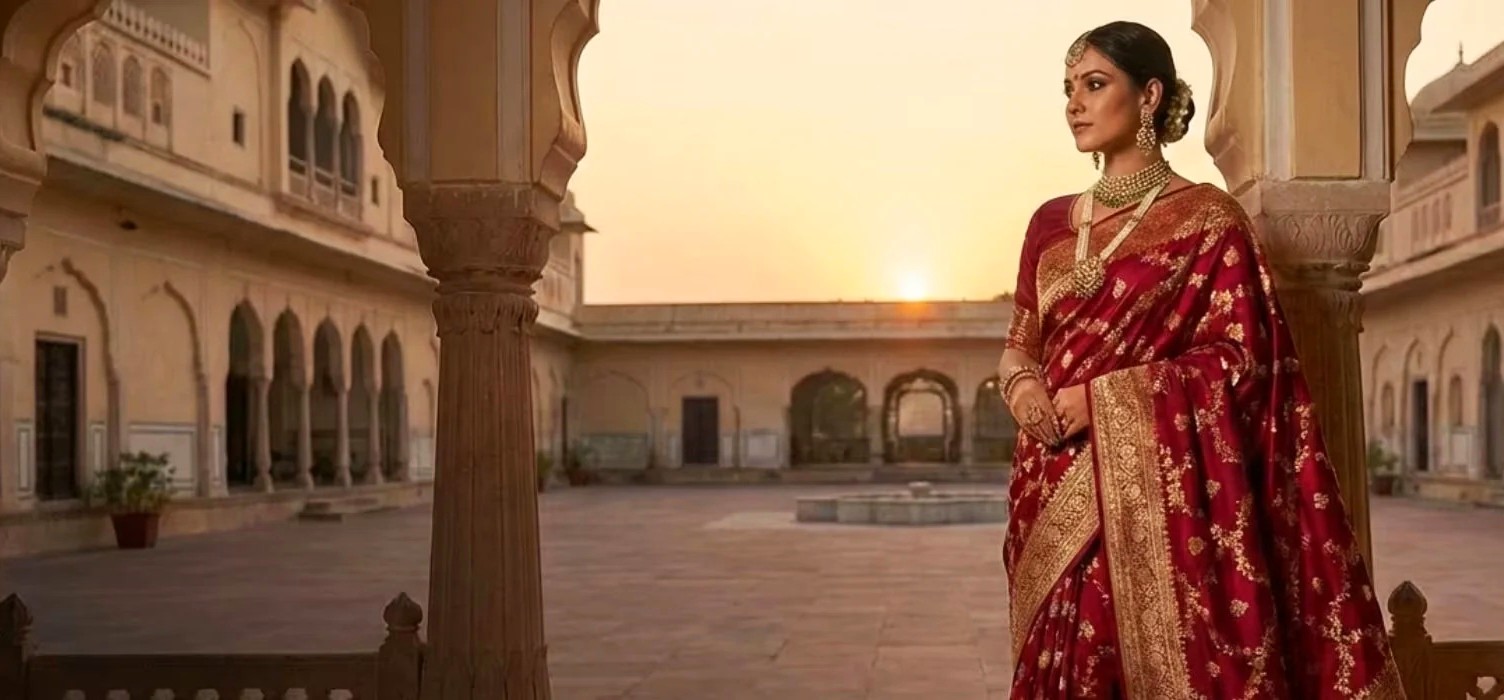
This post contributed by Manjeet Dhillon
I’d decided that if I was going to keep writing about the people who hold this city together, I ought to be able to look at a saree and know, at a glance, what it was telling me. That felt like a reasonable, containable goal. I was wrong about the containable part within about four minutes.
The woman who eventually took pity on me, I’ll call her Kalaivani, because that’s close enough to what she introduced herself as before the shop got busy, and asked me a single question: Not what do you want to know, but what was it for?
She’d clearly had this conversation before. I told her the truth – that I lead orientation sessions for newcomers to KL, who are always asking about the sarees they admire on the street but don’t know what to ask for. Something in her posture changed.
JUST A CLOTH?She pulled two stools out from behind the counter and asked me one question: did I want to know about the drape, or the saree itself, or the whole idea of it? She gestured at the shop as she said it, the shelves, the fifty years of family business behind her, as if these were three distinct things, which, it turned out, they were.
A saree, she explained, laying a length of unstitched cotton across the counter between us, is just a cloth: five, seven, sometimes nine yards of it, no seam, no button, nothing holding it to your body except tucks, weight, and what she called, without a trace of irony, “years of practice you don’t get from YouTube.”
She ran her finger along the loose end. “Pallu,” she said. “This is where the weaver puts everything they’ve got.” She flipped it over to show me the border running the length of the fabric, its width, its pattern, apparently a kind of signature that tells you which tradition made it before you’ve even looked at the pallu, and then pointed to the finished edge, the selvedge, so the whole thing wouldn’t fray into ribbons the first time you washed it.
At the waist, she said, it all gets folded into pleats and tucked into a petticoat, which is doing more structural work than any other single garment I have ever worn.
“And the blouse is separate,” she added, holding up half a metre of matching silk. “Always separate. Always fitted. We have a tailor in the back for exactly this reason.”
I asked her to show me how to wear a saree, and she laughed, not unkindly, and told me that was the wrong question for a Saturday afternoon in a shop with four other customers waiting. What she could show me was the shape it makes: cloth tucked at the waist, pleats fanning forward like the folds of a paper fan, the pallu thrown back over the left shoulder to catch the air when you walk.
Nivi style, she said, the one you’ll see on nine out of ten women on this street, dominant across the Tamil and Telugu communities that make up most of her customers.
“There’s one other drape,” she added, almost as an afterthought, “but you won’t see it here. You’ll see it on a stage.”
She meant the Bharatanatyam dancers, whose front pleats are stitched flat and fanned into a stiff panel that opens like a hand fan when the dancer bends her knees, the cloth beneath tucked between the legs into something closer to trousers than a skirt.
“Made for movement,” she said. “Ours is made for elegance that isn’t in a hurry.”
THE LANGUAGE OF SAREESMy eyes kept drifting back to one saree, a deep crimson body with an emerald border.
“Kanjivaram,” Kalaivani said, before I’d even asked.
She explained that the Kanjivaram’s border is woven separately on the loom and then interlocked into the body afterward, which is why it sits slightly raised, why the line between border and field looks cut rather than blended. She held it up to the light so I could see the gold thread running through it, zari, she said, the single biggest thing that decides what a saree like this costs.
Real zari, gold or silver worked into the border and pallu, turns a saree into an heirloom. Some of what she had in the back, she told me, would outlive her.
She walked me through the motifs like she was reading a language I’d been staring at without understanding my whole life. The mango-shaped paisley, keri, she called it, curling across a border. Rows of stylised temple towers along a hem, which she said marks a saree meant for religious or ceremonial wear, not a wedding reception but the actual ceremony. Peacocks, lotus flowers, small geometric checks that, she said, if I asked the right elderly aunty, would tell her exactly which weaving village near Kanchipuram it came from.
And then the colour, which turned out to be doing more work than I’d assumed. Red is the bridal colour, she said. White meant mourning. Jewel tones like peacock blue and deep purple were kept for festivals: Deepavali, ear-piercing ceremonies, the kind of formal occasion where everyone is quietly being sized up by everyone else’s mother.
At one point, I asked how much of what she’d just told me about Tamil weaving carried over to Telugu families too, a different South Indian community – as I genuinely didn’t know where the line sat.
Kalaivani smiled. “Different traditions,” she said.
The Telugu families who shop here, she said, have their own textiles entirely: Pochampally sarees, woven with a tie-dye technique called ikat that gives the pattern a soft, deliberately blurred edge, and Gadwal sarees, which pair a light cotton body with a Kanjivaram-style silk border, cooler to wear, popular for daytime functions where nobody wants to melt by noon.
For Kerala-style sarees, she said, I’d need a different shop entirely, and pointed me three doors down without moving from her stool.
The palette shift was immediate and almost startling after the crimson and emerald I’d just been sitting in: off-white cotton and silk, broken only by a single line of pure gold zari along the border.
Restraint as the entire design philosophy, the shopkeeper there told me. She shared that it descends from an older two-piece garment, the mundum neriyathum, one cloth wrapped around the lower body and a second draped from hip to shoulder, until at some point someone stitched the idea into a single length and gave it the shape of a saree without quite becoming one.
By the time I left, I could stand on the street and feel my eyes darting toward every pattern in sight at the shopfronts, mannequins in sarees, as if it were a code I could now proudly decipher.
Three hours of education, and I felt like quite the accomplished Sherlock.
This article appeared in the August 2026 edition of The Expat magazine.
...


Read the fullstory
It's better on the More. News app
✅ It’s fast
✅ It’s easy to use
✅ It’s free






.png)