The haze is back, yet again. So why aren’t we better prepared?

7 hours ago
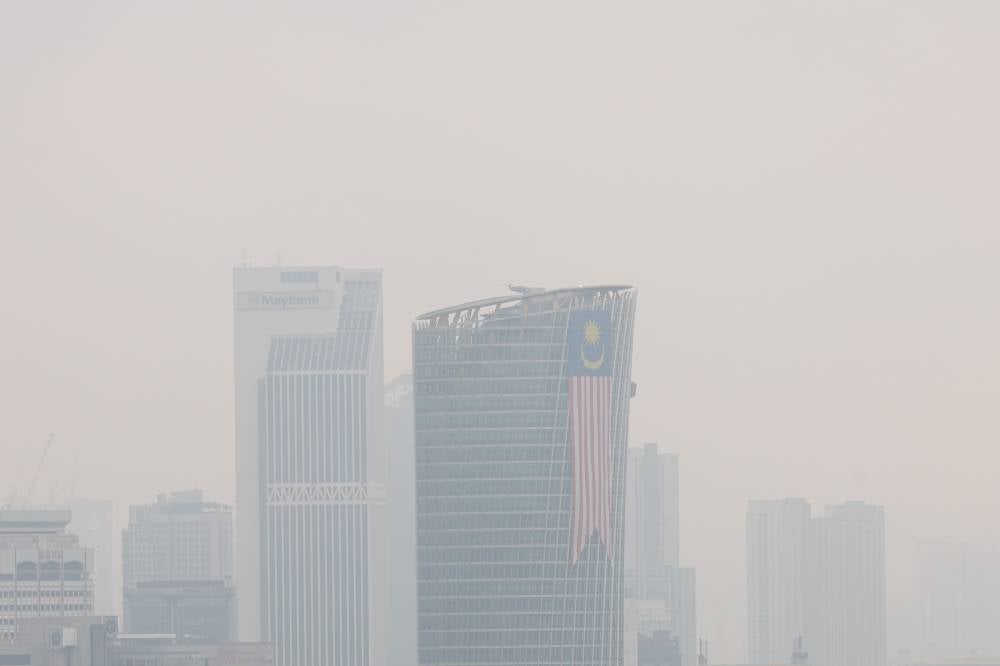
LIKE an unwelcome annual visitor, the haze is back, bringing with it deteriorating air quality across the region.
Schools have closed in parts of Sarawak. Parents are once again checking Air Pollution Index readings before sending their children outdoors. Masks are reappearing and respiratory clinics are seeing more patients.
Across the region, governments are once again issuing familiar assurances that the situation is being closely monitored.
The question we should be asking is not why the haze has returned. The more important question is why, after decades of dealing with this problem, we are still struggling to prevent it.
The current haze is linked to forest and peatland fires in parts of Indonesia, worsened by dry conditions associated with El Niño and the Southwest Monsoon.
Prevailing winds carry the smoke across borders into Malaysia and neighbouring countries.
What is striking is that none of this came as a surprise.
As early as August, the Asean Specialised Meteorological Centre activated Alert Level 2 for the southern Asean region, warning that dry weather, increasing hotspots and strengthening El Niño conditions could heighten the risk of transboundary haze.
To be fair, governments are not doing nothing.
Indonesia has arrested suspects linked to forest and peat fires and is investigating companies believed to be involved in illegal land clearing. Firefighting aircraft, cloud-seeding operations and ground personnel have been deployed.
Malaysia, meanwhile, has raised the issue through Asean channels and called for stronger regional cooperation, enhanced hotspot surveillance and stricter enforcement against open burning — a call repeatedly made after every major haze incident.
These are necessary measures. But the real problem is that Southeast Asia still treats haze as a seasonal emergency rather than a chronic governance failure.
For more than two decades, Asean has had the Agreement on Transboundary Haze Pollution. It was supposed to provide a framework for cooperation and prevention. Yet whenever dry conditions intensify, the region finds itself battling the same crisis all over again.
The uncomfortable truth is that enforcement remains inconsistent. Illegal land clearing by fire remains attractive because it is cheap.
Peatlands continue to be drained and degraded, making them highly combustible during droughts.
Environmental laws exist, but penalties often arrive after the damage is done.
The gap, therefore, is not information. It is action.
We monitor hotspots, but do not always do enough to remove the incentives that create them.
We discuss regional cooperation, but lack sufficiently strong mechanisms to hold corporations and landowners accountable when pollution crosses borders.
And we continue to frame haze primarily as an environmental issue, when it is also a public health and economic one.
Every haze episode carries hidden costs — reduced productivity, higher healthcare spending, disrupted tourism, school closures, lost learning time and businesses affected by poor visibility and restrictions on outdoor activities.
These costs rarely make headlines, but they are substantial.
So, what needs to change?
First, prevention must become the priority.
Asean countries should set measurable annual targets for reducing hotspots, peatland fires and land-clearing by fire. Success should be measured not simply by how quickly fires are extinguished, but by how effectively they are prevented.
Second, polluters must pay — including across borders. Companies that knowingly cause or benefit from illegal burning should face meaningful financial penalties, loss of licences and restrictions on operating in the region. Where fires cause damage across national borders, Asean should explore mechanisms for establishing liability and compensation.
Third, peatlands need far greater protection. Governments should tighten controls on peatland conversion, restore degraded areas and invest in water-management systems that keep peatlands sufficiently wet during prolonged dry periods. Protecting peatlands is not simply an environmental measure; it is haze prevention.
Fourth, satellite technology should be used for enforcement, not merely detection.
Asean already has sophisticated systems capable of identifying hotspots. The next step is turning that information into evidence that can trigger rapid investigation. Authorities should be able to identify the responsible landowner, concession holder or operator and act swiftly.
Fifth, repeat offenders should face greater scrutiny. Companies repeatedly found responsible for fires or illegal land clearing should face tougher sanctions and, where appropriate, public disclosure. For businesses dependent on investors, customers and international markets, reputational consequences can be as powerful as financial penalties.
Sixth, Asean needs a permanent haze mechanism rather than repeatedly assembling a response after the smoke arrives. A standing cross-border mechanism involving environmental, forestry, agricultural, meteorological and enforcement agencies could focus on prevention and early intervention throughout the year.
Seventh, local communities need practical alternatives to burning. For some smallholders, fire remains the cheapest and fastest way to clear land. Governments need to provide affordable alternatives, equipment, technical assistance and incentives for zero-burning practices. Enforcement without viable alternatives risks simply shifting the problem elsewhere.
Finally, haze must be treated as a public-health and economic issue. Governments should have clear protocols for schools, outdoor workers, hospitals and vulnerable groups, triggered when air quality reaches specified thresholds.
They should also quantify the annual economic burden of haze. Once that cost is properly measured, investment in prevention becomes much harder to dismiss as an environmental expense.
The region likes to speak about sustainability and climate resilience. The haze is the test of whether those commitments mean anything.
The challenge is no longer a lack of knowledge. We have the forecasts, satellite surveillance, regional agreements and decades of experience.
What is missing is the political will to act on that knowledge.
Asean does not necessarily need another agreement. It needs to make the agreements it already has work — with clear targets, stronger enforcement and consequences for those responsible.
Until governments make prevention cheaper than burning and pollution more expensive than compliance, the haze will remain a recurring crisis rather than a preventable one.
...


Read the fullstory
It's better on the More. News app
✅ It’s fast
✅ It’s easy to use
✅ It’s free