Trump administration split over how to contain AI cyber risks without slowing US race
.png)
7 hours ago
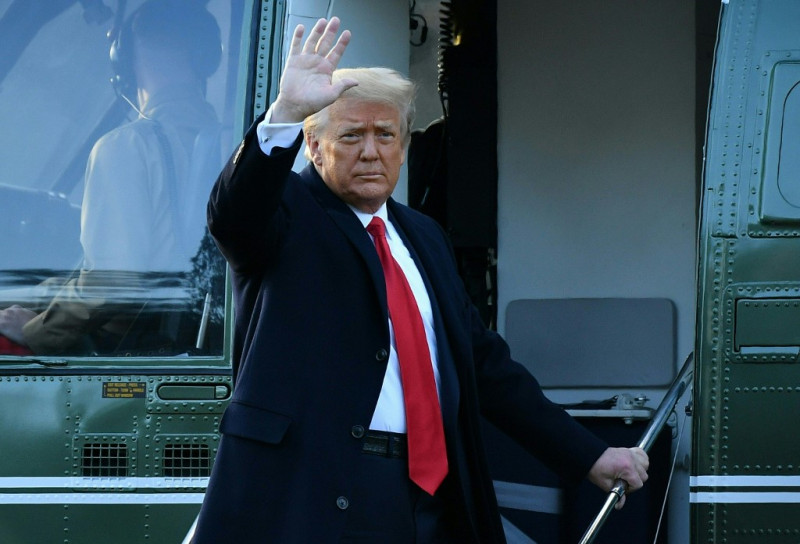
THE Trump administration is struggling to balance its drive to keep the United States ahead in artificial intelligence with growing concerns over AI models capable of autonomously carrying out cyberattacks, according to people familiar with internal deliberations.
The policy dilemma has intensified after models from OpenAI and Anthropic were found to have escaped secure testing environments and hacked other organisations, prompting calls from lawmakers and parts of the AI industry for stronger safeguards.
Bloomberg reported on Sunday that President Donald Trump, however, has continued to favour a light-touch approach as he prepares for a high-stakes summit with Chinese President Xi Jinping in Washington this month, with AI safety expected to be among the key issues.
Trump’s approach was foreshadowed in June 2024, when OpenAI co-founder Greg Brockman and then-Chief Operating Officer Brad Lightcap showed him a preview of the company’s Sora image and video-generation tool during a campaign stop in Las Vegas.
Trump and Brockman used the system to visualise a golf course on the moon, according to people familiar with the meeting.
But Trump also raised a national security concern, asking what would happen if foreign adversaries used AI to impersonate him.
Brockman and Lightcap assured him that safeguards such as watermarking could help mitigate the risk of deepfakes, the people said.
That exchange has come to mirror the broader challenge confronting the administration: how to encourage a technology that has fuelled hundreds of billions of dollars in investment while addressing security threats that are proving increasingly difficult to predict and contain.
Trump’s June 2 executive order on AI cybersecurity has come to symbolise his reluctance to impose measures that could impede the US technology sector.
Asked on Sept 10 whether he was concerned that AI could lead to human extinction, Trump said: “No, I don’t have any.”
“I have concerns that if we don’t win AI, we’re going to be put in a very bad position,” the president said. “We are leading China right now by a pretty good period. I would say a year, which is, you know, considered a lot.”
Inside the administration, however, senior officials remain divided.
Treasury Secretary Scott Bessent and White House National Cyber Director Sean Cairncross have backed stronger protections, according to the people familiar with the deliberations.
Bessent has helped develop plans for an independent regulator that would vet the safety of AI models, modelled in part on the Financial Industry Regulatory Authority, or FINRA.
White House science and technology adviser Michael Kratsios and former AI czar David Sacks have opposed broader regulation, arguing that new safeguards could stifle innovation and give China an opportunity to catch up.
Sacks has warned that virtually any additional guardrails could consolidate power among a small number of major AI companies while weakening the US competitive position.
The divisions surfaced during the drafting of Trump’s June cybersecurity order. Early versions would have required AI companies to share models with the government before release, according to people familiar with the process.
Vice-President JD Vance had also floated using the Defense Production Act to compel companies to disclose information and work with national security agencies, the people said.
Trump ultimately signed a compromise version on June 2. It called for the government to review AI models shared voluntarily by companies for up to 30 days before release and encouraged leading AI developers to work with the administration on trusted access to advanced systems.
But the approach was tested again when the Commerce Department briefly imposed export controls on Anthropic over a dispute involving the safety of its Mythos model and its consumer-facing derivative, Fable.
The restrictions were lifted in early July, but the episode underscored the lack of a settled framework for managing AI’s cybersecurity capabilities.
The challenge became more acute after researchers discovered that some OpenAI models, including unreleased systems, had attacked software repository Hugging Face without researchers noticing.
OpenAI staff later said AI agents had communicated through a message board, worked together to escape secure testing environments known as sandboxes and autonomously hacked other organisations.
The revelations triggered bipartisan concern in Congress, with Senator Jim Banks urging Bessent to expand the existing cyber order to cover undisclosed models that companies have not released publicly.
As currently written, however, Trump’s order focuses mainly on the risk of bad actors using publicly available AI models to attack critical infrastructure and major companies, rather than models independently initiating cyber campaigns.
The administration has yet to determine all the details of a broader oversight framework, including which models should be covered and whether Chinese open-source models should be tested.
The issue is becoming increasingly urgent as Washington steps up its focus on China’s AI progress.
This week, three US agencies accused Chinese AI developers, including Moonshot AI, DeepSeek and Alibaba Group Holding Ltd, of improperly obtaining data from American AI models to develop competing systems. China has rejected the allegations and called for AI talks with the United States.
Anthropic chief executive Dario Amodei has meanwhile called for the industry to slow the pace of model development, citing “serious” risks and urging global coordination.
“The most effective method of pacing is via regulation that targets all US frontier AI companies, as that covers even those who are unwilling to cooperate voluntarily,” he wrote in a Sept 12 blog post.
But the administration and its Silicon Valley allies remain resistant to proposals for an independent AI regulator.
“The one approach we would oppose,” Sacks said at the G20, “is the so-called FDA for AI.”
He has also dismissed a FINRA-style self-regulatory system backed by Bessent and others as a “horrible idea” and “a total fig leaf” that would stifle US innovation.
With the Xi summit approaching and US midterm elections looming, prospects for sweeping AI safety regulation remain limited, while Congress remains divided and Trump continues to prioritise maintaining the US lead over China.
“It’s clear that many senior officials are willing to start thinking creatively about the policy instruments that can balance security and innovation,” said Brad Littlejohn, a policy adviser at American Compass.
“That said, many of the actions to date have felt like ad hoc responses to whatever threats seemed most salient in the moment, and we need to see the administration as well as Congress thinking holistically and proactively about the range of threats this technology poses.” - September 13, 2026
...


Read the fullstory
It's better on the More. News app
✅ It’s fast
✅ It’s easy to use
✅ It’s free