When the customer learns to make it himself, the factory next door goes quiet
8 hours ago
A rocket company is now casting the hardest part inside a power plant. Behind that odd headline sits a shift in how the world makes things, and it does not favour a region built to be everyone's factory.
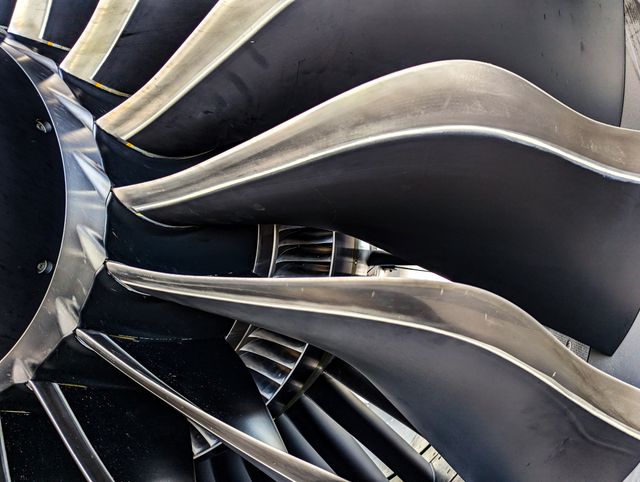
A rocket company recently decided to start making turbine blades.
Elon Musk confirmed on Aug 30 that SpaceX, his rocket and satellite firm, will build a foundry in Texas to cast the blades and vanes that sit inside large gas turbines. He called it a game-changer, and said making them himself could bring new turbines online up to 18 months faster.
On the face of it, this is a strange piece of news. Why would the company that lands rockets care about power-plant parts? Sit with it for a moment, though, and it tells you exactly where the world is heading. It is one of the clearest signals yet of a shift that reaches all the way down to us.
Here is the problem Musk is solving. The race to build artificial intelligence is no longer really about chips. Chips, the world can now turn out in weeks. The thing that has become scarce is electricity, and the machines that generate it. A data centre packed with the finest chips is useless without enormous, steady power, and that power increasingly comes from gas turbines. But turbines have a choke point, and it is small. The blades.
Turbine blades are among the hardest things on earth to manufacture. They sit in the hottest part of an engine and must survive conditions that would melt ordinary metal. A single batch can take 60 to 90 weeks to produce. By most counts, only about four companies in the world can cast them at industrial scale, and they are effectively sold out. One of the largest, GE Vernova, has reported an order backlog worth around US$176 billion, booked through the end of the decade. The Oak Ridge National Laboratory has described turbine waits stretching five to seven years.
So the most powerful companies of our age have run into a wall made of one small, stubborn part. And Musk’s answer is the oldest move in industry. If you cannot buy it, make it yourself.
That is the real story here, and it is far bigger than one billionaire.
For the last 30 years, the gospel of business ran the other way. Do not make what you can buy. Own nothing you can rent. Keep it lean, keep it global, hold no stock, and trust that somewhere, someone will always make the part cheaper than you can. That belief built the modern world. It also built us. Southeast Asia sold itself, brilliantly, as the place you outsource to. The world’s contract factory. The reliable someone at the far end of the supply chain.
Then came the shocks of this decade, and one lesson landed hard. A single missing part can cost you everything. So the pendulum is swinging back, from buying to making, from lean to owning, from trust to control. Musk casting his own blades is only the loudest example. The same mood is spreading through boardrooms everywhere.
Now, this is not magic, and I will not pretend it is. Owning the hard part means learning to make the hard part, and casting turbine blades takes years of testing before they can be trusted under real load. Musk may yet find that buying them was cheaper for a reason. Vertical integration, the clumsy name for making your own supplies, trades one danger, depending on others, for another, the sheer cost and difficulty of doing everything yourself. It is a bet, not a cure.
So what is the lesson for us?
Here is where I want to resist the easy line. The lazy version says Southeast Asia should build its own foundries too, own our own choke points, and there is a grain of truth in it.
But the harder, more honest reading points the other way, and we should sit with how uncomfortable it is.
When the richest companies on earth respond to scarcity by pulling work back inside their own walls, the model they are walking away from is ours. Our whole pitch to the world has been simple. Send us the work, we will do it cheaper.
That pitch only holds while the big players still want to hand work out. The moment they decide the crucial things are too important to trust to anyone else, and start making them in-house, the person at the cheap end of the chain quietly loses the one thing they had. Leverage.
We have spent decades competing to be the lowest bidder. We became very good at it. But the game may be changing under our feet, from who can make it cheapest, to who owns the thing that cannot be bought at any price. And on that board, cheap and willing is not a strong hand.
I do not have a tidy four-point plan to close this one, and I am wary of anyone who hands you one. This is not a pothole to be patched. It is a question about what a country is for, in an economy that is learning to need fewer middlemen, fewer suppliers, fewer of the exact role we built ourselves to fill.
So I will leave you with the question instead of an answer, because it is the one keeping me up.
A rocket company can now make a turbine blade. The largest buyers in the world are teaching themselves to need no seller.
What, then, is a region built to be everyone’s factory worth, in a world quietly deciding it would rather not have one?
That is the question. I do not think we have started asking it.
The views expressed here are the personal opinion of the writer and do not represent those of Twentytwo13.
...


Read the fullstory
It's better on the More. News app
✅ It’s fast
✅ It’s easy to use
✅ It’s free