P Protect Patch Introduces A Patch-Based P-Protect For Prostate Health Support

8 hours ago
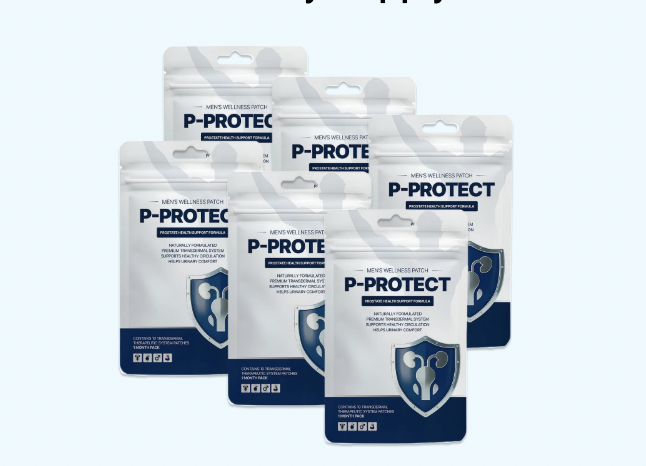
PProtect Patch introduces P-Protect a patch-based men’s wellness product, highlighting prostate health awareness, ingredient transparency, responsible use, and informed healthcare decisions.
Ogden, UT, Oct. 13, 2026 (GLOBE NEWSWIRE) — P Protect introduces P-Protect Patch, a patch-based product positioned within the men’s wellness category, bringing attention to an alternative format for individuals interested in personal wellness routines and prostate health. The product’s introduction highlights the role of product format, ingredient transparency, and responsible communication in discussions surrounding men’s health and dietary or wellness products.
Official Website: https://p-protect-patch.shop/
Prostate health is an important consideration for many men, particularly as they grow older. General awareness of prostate function, urinary health, and routine preventive care can help individuals make informed decisions about their well-being. At the same time, products marketed for prostate support require careful evaluation of their ingredients, intended use, available evidence, and compatibility with individual health needs.
P-Protect Patchenters this broader wellness conversation through a patch-based format. Information about its formulation, application instructions, and intended use should be reviewed through the product’s official labeling and accompanying documentation. Product-specific claims should be considered in light of the available evidence rather than assumed from the format or the name of the product.
Understanding Prostate Health
The prostate is a small gland in the male reproductive system located below the bladder and surrounding part of the urethra. It contributes fluid to semen and plays a role in reproductive function. Changes in prostate size and function can occur with age, although individual experiences vary considerably.
Several conditions may affect the prostate, including benign prostatic hyperplasia (BPH), prostatitis, and prostate cancer. These conditions have different causes, symptoms, diagnostic procedures, and treatment approaches. They should not be treated as interchangeable, and a general wellness product should not be assumed to address all of them.
BPH is a noncancerous enlargement of the prostate that may contribute to urinary symptoms. These can include a weak urine stream, difficulty beginning urination, frequent urination, waking during the night to urinate, or a sensation that the bladder has not emptied completely. Similar symptoms can also arise from other medical conditions.
P Protect Prostatitis refers to inflammation or other conditions affecting the prostate and may involve pelvic discomfort, urinary symptoms, or pain. Prostate cancer, meanwhile, can develop without noticeable symptoms during its early stages. The appropriate approach to prostate health therefore depends on a person’s medical history, symptoms, age, risk factors, and advice from a qualified healthcare professional.
A Patch-Based Product Format
P Protect Patch represents a patch-based format within the broader men’s wellness market. Products offered in patch form may be designed for application to the skin, but their intended use and method of delivery depend on the specific formulation and product design.
A patch’s appearance alone does not establish how its ingredients enter the body, how much of an ingredient may be absorbed, or whether the product produces a measurable physiological effect. Those questions depend on factors such as ingredient characteristics, formulation technology, application instructions, and supporting research.
For P-Protect Patch, consumers should consult the product label to establish the intended application site, recommended duration of use, ingredient list, and relevant precautions. Information about the amount of each ingredient, if provided, can also help consumers and healthcare professionals assess the formulation.
P Protect The distinction between a product’s intended purpose and its demonstrated effects is important. A product may be marketed within the prostate wellness category without having been shown in clinical trials to prevent, diagnose, treat, or cure a prostate condition. Product descriptions should make that distinction clear.
Ingredient Transparency and Product Information
Ingredient transparency is a central consideration when evaluating any wellness product. Clear labeling helps consumers understand what a product contains and gives healthcare professionals information that may be relevant when reviewing potential interactions, allergies, or other safety considerations.
For a patch-based product such as P-Protect Patch, useful documentation may include the complete ingredient list, the quantity of each active ingredient where applicable, other formulation components, application instructions, storage requirements, manufacturing information, and appropriate warnings.
No ingredient-specific efficacy claims should be attributed to the product without a verified formulation and appropriate supporting evidence. Similarly, statements about absorption through the skin, delivery rates, or sustained release require product-specific technical documentation rather than assumptions based on the use of a patch.
Consumers reviewing P-Protect Patch should look for accessible labeling and clear explanations of the product’s intended use. If details are unavailable or unclear, obtaining clarification from the manufacturer or a qualified healthcare professional is a reasonable step before use.
The Role of Evidence in Men’s Wellness
PProtect patch Health-related product information is most useful when it distinguishes between established medical knowledge, preliminary research, and claims that have not been adequately tested. This distinction is especially important in areas involving prostate function because several different conditions can produce overlapping symptoms.
Evidence supporting an ingredient in one form or at one dose does not automatically demonstrate that a different formulation will produce the same result. Research involving an oral supplement, for example, cannot by itself establish the effectiveness of a topical patch containing an ingredient. The delivery method, formulation, dose, and study population all matter.
PProtect A product-specific clinical assessment would generally need to examine the actual formulation and its intended use. Depending on the claims being considered, relevant evidence could include laboratory testing, safety assessments, studies of ingredient absorption, and appropriately designed clinical trials measuring meaningful outcomes.
For a product such as P-Protect Patch, statements that it improves urinary flow, reduces nighttime urination, changes prostate size, or prevents prostate disease should not be made unless supported by adequate evidence applicable to the finished product and the specific claim.
This evidence-based approach does not diminish the importance of consumer wellness choices. Instead, it provides a framework for evaluating those choices without confusing a product’s intended purpose with a medically established outcome.
Safety and Responsible Use
The safety of a wellness product depends on its ingredients, formulation, instructions, and the circumstances of the person using it. Products applied to the skin may cause local irritation or allergic reactions in some individuals. Depending on the formulation, additional precautions may be relevant.
Consumers should follow the product’s verified labeling and avoid applying a patch to irritated, damaged, or otherwise unsuitable skin unless its instructions specifically indicate that use is appropriate. They should also review any stated restrictions concerning application, duration, storage, and disposal.
People who take prescription medicines, use other supplements, have ongoing medical conditions, or have experienced reactions to topical products should discuss the product with a healthcare professional when appropriate. A pharmacist can also help review ingredient lists and identify potential concerns.
Particular care is warranted when urinary or prostate-related symptoms are present. A wellness product should not replace medical evaluation, prescribed treatment, or recommended screening discussions. Difficulty urinating, blood in the urine, persistent urinary changes, or recurring pelvic discomfort warrants professional assessment. An inability to urinate or urinary symptoms accompanied by fever and significant pain may require urgent medical attention.
These precautions are relevant regardless of whether a product is supplied as a patch, capsule, tablet, liquid, or another format.
Prostate Awareness and Routine Healthcare
P Protect Prostate health is best approached as part of an individual’s broader healthcare needs rather than as a single-product decision. Age, family history, medical conditions, and personal preferences may influence conversations about prostate cancer risk assessment and other aspects of care.
Healthcare professionals can explain which symptoms require investigation, whether testing is appropriate, and which management options may be suitable for a particular diagnosis. Depending on the condition, these options may include monitoring, lifestyle measures, medication, procedures, or other evidence-based interventions.
PProtect For urinary symptoms associated with an enlarged prostate, a clinician may review symptom severity, medical history, medicines, and possible alternative causes before recommending treatment. The appropriate management plan differs from the approach used for suspected infection, prostatitis, or prostate cancer.
Consumers should be cautious about claims that promise a universal solution for prostate concerns. Prostate-related symptoms have multiple possible causes, and a product that has not been adequately evaluated should not be presented as a substitute for diagnosis or individualized treatment.
Questions Consumers May Consider
When reviewing P-Protect Patch or another product in the men’s wellness category, several practical questions can help clarify what is known.
What is the product intended to do? The intended use should be stated clearly on the product label and supported by appropriate documentation.
What does the product contain? Consumers should be able to review the full ingredient list and any available quantities or relevant formulation details.
How is the patch intended to be used? The application site, duration, frequency, and precautions should come from verified product instructions.
What evidence supports the stated benefits? Claims about health outcomes should be evaluated against reliable research relevant to the actual finished product, rather than general references to wellness or isolated ingredient studies.
Are there potential safety concerns? A review of warnings, allergies, concurrent medicines, and relevant medical conditions can help inform an individual’s decision.
These questions encourage a more informed approach to wellness products and help separate verifiable product information from assumptions or generalized promotional statements.
About P-Protect Patch
P-Protect Patch is presented as a patch-based product associated with the men’s wellness and prostate health support category. Its formulation, ingredient quantities, directions for use, and product-specific evidence should be established through verified manufacturer documentation and the product’s official labeling.
Official Website: https://p-protect-patch.shop/
The introduction of a product in this category also highlights the importance of transparent information for consumers evaluating wellness options. Clear descriptions of formulation and intended use, alongside appropriate safety information and evidence-based claims, can support more informed discussions between consumers and healthcare professionals.
...


Read the fullstory
It's better on the More. News app
✅ It’s fast
✅ It’s easy to use
✅ It’s free