America's Midterm Elections: A Referendum on Trump, and a Warning to Washington

8 hours ago
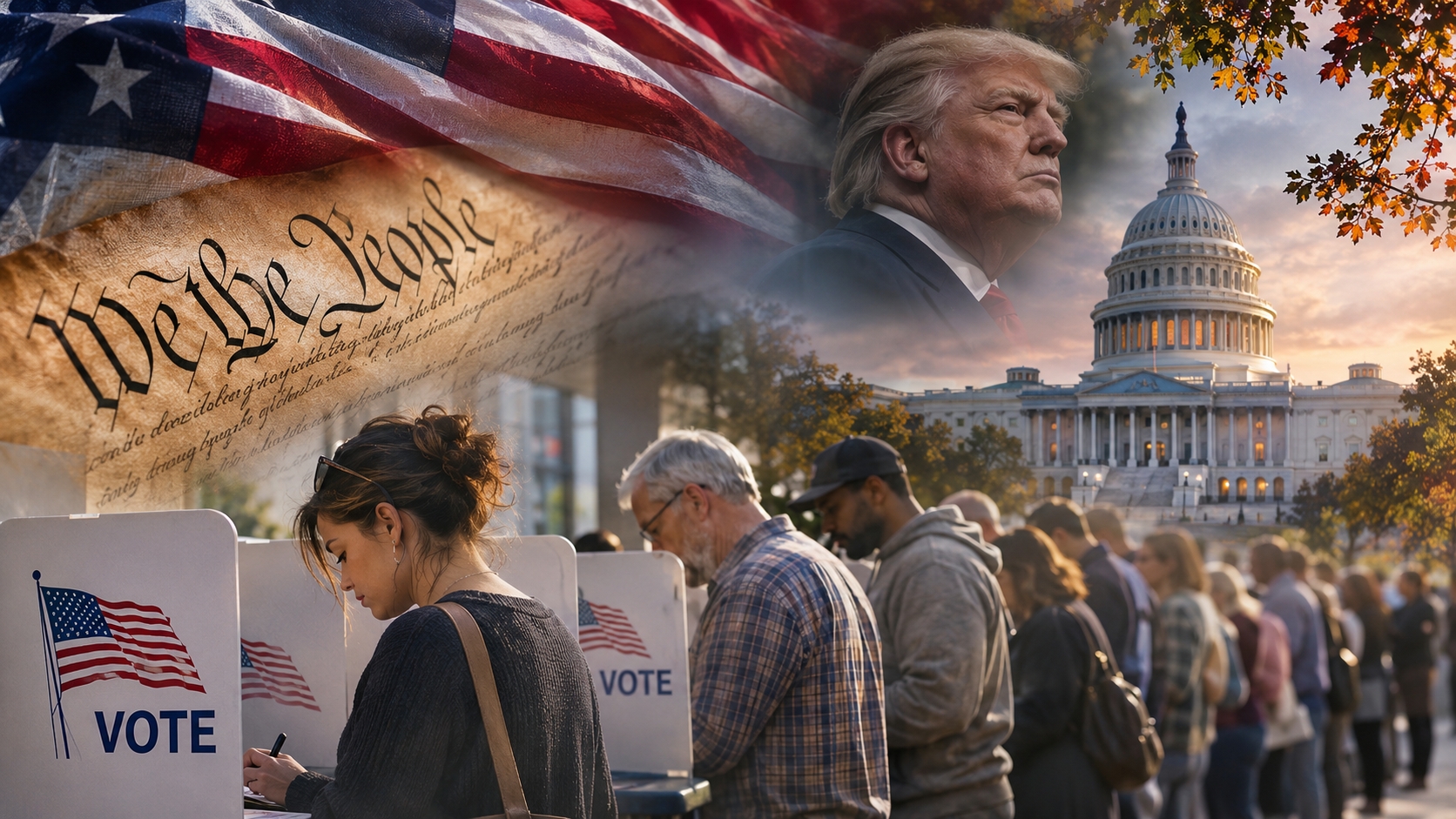
The American midterm elections have always been an important measure of public sentiment, but the 2026 contest carries considerably greater weight – for both the United States and the world – than the usual referendum on the party occupying the White House. After nearly two years of Donald Trump’s chaotic second administration, voters have been asked to assess not only the president’s performance, but the broader direction of the country – and whether the Republican Party deserves to retain control of the institutions that might restrain him.
The early results, which are just starting to come in on Tuesday night in the US (and Wednesday morning here in Malaysia) suggest that many Americans are deeply dissatisfied. Democrat Roy Cooper has captured North Carolina’s Senate seat, defeating Republican Michael Whatley and delivering a significant blow to the party that had been defending its congressional majority. In Georgia, Democratic Senator Jon Ossoff has won reelection, while Democrat Chris Pappas has taken New Hampshire. With further results still being counted, control of both chambers of Congress remains uncertain, but the initial returns have put Republicans on the defensive.
The outcome is being shaped by several overlapping concerns. The cost of living remains a persistent frustration, with households struggling to reconcile political promises with the high prices they encounter at the supermarket, petrol stations, and housing market. The administration’s disastrous handling of the economy has become a particular vulnerability. A Reuters/Ipsos poll published just before Election Day put Trump’s approval rating at 32%, close to the lowest level recorded during his political career. The same survey found that 78% of respondents considered the cost of living a very important or top voting issue.
There is also the question of the unpopular war in Iran, a conflict that has become a major liability for the White House. The joint US-Israeli military campaign, pursued under Trump and Israeli Prime Minister Benjamin Netanyahu, has drawn sustained opposition from a substantial majority of Americans. A University of Massachusetts Amherst poll in August found that 54% disapproved of US military action against Iran, while 68% disapproved of Trump’s handling of the conflict. A separate Economist/YouGov survey in September found that 60% disapproved of his approach. Other polls show that up to 71% of Americans do not approve of the war. These are not marginal disagreements over foreign policy. They reflect widespread unease about a war that many Americans believe their country should never have entered, particularly as its economic consequences are felt at home.
A PRESIDENT, A PARTY, AND A PUBLIC LOSING PATIENCETrump’s political difficulties extend beyond the economy and the Middle East. His administration has faced persistent criticism over conflicts of interest, the use of public office for private advantage, and the financial activities of people close to the president. Questions surrounding the Trump family’s business interests, including its cryptocurrency ventures, have become part of a wider debate about whether the normal boundaries separating public responsibility and private enrichment are being respected.
These concerns are not confined to Trump’s political opponents. A Financial Times and Focaldata survey conducted in October found that 69% of registered voters were concerned about corruption, self-dealing, and conflicts of interest in the administration. Nearly half of those surveyed believed corruption had worsened since Trump returned to office. The White House disputes accusations of wrongdoing, but the political damage is evident: even among people who supported Trump in 2024, concerns about the conduct of the administration are no longer easily dismissed.
The Republican Party also faces a familiar midterm problem, magnified by this president’s unusually dominant role in its political identity. Midterm elections typically favour the party outside the White House, as voters use the opportunity to express dissatisfaction without having to choose a new president. This time, however, the national mood appears exceedingly unfavorable to Republicans. The final polling averages showed Democrats with a substantial advantage on the generic congressional ballot – the question asking voters which party they would prefer to represent them in Congress. One widely followed average put that lead at nearly 12 percentage points, while the final Emerson College poll found Democrats ahead by 10 points.
In a country where electoral races are frequently decided by razor-thin margins, a 10- to 12-point lead for one party is immense.
Polling is not an election result, of course, and national preferences do not translate neatly into individual congressional races. Nevertheless, the consistency of the Democratic advantage across a broad range of surveys and polls has been difficult to ignore. The early results now provide some tangible evidence of that discontent, although the final balance of power will depend on a large number of still-contested races. Many outcomes will be known within a day of the polls closing, but some races may not be called for several days.
WHY CONTROL OF CONGRESS MATTERSFor international readers, it is worth understanding why the prospect of Democrats taking control of Congress matters so much. The United States does not operate under a parliamentary system in which the government is simply the party or coalition holding a legislative majority. It has three separate branches of government: the executive, headed by the president; the legislative, comprising two chambers of Congress – the House of Representatives and the Senate; and the judicial, headed by the Supreme Court.
The president directs the executive branch, appoints senior officials (typically with Senate confirmation), and sets much of the administration’s policy agenda. But Congress controls federal legislation and government spending, confirms many senior appointments, and has constitutional responsibility for overseeing the executive. That division of power is central to the American system of checks and balances.
The House and Senate each have their own committees, which can summon officials, demand documents, hold public hearings, and investigate the conduct of government agencies and senior officeholders. Congressional subpoenas are legally enforceable, although disputes over executive privilege, national security, and compliance can lead to lengthy legal battles. A party controlling a chamber also controls its committee leadership and agenda, giving it considerable influence over which investigations receive attention and resources.
The problem, as seen by a majority of Americans, is that the Republican-controlled Congress has become little more than a rubber stamp for the Trump administration, rather than any sort of meaningful check on executive power. Whatever Trump wants, the Republicans in Congress will provide – largely out of self-preservational fear of incurring the president’s wrath and having him turn his supporters on them. Several prominent Republicans of conscience have been primaried and voted out of office because they did not sufficientily toe the line of fealty to the president. Other Republicans watched in real time, of course, and so nearly all of them have been cowed into submission. This has allowed Trump and his administration nearly unchecked power to do as they please, which is not the way the government of the United States was ever intended to function.
If Democrats secure majorities in both chambers, the consequences for the Trump administration could be substantial. With control over the House and the Senate, Democrats would have the power to launch wide-ranging investigations into issues that have become important to voters, including alleged conflicts of interest, the administration’s handling of the Iran war, federal spending, immigration enforcement, and the conduct of senior officials. They could compel testimony and documents through committee processes and subpoenas, subject to the usual legal constraints, and make the administration answer difficult questions in public.
A Democratic-controlled Congress could also obstruct or entirely reshape parts of Trump’s agenda, scrutinize executive spending, and use its confirmation and oversight powers to impose greater accountability. It would not, however, be able simply to remove the president or reverse every executive decision. Legislation still requires presidential approval or sufficient votes to override a veto, while impeachment requires a House majority and conviction by a two-thirds Senate vote in order to remove a president. So while congressional control can make a presidency considerably more difficult to manage, and serve as an effective check on power, it does not transfer executive authority to the opposition. The office of the presidency still wields considerable power, regardless of which party controls Congress.
THE CONSEQUENCES BEYOND AMERICA’S SHORESThe implications are not limited to Washington. American political decisions have direct consequences for countries across Southeast Asia, where trade, investment, security, and diplomatic relationships are closely tied to the United States.
A change in congressional control would likely bring renewed scrutiny of Trump’s tariff policies and their effects on regional exporters, including manufacturers in Malaysia, Vietnam, Thailand, and Indonesia. Congress has a role in trade legislation and oversight, although the president retains some powers over tariffs under existing laws. A more assertive opposition could also examine the administration’s approach to regional security, its commitments to partners in the Indo-Pacific, and the balance between engagement with Southeast Asian governments and strategic competition with China.
There may also be greater congressional attention to Myanmar, human rights, maritime security in the South China Sea, and US development assistance. Such issues are not guaranteed to become immediate priorities, and a Democratic majority would not necessarily produce a wholesale reversal of American foreign policy in short order. But congressional hearings, appropriations decisions, and pressure on the administration can all influence how Washington engages with the region.
For Malaysia and its neighbors, the stakes are fairly practical. American trade policy affects export markets and supply chains; US security commitments influence regional calculations; and the stability of the broader international system matters to countries whose prosperity depends on open trade and predictable relationships between major powers.
Ultimately, the midterms are a judgment on more than just the current president or one political party. They are a test of whether the American electorate believes the country’s present course is sustainable, and whether its institutions can still hold those in power accountable. Trump’s supporters, though a minority of the electorate, remain a substantial political force, and the Republican Party is not about to disappear. But the election has exposed the depth of dissatisfaction with the administration’s performance, particularly over affordability, foreign policy, and ethical standards.
The key thing for international observers to understand is pretty straightforward: if Democrats take both chambers, the final two years of Trump’s presidency will look very different. If Republicans retain control, which is considered very unlikely (but not impossible), the president will have a considerably freer hand. Either way, the message from American voters will resonate far beyond the country’s borders. The United States, for better or worse, remains too influential for the rest of the world to treat its elections and its politics as someone else’s business.
...


Read the fullstory
It's better on the More. News app
✅ It’s fast
✅ It’s easy to use
✅ It’s free