Najib is home, Anwar pays political price

1 day ago
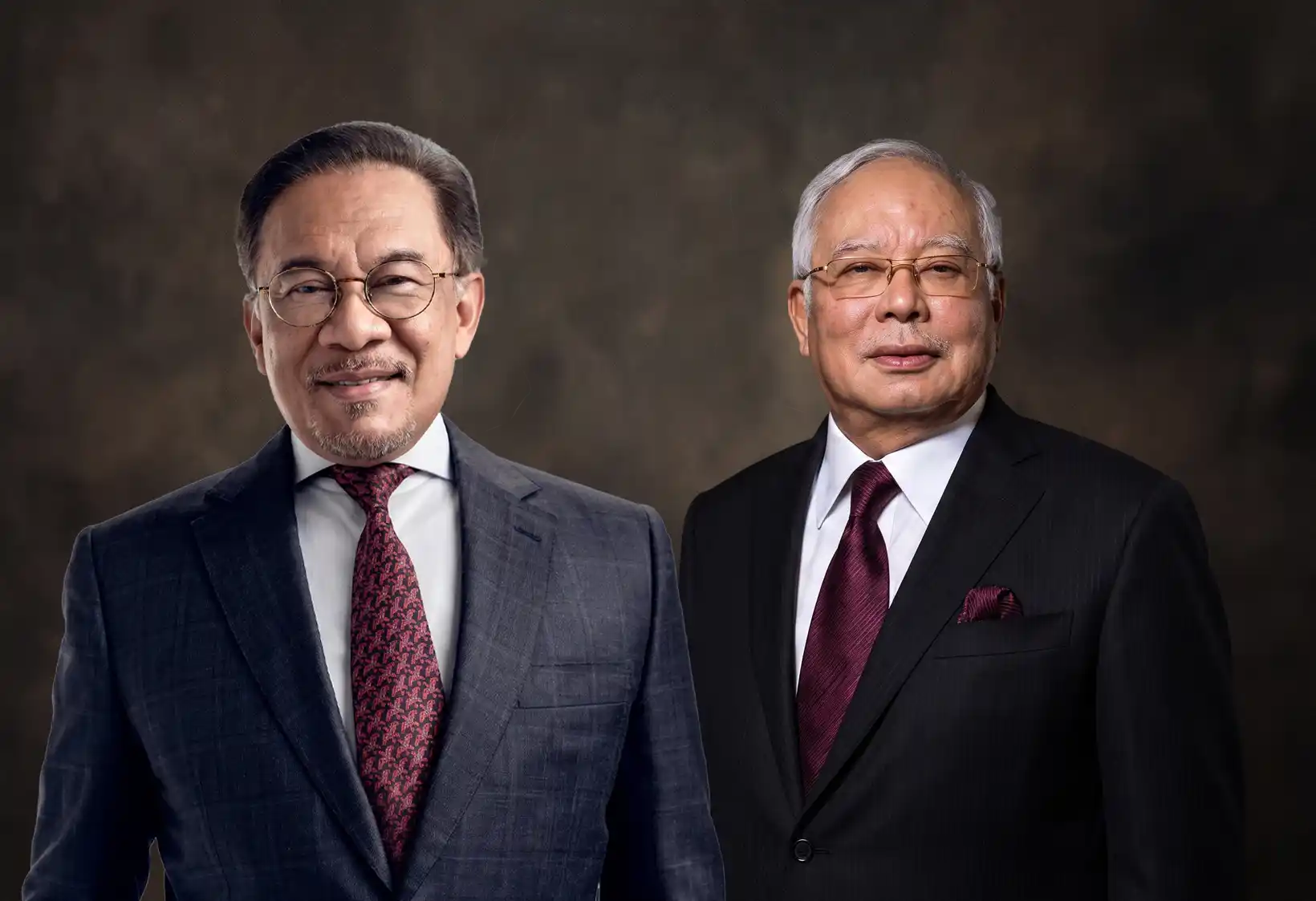
Pakatan Harapan can rightly argue that Datuk Seri Najib Razak remains a convicted offender and that his transfer followed a royal decision. But voters are more likely to remember the images of Najib arriving at Langgak Duta at 9.27pm than the legal explanations.
On the night of Nov 10, a nine-car convoy transported former prime minister Datuk Seri Najib Razak from Kajang Prison to his residence in Langgak Duta, Kuala Lumpur.
Najib will serve the remainder of his reduced six-year sentence in the SRC International case under house arrest until Aug 23, 2028. He is then expected to return to prison to begin serving a separate 15-year sentence imposed in December 2025 in a second 1Malaysia Development Berhad (1MDB) case, which he is appealing.
Legally, this is not freedom. Politically, however, the distinction may matter little. Najib is home, and the implications could be far-reaching.
In Malaysian politics, symbolism often outweighs legal technicalities. The sight of a convicted former prime minister returning home represents a significant victory for Umno and a potential setback for Prime Minister Datuk Seri Anwar Ibrahim and his Pakatan Harapan (PH) coalition.
With the next general election due by February 2028, but widely expected much earlier, the development could reshape the calculations of every major political party.
Umno: Victory with risks
For Umno, Najib’s return represents vindication. The party helped raise the RM50 million fine attached to the pardon granted by His Majesty Sultan Ibrahim, King of Malaysia, on Sept 18. When the Attorney-General’s Chambers (AGC) delayed the transfer, Umno secretary-general Datuk Asyraf Wajdi Dusuki issued stern warnings, while the King cautioned against challenging his decree.
The timing could hardly be better for Umno. Barisan Nasional (BN) has regained momentum after winning the Johor and Negeri Sembilan state elections this year. Najib also gives the party a rallying figure ahead of the Nov 14 Melaka state election, where caretaker chief minister Datuk Seri Ab Rauf Yusoh is defending BN’s mandate.
The benefits are considerable. Najib’s return strengthens Umno president Datuk Seri Ahmad Zahid Hamidi, who has invested considerable political capital in securing it. Zahid can now silence critics who accused him of compromising Umno’s independence by working with Anwar. The development also gives Umno greater leverage: Anwar needs its parliamentary support, while the party has demonstrated that it has alternatives.
Yet the risks are equally real. To younger, urban and non-Malay voters, Umno’s heavy investment in a twice-convicted former leader could reinforce the perception that the party is more interested in protecting its political patrons than pursuing reform. If the next election becomes another referendum on Najib rather than a contest centred on jobs and the cost of living, Umno could consolidate its traditional support base while alienating the very voters it needs to win back.
BN: Stronger kingmaker, divided coalition
Written off after 2018, BN has re-emerged as a kingmaker. A revitalised Umno is likely to press for more seats, ministerial positions and assurances over the remaining 1MDB proceedings. Its smaller coalition partners, MCA and MIC, face a more difficult predicament.
Both parties must win back Chinese and Indian voters who deserted BN in 2018. Yet they remain part of a coalition celebrating the return of the man most closely associated with Malaysia’s biggest corruption scandal.
The bigger question is whether BN and PH can sustain an electoral pact. Both want to prevent Perikatan Nasional (PN) from benefiting from three-cornered contests. But such an arrangement carries considerable political baggage. PH supporters see cooperation with Umno as a betrayal of the reform agenda, while Umno members remain wary of a coalition that once pledged to put Najib behind bars.
Without an electoral pact, PN could emerge as the biggest beneficiary. With one, both coalitions risk losing disillusioned supporters to their rivals or driving them towards abstention.
Anwar: The price of compromise
Anwar himself could emerge as the biggest political casualty. His rise to power in 2022 was built on promises of reformasi (reforms), accountability and an end to impunity. Yet, to secure a parliamentary majority, he allied with former adversaries and appointed Zahid, who was then facing 47 corruption-related charges, as his deputy. Since then, Anwar has repeatedly prioritised political stability over reform. Najib’s transfer represents the most consequential test of that approach.
His dilemma is acute. As prime minister in a constitutional monarchy, he cannot disregard a royal decision. But his political credibility rests on the expectation that institutions will uphold accountability and the rule of law.
If he is perceived as facilitating Najib’s return, he risks alienating reform-minded voters. If he is seen as obstructing a royal decision, he risks antagonising Umno and Malay voters and destabilising his government.
His apparent strategy is to absorb the political damage and argue that economic performance and stability matter more than the 1MDB scandal. Whether voters will accept that argument remains uncertain. He may discover that the political cost of compromising his principles outweighs the benefits of keeping his coalition together.
PH: An identity crisis
For PH, the fallout is equally serious. DAP secretary-general Anthony Loke’s resignation as transport minister on Nov 10 signals deep unease within the coalition.
Three fault lines are emerging.
The first divides DAP, whose predominantly urban and non-Malay support base is particularly sensitive to Najib’s return, from PKR, whose leaders have shown greater willingness to compromise.
The second separates PH’s leadership from the volunteers and voters who campaigned to bring Najib to justice. Their disappointment may not translate into support for PN, but under the first-past-the-post system, abstention can be just as damaging.
The third concerns institutional reform. PH had pledged to separate the Attorney-General’s role as the government’s legal adviser from that of the Public Prosecutor. However, the handling of Najib’s transfer has raised fresh questions about the independence and consistency of the justice system.
PH can rightly argue that Najib remains a convicted offender and that his transfer followed a royal decision. Legally, this distinction matters. Politically, however, it offers little comfort. Voters are more likely to remember the images of Najib arriving at Langgak Duta at 9.27pm than the legal explanations.
A truce, not a resolution
Najib’s return home does not close the 1MDB saga. Instead, it opens another chapter in Malaysia’s uneasy relationship with power, accountability and justice.
If Anwar and Zahid remain together until the next election, they may argue that political stability and economic recovery justified the compromises. But PH’s internal divisions could deepen, while Umno may be emboldened to seek a full pardon for Najib in the second 1MDB case. Either development could plunge the government into a serious crisis, giving PN an opportunity to exploit public discontent and the fragmentation of its rivals.
Najib has long been both an asset and a liability for Umno: a symbol of resilience but also a reminder of the scandals that contributed to its 2018 electoral defeat.
For Anwar, the challenge is no longer simply managing Umno within his government. It is explaining to his own supporters why the politics of compromise has come at such a high price.
Najib is home, but it is Anwar who may pay the greater political price.
The views expressed here are the personal opinion of the writer and do not represent those of Twentytwo13.
...


Read the fullstory
It's better on the More. News app
✅ It’s fast
✅ It’s easy to use
✅ It’s free