Malaysia shifts AI strategy towards measurable impact as new laws loom

7 hours ago
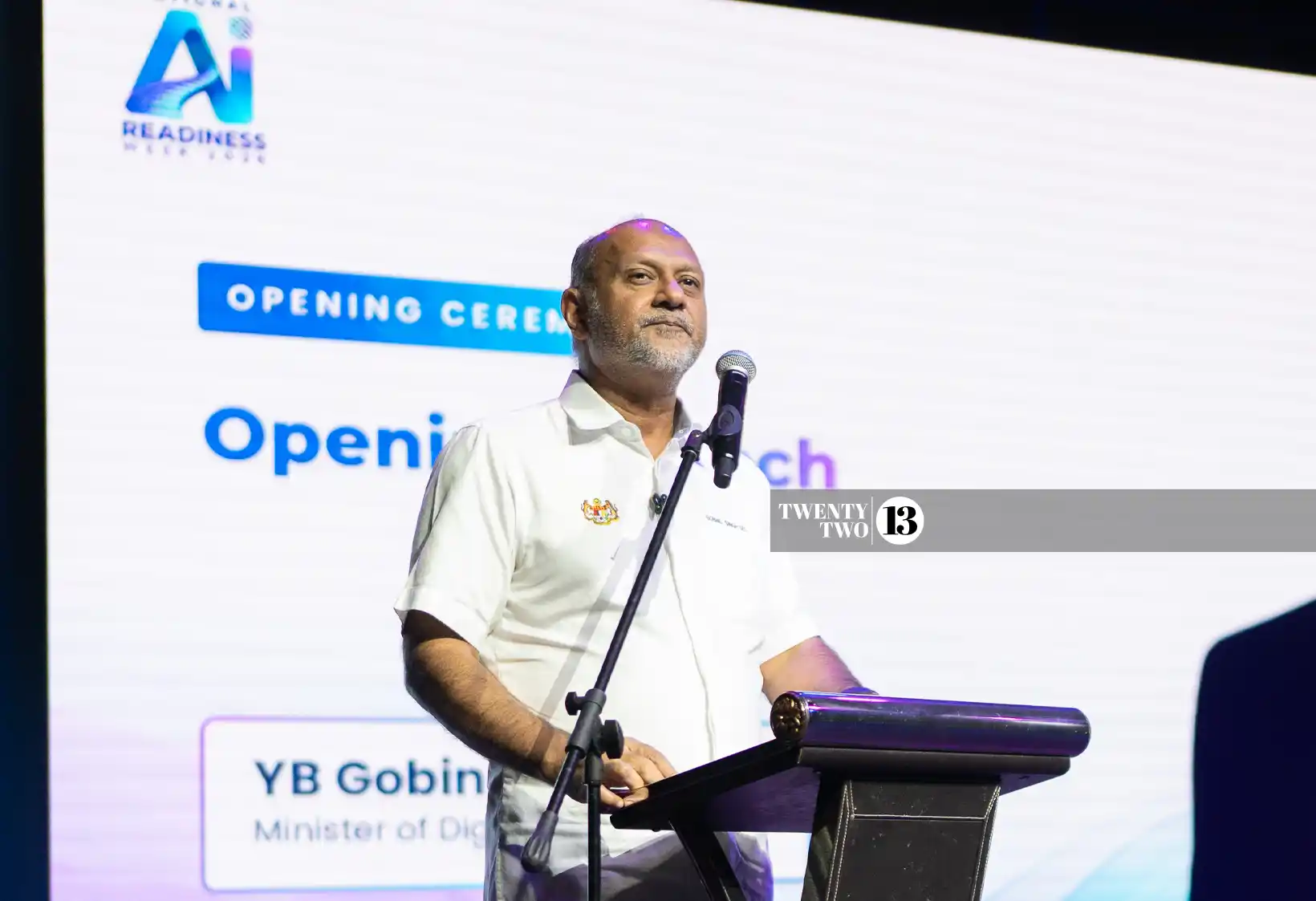
Digital Minister Gobind Singh Deo says Malaysia must look beyond attracting data centres and focus on building a sustainable ecosystem that benefits industries and society.
KUALA LUMPUR: Malaysia is overhauling its artificial intelligence (AI) and data centre strategy, shifting its focus from headline investment figures to measurable public benefits, self-funded utility infrastructure and tighter regulation.
Speaking at the launch of AI Readiness Week at The Campus in Ampang this afternoon, Digital Minister Gobind Singh Deo acknowledged growing global concerns over excessive spending on AI infrastructure, as well as domestic criticism of data centres’ consumption of water and electricity.
“We need to explain why we are spending so much money on AI. We need to demonstrate results. We must show a return on investment (ROI),” said Gobind.
“The markets have reacted, and this is something that could continue to happen if we are unable to explain the facts. The reality is that this investment is necessary because, as I said earlier, we need to build ecosystems.
“These ecosystems cost money, but ultimately, they will enable us to adopt new technologies in the years ahead.”
Citing the medical sector, he said many diseases and medical conditions remained beyond the reach of conventional medical research.
“We may have the data, but without sufficient computing capacity to process it and develop solutions, we have been at a disadvantage. Today, that is changing,” he said.
“With advances in predictive medicine, we will be able to prevent many people from going through the difficulties that previous generations had to endure.
“We will also be able to reduce the costs incurred by the government in dealing with these problems. If we can identify and address health issues at an earlier stage, governments will not have to spend significant amounts on treatment.”
He said the savings could be channelled into education and other areas in need of funding. Rather than slow approvals, Putrajaya is changing the rules governing the development of data centres and AI infrastructure.
Malaysia is also exploring ways to require major investors to develop dedicated power generation and water infrastructure for their data centre operations. At the same time, the government is preparing two major pieces of legislation – the Data Infrastructure Act and the AI Governance Bill – to address regulatory gaps.
Although Malaysia recently climbed to 27th place among 70 economies in the IMD World Digital Competitiveness Ranking, Gobind warned that rankings and capital expenditure meant little unless investments delivered tangible benefits to society.
Responding to criticism that data centres were merely “buildings with chips inside” that consumed resources while creating few direct jobs, Gobind outlined a two-pronged strategy to develop economic activity “around and on top” of existing facilities.
Building “around” data centres means developing local expertise in grid expansion, renewable energy, water-cooling systems and energy-efficient chips. Building “on top” of them means empowering local startups to use Malaysia’s computing capacity to solve real-world problems, including through predictive medicine that can detect diseases earlier and reduce public healthcare costs.
“We can take a step back and say we are afraid, and watch our regional competitors move ahead,” Gobind said. “Or we can be brave, look at the concerns, and build an ecosystem that addresses them.”
To ensure the data centre boom does not place further strain on domestic resources, Gobind said major investors were being encouraged to incorporate dedicated power generation and water treatment facilities into their projects. He cited Google’s recent US$15 billion investment commitment as an example of the scale of investment Malaysia was seeking.
On Nov 4, Alphabet and Google president and chief investment officer Ruth Porat and Prime Minister Datuk Seri Anwar Ibrahim announced that the two-year investment, covering 2027 and 2028, would expand Google’s AI and cloud infrastructure in Malaysia.
“If we anticipate substantial increases in energy demand in the years ahead, we need to start discussing whether these companies can develop their own energy supplies to operate their data centres, as well as the water infrastructure needed to support them,” Gobind said.
“This is no longer just a discussion. We have seen announcements to this effect over the past two weeks.”
To regulate the expanding data centre sector, Putrajaya plans to table the Data Infrastructure Act in Parliament in the first quarter of next year.
Gobind said the ministry had established a Data Centre Task Force (DCTF), co-chaired by him and Investment, Trade and Industry Minister Datuk Seri Johari Abdul Ghani, to examine the challenges posed by the sector.
“The purpose of this committee and task force is to examine the challenges that data centres may pose as we move forward.
“There is currently no established mechanism requiring data centre operators to notify the relevant authorities, and no clearly designated authority to receive such notifications,” he said.
“If we have an ecosystem in which the entire country relies on data centres, we need to start thinking seriously about how to govern this infrastructure.”
The government is also moving to regulate AI safety. Gobind confirmed that he had received the final draft of the proposed AI Governance Bill, which was being circulated among ministries for feedback ahead of its presentation to the Cabinet. The government is targeting the first quarter of next year for its tabling in Parliament.
Through initiatives such as AI Malaysia and AI Safe, the government is also working to establish the institutional and enforcement mechanisms needed to support the proposed legislation.
...


Read the fullstory
It's better on the More. News app
✅ It’s fast
✅ It’s easy to use
✅ It’s free