US loses measles elimination status as cases surge to 5,739

8 hours ago
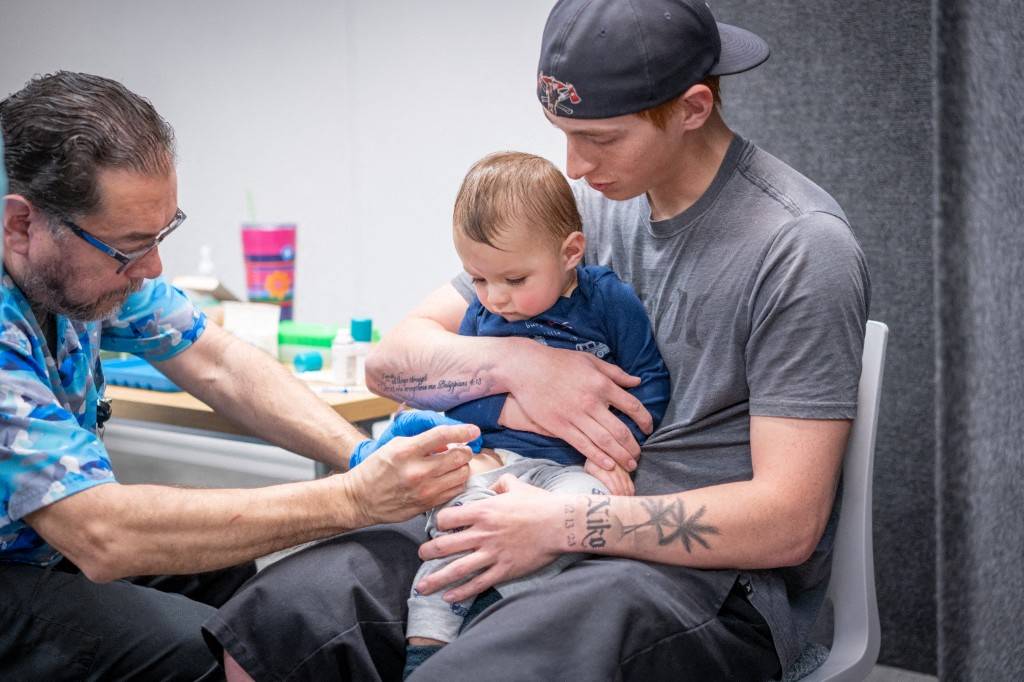
THE United States has lost its measles elimination status after the highly contagious disease resurged, with the country recording 5,739 cases as of Nov 17, exceeding the combined total reported over the past 25 years.
According to American news portal Vox, the Pan American Health Organization (PAHO) officially revoked the United States' measles elimination status following its annual meeting of the measles and rubella elimination commission on Monday, as sustained transmission indicated that the virus had become endemic again.
The development marks a significant setback for a country that declared measles eliminated in 2000. For more than two decades, cases were largely associated with travellers who contracted the virus overseas and brought it into the country, rather than sustained local transmission.
However, the situation has changed dramatically, with active outbreaks reported in New York, Pennsylvania and parts of the Midwest.
At least eight people have died following measles infections in the United States this year, including a seven-month-old baby in New York who was too young to receive the vaccination.
Family physician Dr Barbara Keber, who has practised medicine for 45 years, described the resurgence as surreal, saying she had not encountered measles in her professional career until recent years.
Vox reported that the United States recorded only a few hundred cases in 2024 before infections climbed to more than 2,000 last year, alongside three deaths.
Both figures more than doubled in 2026, following a major outbreak in South Carolina earlier in the year and a subsequent rise in cases in Pennsylvania and New York.
Vaccine hesitancy contributes to resurgence
The resurgence has been closely linked to declining childhood vaccination rates and growing vaccine scepticism.
Concerns that childhood vaccinations cause autism, despite scientific evidence showing no such link, have contributed to public distrust in immunisation.
Vox also highlighted the influence of US Health Secretary Robert F. Kennedy Jr and anti-science activists and politicians in fuelling distrust towards medical science and healthcare professionals, particularly since the Covid-19 pandemic.
Nationwide, measles vaccination coverage among American kindergarteners has fallen to 92.4 per cent, compared with 95 per cent before the pandemic.
Public health experts consider a vaccination coverage rate of approximately 95 per cent necessary to prevent measles from spreading within communities.
The decline has been more pronounced in certain areas. In one Texas school district that experienced a major outbreak last year, fewer than half of its schoolchildren were vaccinated.
Vox's conversations with doctors managing recent outbreaks identified three key factors behind the resurgence and the challenges of bringing the disease under control.
1. Unvaccinated communities can fuel outbreaks
One recurring pattern is the concentration of infections in close-knit communities where vaccine hesitancy is widespread.
Recent outbreaks in New York and Pennsylvania have affected Amish and Mennonite communities, while a previous outbreak in Texas also originated in a Mennonite community.
In South Carolina, a charter school where fewer than 20 per cent of students were vaccinated became the epicentre of an outbreak.
A similar pattern was observed during New York's 2019 measles outbreak, which was concentrated in Hasidic Jewish communities.
According to Vox, these outbreaks demonstrate how clusters of unvaccinated individuals can create conditions for rapid transmission, particularly when members interact with the wider community through social activities, sports and other gatherings.
Even where vaccination requirements exist, some families avoid them by homeschooling their children.
Dr Keber said healthcare professionals must engage carefully with communities whose religious beliefs influence their views on vaccination.
She stressed that building trust between doctors and families is more effective than using fear to persuade vaccine-hesitant individuals.
2. Doctors face challenges recognising measles
Another challenge is that many practising doctors have limited direct experience diagnosing measles because the disease had been eliminated in the United States for so long.
Dr Keber said most physicians currently practising medicine had never encountered an actual measles case.
Family physician Dr Ada Stewart, who has more than 20 years of experience, similarly recalled reviewing medical school materials with colleagues to refresh their knowledge of the disease's symptoms during South Carolina's outbreak.
Measles is highly contagious, with approximately 90 per cent of susceptible individuals likely to become infected following exposure.
An infected person can also spread the virus up to four days before the characteristic rash appears.
Early symptoms, including high fever, coughing, a runny nose and red, watery eyes, can resemble other common illnesses, making early identification more challenging.
The lack of familiarity among both healthcare professionals and the public could therefore allow infections to spread before the disease is recognised.
3. Reversing the trend will take time
Vox also highlighted how the success of eliminating measles contributed to a decline in public awareness of the disease's dangers.
Family physician Dr Andrew Carroll observed that older generations who experienced measles and younger patients encountering it for the first time appeared more concerned about its return.
Meanwhile, those who grew up during the period when measles was largely under control may have become less aware of its severity.
He warned that public health progress could be forgotten within a single generation, allowing preventable diseases to return when vaccination rates decline.
Carroll said the United States had gone from being a measles-free nation 25 years ago to experiencing widespread transmission again because people had forgotten how serious the disease could be.
The challenge now is rebuilding public confidence in vaccination and restoring coverage levels needed to stop community transmission.
However, the process could take years, with doctors warning that the current outbreaks may result in further preventable illnesses and deaths before vaccination rates recover.
Paediatrician Dr Jason Terk, who spoke to Vox last year, expressed concern that the lessons from the resurgence might only be fully understood by the next generation.
He warned that the country was going through a cycle in which preventable deaths and illnesses would be among the consequences of losing the progress made against measles.
The resurgence serves as a reminder that eliminating a disease does not mean the threat has disappeared permanently, particularly when vaccination coverage and public confidence in science begin to weaken.
...


Read the fullstory
It's better on the More. News app
✅ It’s fast
✅ It’s easy to use
✅ It’s free