Kweichow Moutai sees first fall in revenue, profit amid corruption crusade
1 hour ago
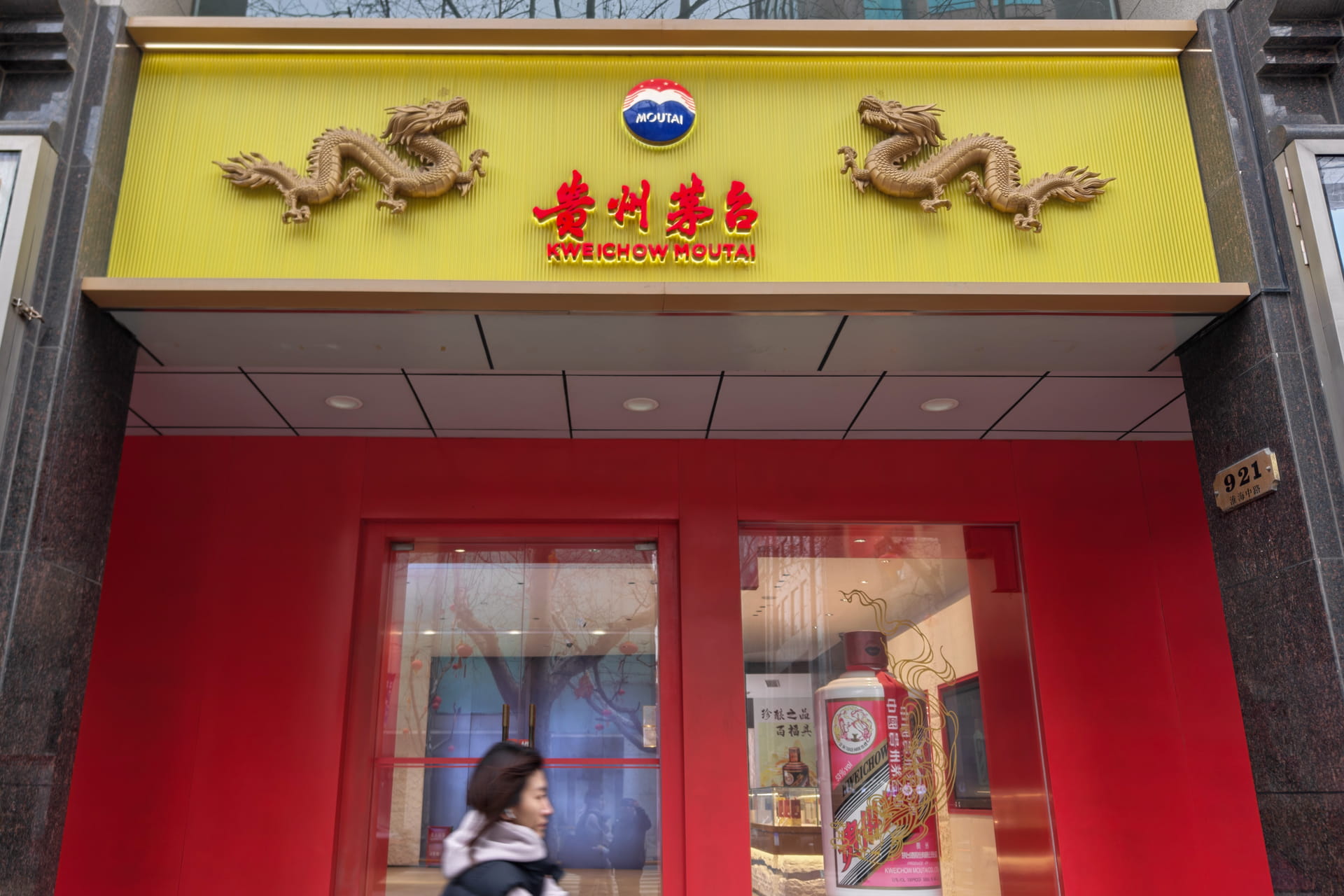
Kweichow Moutai, the leading manufacturer of Chinese hard liquor baijiu, has reported the first simultaneous decline in both revenue and net profit since it listed its shares in 2001, likely reflecting a squeeze on official banquets under Chinese President Xi Jinping’s campaigns against corruption and extravagance.
In a disclosure to the Shanghai Stock Exchange, the company said its annual revenue for 2025 came to RMB 168.83 billion (USD 24.7 billion), down 1.2% year-on-year, while its net profit was RMB 82.32 billion (USD 12.1 billion), a 4.5% fall.
The brand, known as the liquor of choice across China’s political scene, had not suffered such a double whammy since going public in July 2001. Its prospectus suggests the streak of gains dates back to at least 1997. The closest to such a dual setback came in 2015, when Kweichow Moutai eked out only 3.4% revenue growth and a 1% profit uptick.
The company’s share price opened at RMB 1,400 (USD 205.1) on April 17, down by over 4% from the previous day. The shares closed 3.8% lower at RMB 1,407.24 (USD 206.1).
Kweichow Moutai, established as its name indicates in the less wealthy southwestern inland province of Guizhou, is one of China’s most profitable companies overall. Its sorghum-based transparent liquor consistently delivers gross profit margins of 90%, accompanied by high volume growth. It is the crown jewel enterprise for the provincial government, which ultimately controls the company, in terms of tax revenue, employment and other benefits.
As the favored tipple for official banquets, Kweichow Moutai has been served at numerous historic events, including for a toast by then premier Zhou Enlai and US President Richard Nixon during the American leader’s ice-breaking visit to China in 1972.
China’s rapid economic growth lifted the company’s top and bottom lines ever higher, while its brand developed a certain mystique, leading to sometimes exorbitant retail prices and making the bottles popular gifts, or allegedly, bribes.
Last year, however, Chinese authorities called for “practicing thrift and opposing waste,” clamping down on luxuries like high-end food and alcohol during parties. The company itself has faced heavy scrutiny under Xi’s relentless anti-corruption campaign, which has shown renewed vigor of late with purges of military and other officials.
Kweichow Moutai’s growth slowed in the mid-2010s in the early days of Xi’s clampdown. And multiple top officials have been arrested and charged since.
Yuan Renguo, who served as the company’s chairman between 1994–2018, was sentenced to life in prison in September 2021 for accepting over RMB 112.9 million (USD 16.5 million) in bribes, allegedly to help distributors secure contracts.
Most recently, Jiang Yan, the company’s vice president, CFO, and the secretary to the board, was investigated for suspected “serious violations of discipline and law,” according to an announcement by the Guizhou branch of the disciplinary committee of the Chinese Communist Party and the provincial government on March 13.
The company confirmed the detention of Jiang while stressing that all production and management activities are “normal and orderly,” with the case having “no significant influence” on operations. Chairman Chen Hua is to fill in for the time being.
The detention of Jiang was initiated by a team dispatched to the company by the Guizhou province disciplinary committee last July, acting on Xi’s call to step up anti-corruption efforts when he visited the province in March 2025.
The team stayed for more than two months to reform the company’s internal governance, establishing procedures to accept whistleblowing and to correct violations of discipline related to politics, organizational matters and clean governance. The announcement by the disciplinary committee described the dispatch of its personnel to Kweichow Moutai as a “return,” as it was not the first time.
Shares in Kweichow Moutai, once among the most valuable out of all mainland listings, have lost their sheen since peaking in mid-2020. The company’s ranking in the Shanghai market in terms of market capitalization was down to fourth as of April 16, trailing two state banks (Agricultural Bank of China and Industrial and Commercial Bank of China) and state oil conglomerate PetroChina.
Kweichow Moutai’s disclosure barely addressed the reasons for the dual fall in revenue and profit. It blamed the drop in revenue on “the impact of the structural adjustments” in its lineup of jiang-flavored liquor, a specific type of baijiu.
Wei Xiaopo, Hong Kong-based analyst at Citi, wrote in a note on April 17 that the latest annual results were “well below market and our expectations.” Still, he characterized 2025 as a “reset year for Moutai’s operating model,” foreseeing a rebound this year.
He maintained a “buy” rating for the stock, highlighting its high dividend payout ratio, which was raised by four points to 79% for 2025, coupled with continued share buybacks.
This article first appeared on Nikkei Asia. It has been republished here as part of 36Kr’s ongoing partnership with Nikkei.
Note: RMB figures are converted to USD at rates of RMB 6.83 = USD 1 based on estimates as of April 20, 2026, unless otherwise stated. USD conversions are presented for ease of reference and may not fully match prevailing exchange rates.
...


Read the fullstory
It's better on the More. News app
✅ It’s fast
✅ It’s easy to use
✅ It’s free