Opinion | Without diplomacy, deterrence in Asia is a path to escalation

1 hour ago
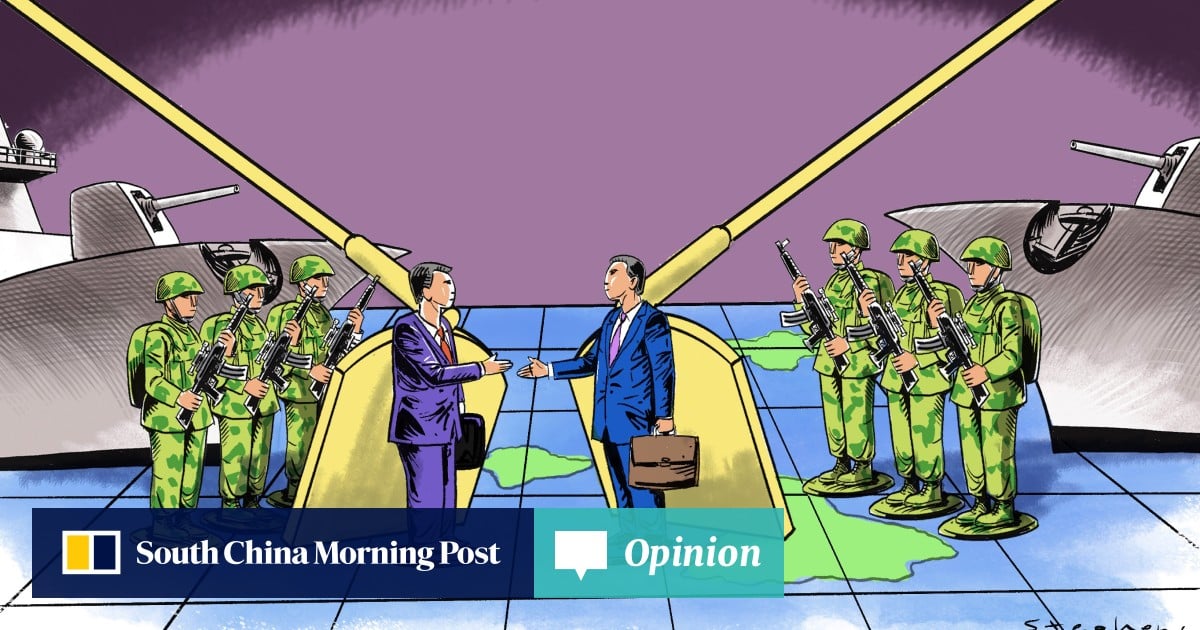
“Balikatan 2026” is meant to reassure allies and deter adversaries. But the military exercise
hosted by the Philippines also reveals a harsher truth: the Indo-Pacific is drifting into a security logic in which deterrence no longer contains risk but multiplies it. Every move taken in the name of stability now invites a countermove
. Every display of resolve is answered by another. The result is not equilibrium, but a trap.
That is why diplomacy has to return to the centre of regional strategy before military signalling becomes the region’s default language.
The scale of the exercise is itself a message. More than 17,000 personnel from the Philippines, United States, Australia, Japan, Canada, France and New Zealand are involved. Japan is participating as an active combat partner for the first time
, and its Type 88 anti-ship missile is part of a live-fire drill. Philippine and US forces are also conducting maritime strike drills on Itbayat, the country’s northernmost island, close to Taiwan
Manila frames Balikatan as a sovereign exercise in defence modernisation and “minimum credible deterrence”. An army spokesman said the Philippines was “unfazed” by Beijing’s warnings and had contingency plans for any escalation around the drills. That stance captures the moment. Even a defensively framed exercise is now paired with explicit readiness for a response – capability, geography, timing and symbolism all matter here, and all sides now speak in those terms. No country embodies that shift more sharply than Japan.
For years, Tokyo expanded its regional security role cautiously, wrapping change in the language of partnership and constitutional restraint. That caution is thinning. The clearest recent example is the April 17 transit
of the destroyer JS Ikazuchi through the Taiwan Strait, shadowed by China’s Eastern Theatre Command for 14 hours. The date was politically explosive: the anniversary of the 1895 Treaty of Shimonoseki, which forced Qing China to cede Taiwan to Japanese colonial rule.
That historically freighted date made the transit inflammatory. A PLA Daily commentary accused Tokyo of “harming the feelings of the Chinese people” and warned of Japan’s “new militarism”. Official Chinese channels circulated drone footage of the encounter to underline the point. Whatever Tokyo intended, Beijing did not read the passage as routine navigation – and answered immediately in operational terms.
...


Read the fullstory
It's better on the More. News app
✅ It’s fast
✅ It’s easy to use
✅ It’s free