Semporna Comes Alive: Culture, Sea Gypsies, and the Spectacle of Regatta Lepa

1 hour ago
This post contributed by Sarah Anne Lee
Travelling into the port town of Semporna, where most of its more modern buildings stand, is a journey in itself. Just under an hour’s drive from Tawau Airport – admittedly a bumpy one – the route is lined with wooden houses on stilts, curiously set far from any water. As our local guide explained, this architectural quirk is less about necessity and more about tradition, a holdover from generations of coastal living.
Typically a quiet town, Semporna was anything but subdued during our visit. The week leading up to the region’s biggest cultural celebration had brought a palpable energy, and our weekend arrival placed us right in the thick of it. Along the harbour, temporary stalls had sprung up in a lively bazaar, offering familiar street fare such as cucur, spiced chicken rice, and refreshing local drinks like iced milk tea and sirop bandung. On an ordinary day, this same waterfront would be dominated by fishermen hauling in fresh catches – prawns, crabs, lobsters – in a steady, unbroken rhythm.
Out on the water, the scene was just as engaging. Boats criss-crossed the bay, ferrying locals between islands or heading out on daily errands. Our guide pointed out that the jetty where we stopped for lunch catered largely to residents, with a more tourist-oriented jetty located further along the shoreline.
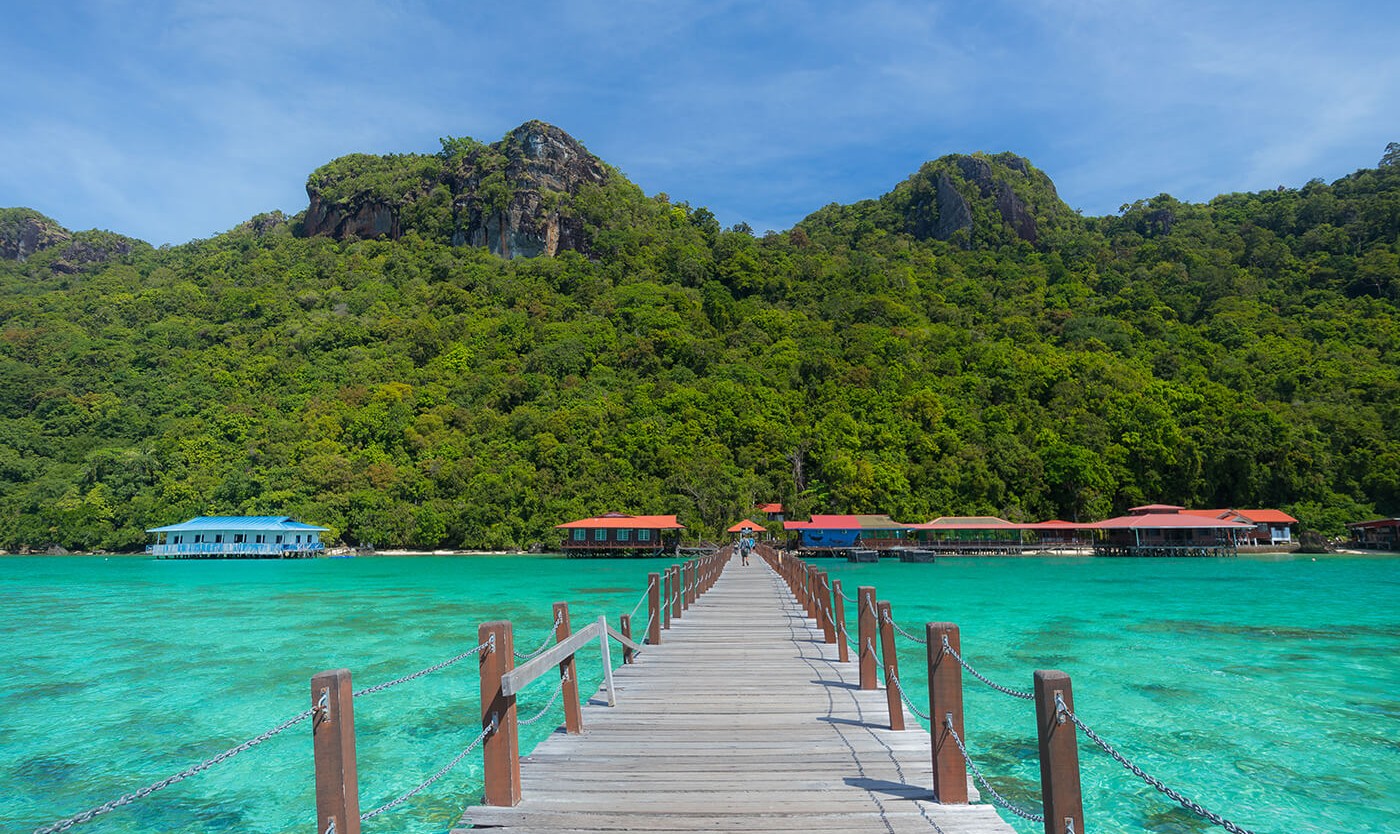
ISLANDS AND TRADITIONSOur first excursion took us to Bohey Dulang Island, one of the standout features of the Tun Sakaran Marine Park. Formed from ancient volcanic activity, the island is best known for its sweeping views from the summit of a steep hiking trail. Unfortunately, wet conditions earlier in the day made the climb unsafe, but there was still plenty to take in. A visit to the island’s giant clam rehabilitation centre and a stroll along wooden walkways revealed crystal-clear waters teeming with marine life – sea urchins, sea cucumbers, and a kaleidoscope of reef fish. Notably, the waters around Semporna are home to all seven known species of giant clam, with dolphins occasionally spotted in the bay.
From there, our boat – operated by Semporna Scuba and led by divemaster Alexander Ho – continued to nearby Bodgaya Island. Here, a community of Bajau people maintains traditional sea-based settlements. Their wooden homes, built on stilts above the water, appear almost timeless. Children paddled out to greet us in hand-carved boats, curious and cheerful, though visitors are gently discouraged from handing out gifts to preserve the community’s independence.
The Bajau, often referred to as “sea gypsies,” have a long nomadic history. However, rising costs and tighter maritime borders have increasingly anchored them to fixed locations. Many now rely on fishing and informal trade, while issues of statelessness continue to affect parts of the community due to complex cross-border heritage.
A short ride away, Sibuan Island offered a contrasting setting – a pristine sandbank of powdery white sand dotted with ghost crabs and seashells. It is widely regarded as one of the most beautiful spots in the Celebes Sea. Visitors are reminded that even something as seemingly harmless as taking a shell is not permitted, as these protected areas rely on minimal human interference to remain intact.
FESTIVAL ON THE WATERReturning to Semporna harbour, the build-up to the Regatta Lepa was impossible to miss. Rows of traditional boats, known as lepa, gathered in anticipation, their sails – called sambulayang – decorated in distinctive patterns. Families living aboard these vessels greeted passersby with waves and smiles, adding to the sense of community.
The evening’s Sangom Maglami-Lami celebration brought the festivities ashore, with cultural performances including the elegant Igal-Igal dance and a pageant to crown the Lepa Queen. The music, attire, and language all reflected the unique identity of the Bajau, offering a perspective quite distinct from that of Peninsular Malaysia.
The following morning shifted to a more formal tone, with government agencies participating in demonstrations and officiating ceremonies. The Fire and Rescue Department showcased emergency response techniques, while ESSCOM staged simulations involving maritime security operations. These displays underscored the strategic importance of Sabah’s eastern waters.
The highlight, however, was the Sea Games Competition, where teams from different villages competed in boat races and even tug-of-war contests conducted on water. Observing the rowing technique – with oars braced against the ankle and guided by coordinated upper body movement – was a reminder of how deeply maritime life is embedded in the local culture.
As the morning drew on, the decorated lepa boats paraded into the harbour in a vibrant display of colour and craftsmanship, many carrying performers in full traditional attire. Larger vessels, elaborately adorned, are typically reserved for major celebrations such as weddings and festivals, making their appearance here all the more significant.
BEYOND THE COASTSemporna’s appeal extends beyond its waters. A visit to Bukit Tengkorak offered a different perspective, both literally and historically. The climb – a manageable series of staircases leading to a coastal viewpoint – rewards visitors with sweeping vistas. The site itself holds archaeological importance, with evidence of Neolithic pottery production and trade links reaching as far as the Majapahit kingdom.
Nearby, the Tun Sakaran Museum provides a concise look into local history, including the legacy of Tun Sakaran, a prominent political figure from the region.
Further inland, Tawau Hills Park presents yet another facet of Sabah’s natural wealth. A relatively gentle hike leads to the towering Seraya Kuning Siput tree, standing at an impressive 88.32 metres and ranked among the tallest tropical trees in the world. The park is also home to a range of wildlife, including sun bears, pygmy elephants, and clouded leopards, though sightings require both time and luck.
There’s just a different vibe to be found here. Beyond its headline attractions, Semporna also offers a quieter, more reflective layer for those willing to slow down a little. Small coastal villages away from the main harbour reveal a rhythm of life that is still inextricably tied to the sea, where wooden walkways connect simple homes on stilts and daily routines revolve around fishing, repairing nets, and preparing boats for the next tide. There is little sense of performance here – just continuity, shaped by generations of maritime living.
The surrounding waters, part of the larger Coral Triangle, are also among the most biodiverse in the world. Even without diving or snorkelling, the clarity of the sea around the islands offers a glimpse into this richness. Coral gardens sit just below the surface in many areas, and conservation efforts are increasingly visible through small marine rehabilitation projects and protected zones, particularly within the Tun Sakaran Marine Park.
Back on land, Semporna’s growing role as a gateway to island tourism is gradually reshaping its identity. While it remains firmly rooted in its local culture, there is a quiet shift underway as more visitors pass through on their way to Sipadan, Mabul, and surrounding dive sites. The actual town of Semporna has come under recent fire for its problems with littering and pollution, and the attention being paid seems to be yielding some positive results, at least initially. Balancing tourism in this area with growing calls for better stewardship and preservation – both environmental and cultural – will likely define the town’s next chapter, even as it continues to move to the steady rhythm of the sea.
...


Read the fullstory
It's better on the More. News app
✅ It’s fast
✅ It’s easy to use
✅ It’s free