Aeroline’s Kuala Lumpur Exit Sparks Conversation Over Cost, Competition, and Passenger Convenience

1 hour ago
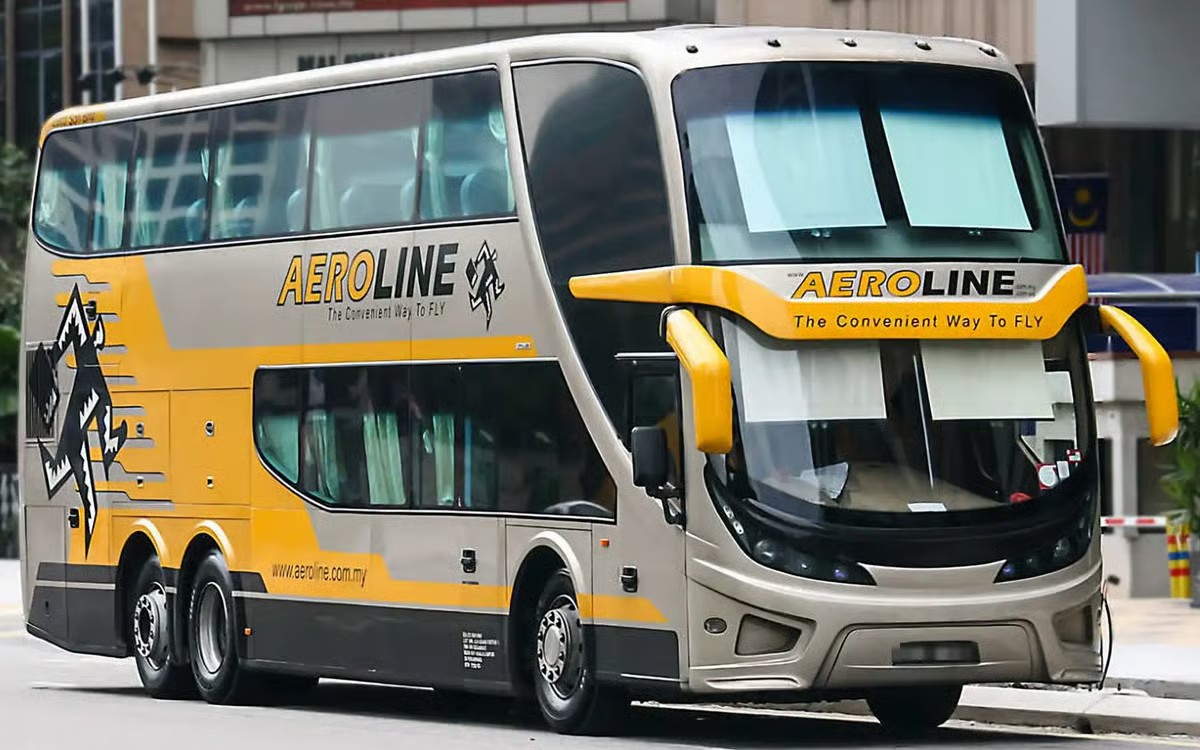
For many travellers moving between Kuala Lumpur and Singapore, Aeroline was never simply another bus operator. Its distinctive yellow coaches built a loyal following over the years by offering something closer to a premium airline experience on wheels – spacious seating, dedicated lounges, complimentary refreshments, and city-centre boarding points that appealed to both business travellers and leisure passengers.
That chapter now appears to be coming to an end.
Aeroline recently announced that Kuala Lumpur will no longer serve as a boarding or drop-off point for its coaches, ending more than 20 years of operations in the Malaysian capital. The decision follows regulatory directives from Malaysia’s Land Public Transport Agency (APAD) requiring the company to operate only from licensed terminals.
The move has unsurprisingly sparked considerable discussion among passengers, particularly frequent users of the popular Kuala Lumpur – Singapore route, with many questioning whether the outcome ultimately benefits travellers or the broader transport landscape.
REGULATIONS, COSTS, AND A DIFFICULT DECISIONAccording to Aeroline, the company received a directive on May 13 stating that it could only operate from approved terminals, specifically 1 Utama, LaLaport Bukit Bintang City Centre, and IOI City Mall.
Aeroline had most recently been operating from The Exchange TRX after relocating from its popular long-time base at Corus Hotel near KLCC. The operator described the TRX location as particularly attractive due to its direct integration with the MRT network and convenient access to central Kuala Lumpur districts including Bukit Bintang, KLCC, and Chinatown.
However, APAD later clarified that TRX was not a licensed terminal and stated that Aeroline had not applied to use the location as an official operational hub.
Faced with relocating to approved terminals, Aeroline argued that the economics simply no longer worked.
The company singled out LaLaport as the only approved location reasonably close to the city centre but said the commercial fees imposed there were too high to absorb without significantly raising ticket prices. Aeroline also maintained that the physical layout would make it difficult to replicate the premium experience that helped distinguish the company from conventional express bus operators.
“Rather than compromising our values, charging you more, or delivering a compromised experience, we have made the very difficult decision to leave Kuala Lumpur entirely,” the company said in its statement.
The operator further noted that maintaining its reservation systems, customer support functions, waiting lounges, and personalized passenger services under the new framework would require substantial additional manpower and operating expenditure.
While regulators are fully entitled to enforce licensing requirements, the outcome highlights a recurring challenge in transport policy. Compliance and even a degree of standardization are certainly important, but so too are passenger convenience and commercial viability.
A REDUCTION IN CHOICE FOR TRAVELLERSThe immediate impact is straightforward: Kuala Lumpur travellers lose one of the market’s most recognizable premium coach brands.
For years, Aeroline occupied a unique position between traditional express buses and air travel. It attracted business travellers, expatriates, Singapore-bound professionals, tourists, and passengers who valued city-centre convenience and a more comfortable journey.
Its withdrawal inevitably reduces competition within that premium segment.
Competition generally works in the consumer’s favour, as any first-year economics student can understand. In order to compete, operators are encouraged to maintain service standards, improve facilities, innovate, and keep pricing reasonable. When a prominent player exits a market, competition is reduced and those pressures naturally ease.
The Malaysian Inbound Tourism Association (MITA) has already called for a balanced approach to transport accessibility, market competition, and traveller convenience, noting that Aeroline’s departure highlights broader issues affecting tourism connectivity.
There are, of course, also practical concerns for passengers, too. One of Aeroline’s strongest selling points was convenience. Travellers could board in central locations and avoid the additional transfers often associated with larger transport hubs. For passengers carrying luggage, travelling with family members, or moving between Kuala Lumpur and Singapore for business, that convenience formed an important part of the overall experience.
Many passengers expressed disappointment on social media following the announcement, with some describing Aeroline as the only coach operator they trusted for cross-border travel. Others highlighted the onboard facilities and premium service standards that helped positively differentiate the company from competitors.
Of course, APAD’s position is not without merit. Transport authorities have long argued that allowing operators to pick up and drop off passengers at unapproved locations creates safety, traffic management, and enforcement challenges – this can be seen as a reasonable concern. Indeed, the regulatory agency has previously taken action against Aeroline over terminal compliance issues, including a one-month suspension imposed late last year.
Apart from safety concerns, from a regulatory standpoint, consistency is important, as well. Rules that apply to one operator should generally apply to all.
At the same time, the Aeroline case raises a broader question about flexibility within the transport sector. Should specialized operators that demonstrably serve a market niche be given greater latitude in determining where and how they operate, provided safety and operational requirements are met? Should there be a process by which operators can apply for special consideration regarding some regulations?
There is unlikely to be a simple answer.
For now, Aeroline says it will continue operating through its remaining hubs and routes outside Kuala Lumpur while providing further details regarding schedules and ticketing arrangements.
Whether another operator eventually fills the gap remains to be seen. What is clear is that Kuala Lumpur has lost one of its most distinctive long-distance transport brands. For many travellers, the result is fewer choices and less convenience. Depending on how the market evolves, it could also place upward pressure on fares or reduce the incentive for operators to maintain premium service standards.
For Malaysia’s transport sector, the episode hopefully serves as a reminder that even well-intentioned regulations can sometimes produce unintended consequences. When a respected operator decides that compliance makes its business model unworkable, it is perhaps worth asking whether the balance between regulation, competition, and passenger needs is exactly where it should be.
Sources: The Straits Times, Free Malaysia Today, Malay Mail, The Rakyat Post, Bernama
...


Read the fullstory
It's better on the More. News app
✅ It’s fast
✅ It’s easy to use
✅ It’s free