Robertson Quay: Exploring Singapore's Historic Riverside Heart

1 hour ago
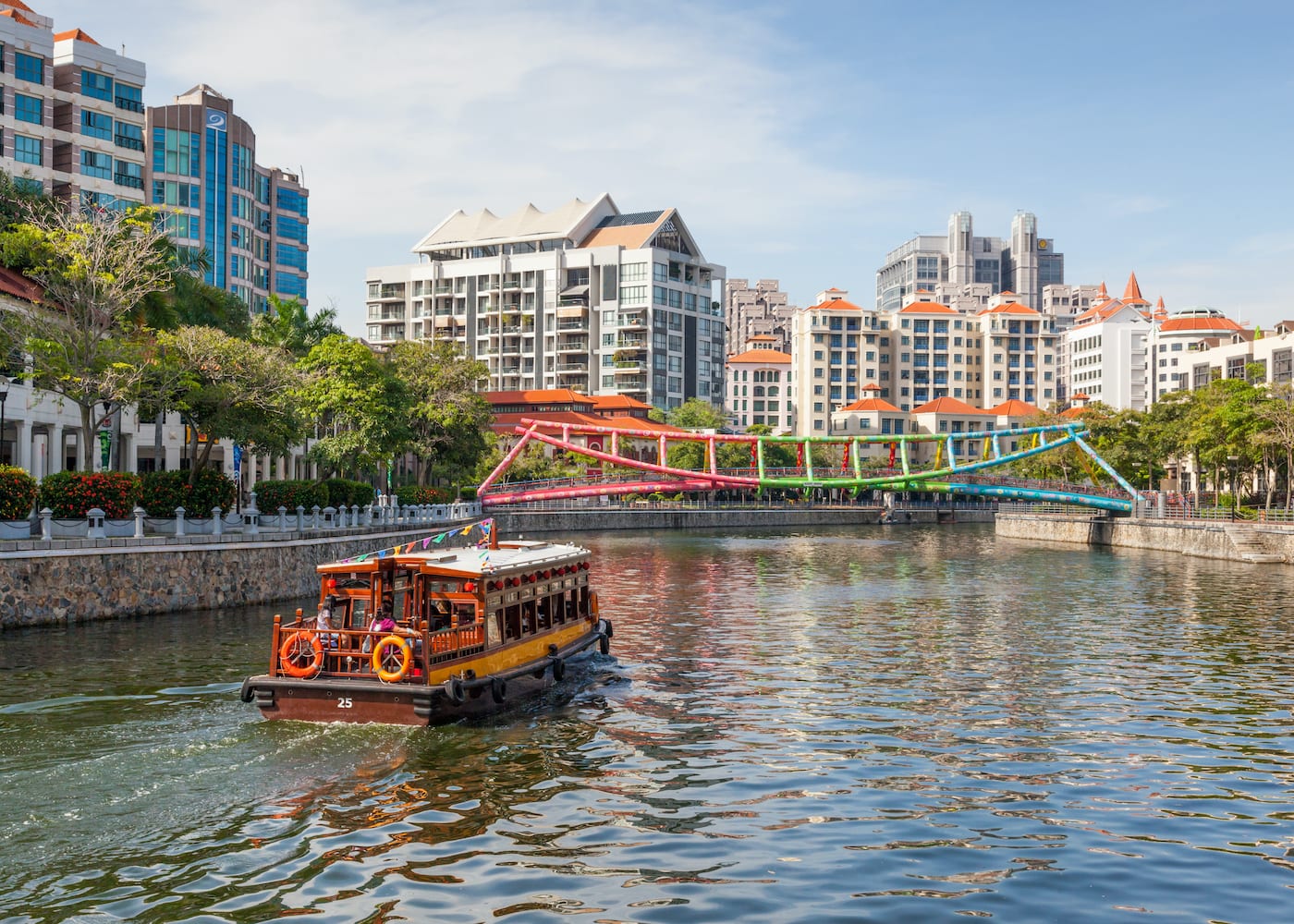
Sited along the tranquil banks of the Singapore River lies picturesque Robertson Quay, a testament to the city-state’s remarkable heritage and continual reinvention. Named after Dr. J. Murray Robertson, a distinguished Municipal Councillor, Robertson Quay is the largest and most upstream of Singapore’s three historic quays, with Boat Quay and Clarke Quay completing the celebrated trio.
Unlike the more energetic atmosphere of Clarke Quay or the postcard-perfect curves of Boat Quay, Robertson Quay has always possessed a quieter, more understated character. Today, leafy riverside promenades, boutique hotels, stylish cafés, and converted warehouses create one of Singapore’s most pleasant quayside districts, but beneath this polished exterior lies a fascinating story of trade, industry, and urban transformation. To truly appreciate Robertson Quay, it helps to understand the pivotal role this stretch of river once played in shaping the fortunes of a young and ambitious port city – one that was vastly different from the polished and presentable Singapore we know today.
A RIVERINE HUB OF COMMERCE, A HERITAGE HONOUREDLeafing through books and historical accounts of Singapore, Robertson Quay tells a fascinating story of transformation. Once little more than marshy tidal land, the area was reclaimed during the late 19th century as the colony’s population and commercial importance grew rapidly. Warehouses, locally known as “go-downs,” soon lined the riverbanks, storing the endless flow of goods arriving from across the region.
By the early 20th century, the district had become an essential component of Singapore’s thriving entrepôt economy. The term itself refers to a trading port or warehouse where goods are imported, stored, redistributed, and exported, and few places embodied that concept better than Robertson Quay.
It must have been quite a sight during its heyday, with warehouses stretching along the river and into Havelock Road and Jiak Kim Street. Bumboats plied the water constantly, ferrying cargo to and from the busy harbour, while the surrounding streets bustled with merchants, labourers, and traders from across Asia.
Today, many streets and landmarks around Robertson Quay still bear the names of individuals who helped shape colonial Singapore. The quay itself commemorates Dr. Robertson’s service as a Municipal Councillor, while nearby Havelock Road honours Major-General Sir Henry Havelock, remembered for his role during the Indian Rebellion of 1857.
Jiak Kim Street recalls Tan Jiak Kim, a Municipal Commissioner and Legislative Councillor who continued the philanthropic legacy of his grandfather, Tan Kim Seng. The elder Tan helped fund Singapore’s first Chinese Free School and is also remembered through the elegant cast-iron Tan Kim Seng Fountain, now a National Monument near the Esplanade.
Even the very shipping trade of those early 20th-century days is reflected in the name of a delightful restaurant called Entrepôt, located on the ground floor of The Robertson House, which opened in 2023 and as we learned on our last visit, was recently sold by its owners. More on that later. For now, though, Entrepôt, adorned with a classic black-and-white palette, sets the stage for a thoroughly enjoyable communal dining experience. The restaurant serves up a beautifully curated fusion of Anglo-Asian cuisine infused with a tapestry of spices that pay homage to Singapore’s vibrant trade history.
The inspired recipes at Entrepôt often come with a colonial twist, offering a delightful blend of old-world charm and contemporary culinary artistry. The food is tasty, and the ambiance, which really leans on the heritage of Robertson Quay, is second to none. We sincerely hope that whatever direction the property takes under new ownership, this sort of appreciation for local history remains intact.
A RIVER RUNS THROUGH ITRivers have shaped great cities throughout history, and Singapore is no exception. Although the island itself is relatively small, the Singapore River became the artery that fuelled its astonishing rise as a trading centre.
Sir Stamford Raffles envisioned Singapore as a key link between India and China, and the river naturally became the focal point of that ambition. Godowns and shophouses lined its banks, temporarily housing goods waiting for favourable winds and onward passage across the region.
As redevelopment accelerated during the 1970s, commercial river traffic gradually disappeared, and warehousing activities came to an end. Thankfully, much of the area’s distinctive architecture survived. Today, these beautifully conserved buildings provide visitors with a tangible connection to Singapore’s maritime past, making a stroll along Robertson Quay as much a history lesson as a leisurely walk.
YOUR ROBERTSON QUAY HOME BASEAt The Robertson House, the legacy of Dr. Robertson and the surrounding quayside district is thoughtfully woven into the guest experience. The guestrooms and club suites, though certainly on the ‘Singapore-standard’ compact size, are styled with meticulous attention and showcase a refined black-and-white design, creating an ambiance that’s both timeless and inviting. Rooms on the quayside offer lovely views of the Singapore River stretching on to the nearby central business district and Marina Bay beyond.
Rooms overlooking the river enjoy attractive views stretching towards the central business district and Marina Bay. Our own stay combined upscale comfort with thoughtful touches, including premium bath amenities and an in-room maxi bar with one complimentary replenishment during the stay.
Club Room and Suite guests also enjoy access to the delightful 1823 Reading Room on the 10th floor, an intimate club lounge and library featuring vintage and collectible books. One particularly charming touch is that guests are invited to take home a book that especially catches their fancy.
The hotel even offers its own curated tea blends, along with Dr. Robertson’s Gin, produced exclusively for the property by Singapore’s Tanglin Distillery.
Facilities include a 25-metre outdoor swimming pool, indoor and outdoor fitness areas, and elegant colonial-inspired function spaces. Access is convenient via nearby Fort Canning MRT station, with several bus routes also serving the area.
Just a short five-minute stroll away is the expansive 18-hectare Fort Canning Park. Once known as Bukit Larangan, or “Forbidden Hill,” the park now offers historical landmarks, walking trails, open lawns, gardens, and a surprising amount of tranquillity in the middle of one of Asia’s busiest cities.
Of course, the Singapore River itself is one of the neighbourhood’s greatest attractions. A leisurely downstream walk quickly leads to a lively collection of cafés, bars, and restaurants, particularly around Boat Quay, which Kuala Lumpur residents might best describe as Changkat Bukit Bintang turned up several notches and blessed with a far better waterfront setting.
Happy hour specials abound, and the sheer variety of dining choices makes the biggest challenge deciding where to stop! At the time of publication, you can expect a ‘best price’ of S$3.50 for a glass of Tiger (or several other brands), S$7.00 for a pint, and similarly-scaled pricing for wines and cocktails.
As for The Robertson House itself, the property’s final day of operations under its current branding is scheduled for July 14, 2026, following its sale to new owners. If you’d like to experience a stay in a truly delightful property in this historic part of Singapore, obviously you mustn’t delay! At the time of writing, few details have emerged regarding its future identity or reopening plans, but during its relatively brief three-year tenure, it has established itself as one of the standout boutique hotels in this historic riverside enclave.
A LEGACY BUILT BY TRADERobertson Quay’s heritage extends well beyond its waterfront promenade. Singapore’s Urban Redevelopment Authority has carefully conserved numerous buildings throughout the district, creating an architectural trail that rewards those willing to explore on foot.
Among the highlights are Nos. 19 and 20 Merbau Road, elegant two-storey buildings featuring clay-tiled gable roofs, decorative plasterwork, and graceful arched openings framed by timber-panelled French windows. Their classical proportions and Tuscan-inspired pilasters reflect the global architectural influences that shaped colonial Singapore.
Nearby, the former Bank of China No. 3 Warehouse on Mohamed Sultan Road remains a particularly fascinating survivor from the city’s trading era. Its distinctive timber lattice panels once provided ventilation and natural light while protecting valuable cargo, while decorative plaster detailing and original timber-framed windows add further character.
Equally impressive are Nos. 41 and 42 Robertson Quay and No. 63 Caseen Street, whose Georgian-inspired façades and elegant window shutters create one of the area’s most attractive streetscapes.
Lastly, Nos. 17, 19, and 21 Jiak Kim Street stand as sturdy single-storey buildings constructed in 1919. These buildings deviate from their contemporaries with their galvanized iron sheet roofs and jackroofs supported by timber trusses. Reinforced concrete columns at the mid-span further bolster the composite roof structure. An intriguing facet of these buildings is their use of galvanized iron sheet roofing, representing the influence of Europe’s Industrial Revolution.
The distinctive roof profile of No. 17 – well-known for housing the Zouk nightclub in contemporary times – resembles the ‘water-element’ from Chinese feng shui, which is often woven into architectural designs throughout Singapore and many other parts of Asia. The intricate herring-bone pattern of the solid timber doors and windows adds a unique touch to these warehouses, offering a glimpse into the craftsmanship of the era.
These buildings are far more than preserved relics. They remain woven into the fabric of modern Singapore, demonstrating how careful conservation can allow history and progress to exist side by side.
Officially gazetted for conservation in June 2014, the heritage buildings of Robertson Quay stand as enduring reminders of the trade that built Singapore. Using The Robertson House (or whatever form it ultimately takes) as a base for exploration, visitors can easily discover one of the Lion City’s most appealing neighbourhoods.
Like its sister quays further downstream, Robertson Quay remains a living legacy of Singapore’s maritime heritage and an enduring example of the city’s remarkable ability to preserve its past while embracing the future.
...


Read the fullstory
It's better on the More. News app
✅ It’s fast
✅ It’s easy to use
✅ It’s free