Japan and Malaysia: Looking to the Future

1 hour ago
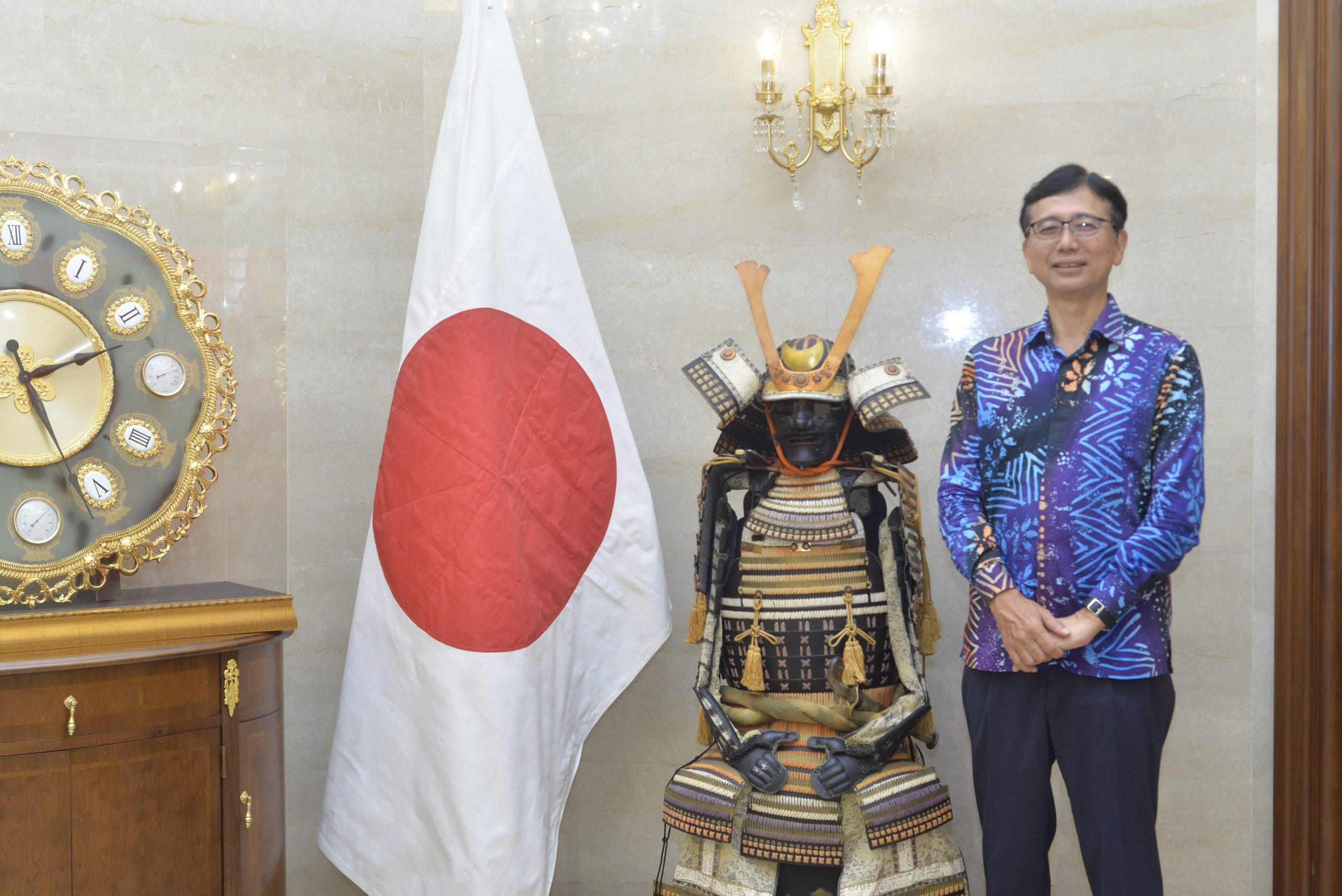
A seasoned diplomat, Ambassador Shikata has served in the US, France, the UK, China and Japan’s Prime Minister’s Office before arriving in Malaysia two years ago. He was as comfortable discussing diplomacy and regional security as he was talking about laksa, Malaysia’s diversity and Japan’s lesser-known destinations.
What first made you interested in an international career?I grew up in Kyoto, Japan’s capital in between the 8th and 19th centuries. When I was 17, I attended a high school in Missouri, the US, as an exchange student. At that time, not many people in the Mid-West knew a lot about Japan, so I found myself making presentations about Japan. People had certain stereotypical images of Japan, and I remember having to explain that, yes, we had cars in Japan! After spending time not only getting to know Americans but also other exchange students coming from across the world, I thought perhaps I could make a career out of international relations. That was when I became interested in diplomacy.
During my International Law studies at Kyoto University, I applied for the Foreign Service examination and was accepted. After entering the Foreign Service, I went on to study at Harvard Kennedy School of Government. HRH the Sultan of Perak also studied there.
Where has your career taken you?My first embassy posting was to Washington, DC in 1989, where I worked as a press officer for four years. Later, I returned to Tokyo and was posted to Paris, where I worked with the OECD and IEA on policy issues including energy and sustainable development. I then returned to Tokyo before moving to London in 2012. I was seconded to the Prime Minister’s Office and worked on global communications.
From London, I also travelled to The Hague for work related to the International Court of Justice. Later I was posted to Beijing, where I stayed until 2019. I then took a sabbatical at Havard University to conduct research on emerging US trade policy towards China before returning to Tokyo. And then, in November 2024, I came to Malaysia as Ambassador.
You had visited Malaysia before becoming ambassador. What surprised you most after actually living here?Indeed, I had already visited Malaysia several times. My first visit was actually a family trip to Langkawi in 1998. I also accompanied the Japanese Prime Ministers on visits to Malaysia during my previous assignments.
What really surprised me here was the number of Malaysians who already are familiar with Japan. I knew about the Look East Policy of course, introduced by Prime Minister Mahathir Mohamad in 1982, and how many Malaysians had been encouraged to study Japanese, work habits, and engineering. But when I came here, I realised just how deeply that experience has spread across the Malaysian society.
The other thing that struck me was Malaysia’s diversity. I knew from the statistics that Malaysia was a multi-ethnic society, but when I travelled around the country and experience the different states and their food and traditions, I really understand it better.
During the past two years, I have visited all the states and tried different kinds of local food. Whenever I visit regions, I try the local laksa – Kuantan laksa, Sarawak laksa and others. The diversity is striking.
Japan has been a major investor in Malaysia for decades. What lies ahead?In the 1980s and 1990s, many Japanese companies came to invest in Malaysia. Japanese companies were involved in major projects, including the Petronas Twin Towers, KLIA and KL Sentral, as well as projects in Putrajaya and Cyberjaya.
During those days, Malaysia was encouraging Japanese companies to come and invest here, and the Look East Policy was an important part of that. But Malaysia is now at a different stage of development. So I am advocating what I would call “co-creation”. It should not simply be Japanese companies coming to Malaysia and doing business here. We should develop things together.
One example is education. More Japanese students are now coming to Malaysia, where they can study in English and experience a very multicultural environment. More Japanese start-ups are also coming to Malaysia rather than automatically choosing Singapore.
Malaysia has good local talent, an English-speaking environment and a multicultural society. It is also more affordable than Singapore. And, thanks to the diversity of Malaysian cuisine, even the standard of Japanese restaurants here is generally very good!
Tokyo, Kyoto and Osaka are already well known to travellers. Where should they go next?There are so many places that it is difficult to choose only three! Okinawa would certainly be one. There is a long history of trade between Okinawa and Southeast Asia, including trading relations with the old Sultanate of Melaka in the 15th and 16th centuries.
Kyushu is another great place to explore, and with direct Malaysia Airlines flights from Kuala Lumpur to Fukuoka, it’s becoming even more accessible. Nagasaki, in particular, has a fascinating history, shaped by its long-standing connections with both the Portuguese and the Dutch.
Then there is Shikoku, which has a lot to offer and is still less familiar to many Malaysian travellers. And if you like snow, you don’t have to go only to Hokkaido. Tohoku has excellent ski resorts and hot springs as well.
Malaysia and Japan will soon mark 70 years of diplomatic relations. What would you like to see in the years ahead?Japan was among the first countries to establish diplomatic relations with Malaysia in 1957, and we has seen strong exchanges of people, students and culture during the last seven decades. I hope we can expand those exchanges further.
Education is particularly important to me. For example, the University of Tsukuba entered the Malaysian higher education market two years ago and is collaborating with the Malaysian universities. It is still a small undergraduate programme, with around 20 students per year, and it is a good start with multi-disciplinary problem based learning, making use of data service.
We have also been working with Universiti Teknologi Malaysia through MJIIT – the Malaysia-Japan International Institute of Technology – for around 15 years. The programme began following a request from former Prime Minister Mahathir, who encouraged Malaysian students to study in Japan. But not everyone can afford to go to Japan, so the idea was to bring Japanese engineering programme to Malaysia.
Many Japanese professors came here and Japanese-style engineering education has been introduced. Now we are talking about taking that programme to the next stage.
Ultimately, I think we should continue encouraging young Malaysians to go to Japan and vice versa. Those experiences can become something very valuable in their education and future careers.
When your posting eventually comes to an end, what do you think you will miss most?I think it will be the combination of everything: the people, the climate, the food and the many places to play golf and pickleball. Many Japanese people who have lived in Malaysia keep coming back after they leave. Some come back to play golf, some to meet old friends. I hope I’ll have many chances to come back too.
With chef Mr Takeno Motomichi, who prepared an amazing Japanese lunch for us. Photo credits: Merong Fotografia.
...


Read the fullstory
It's better on the More. News app
✅ It’s fast
✅ It’s easy to use
✅ It’s free