KL passes economy and fun tests – the job now is to keep it that way

1 hour ago
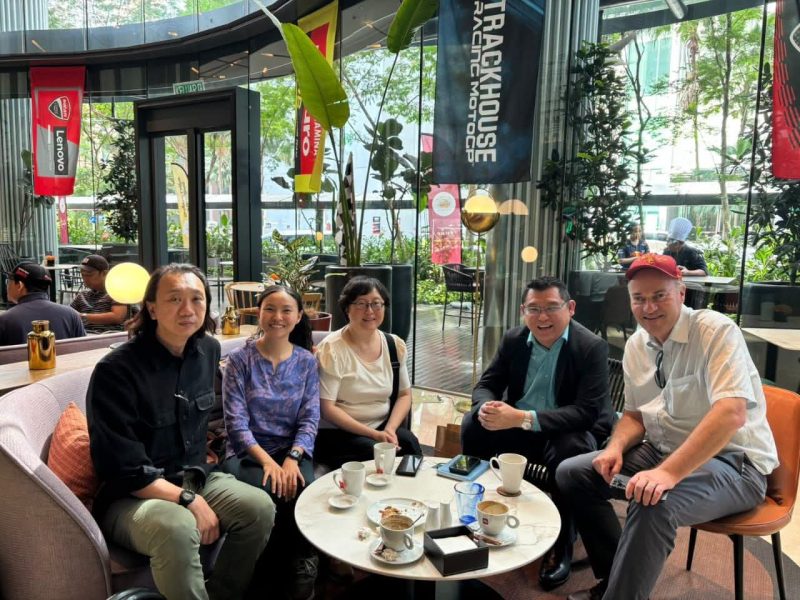
Former Kuala Lumpur City Hall advisory board member Lai Chen Heng shares his discussion with two renowned researchers studying what makes Asian cities succeed.
A city needs a paycheque and a pulse. Kuala Lumpur is building both.
“People live in cities because of the economy, but people also live in cities because they are fun.”
I first heard urban economist Matthew Kahn make this observation in a YouTube lecture. On Oct 31, I had the opportunity to discuss it with him in Kuala Lumpur.
Professor Kahn is Provost Professor of Economics at the University of Southern California, a research associate at the National Bureau of Economic Research and the author of 11 books on urban and environmental economics.
His co-leader, Professor Siqi Zheng, is the Samuel Tak Lee Champion Professor of Urban and Real Estate Sustainability at the Massachusetts Institute of Technology (MIT) and faculty director of its Center for Real Estate.
The two co-authored *Blue Skies over Beijing*, a study of economic growth and the environment in China. They came to Malaysia to examine what makes Asian cities succeed.
For Kuala Lumpur, they selected just two interviewees: Federal Territories Minister Hannah Yeoh and me. It was an honour.
The team approached me after reviewing my opinion pieces and work on urban challenges, which have spanned nearly a decade and covered Kuala Lumpur as a whole, rather than a single district or issue. This included my two years on the Kuala Lumpur City Hall Advisory Board.
Being sought out as a voice on the city, alongside the minister responsible for it, is recognition I regard more as a responsibility than a credential.
My answer to their question was simple: Kuala Lumpur is passing both tests, and the job now is to keep it that way.
The economy test
Kuala Lumpur has moved beyond traditional manufacturing and now thrives on professional and knowledge-intensive industries.
Under the Madani administration, Malaysia recorded a record RM426.7 billion in approved investments in 2025, with foreign investment rising 20.9 per cent to RM207.1 billion.
Kistler, the measurement technology group, has just opened its Asia-Pacific regional headquarters in Kuala Lumpur. Companies like that do not relocate for slogans.
The fun test
Talent comes for the job but stays for the quality of life. Kuala Lumpur offers a high standard of living at a cost that has not priced out the people who keep the city running.
But fun cannot be left to chance. That is why the Kuala Lumpur Creative and Cultural District (KLCCD) matters.
Think City drew up the KLCCD master plan in 2019, together with the National Heritage Department and City Hall. Its aim is to transform the historic city centre, including Masjid Jamek, Jalan Tun Perak and Pasar Seni, into a place where heritage and contemporary art share the same streets.
Art galleries have begun opening in downtown Kuala Lumpur. In May, KL Festival turned heritage buildings and public spaces into a month-long celebration under the theme “Memory & Tomorrow”. Its programme included reimagined wayang kulit, contemporary dance and immersive installations, much of it free.
That last point is the real test. Fun that only the well-off can afford is merely another luxury product. It also makes economic sense. Think City estimates that rejuvenating the Masjid Jamek–Pasar Seni corridor could generate RM5.3 billion in economic benefits.
Kahn’s two tests are not competing priorities. Culture is infrastructure too.
The part in between
Both tests depend on how well a city builds.
On infrastructure, including intercity expressways, I told the delegation that private-sector delivery may cost more upfront but can offer advantages in speed and discipline, provided risks are clearly allocated.
Boston’s Big Dig, a publicly funded project, took about 25 years from planning to completion. It was finished in 2007, nearly a decade behind its original schedule and at roughly six times its initial cost.
The lesson is not that the public sector cannot deliver projects. It is that delivery discipline matters more than who holds the pen.
On housing and the night economy, the goal is to keep Kuala Lumpur a home for ordinary citizens. Transit-oriented housing, affordable high-rises and traditional food stalls must all be part of the picture, rather than allowing the city to become an exclusive enclave.
The conversation turned personal when we discussed Boston, where my daughter is studying. Cities compete for people as much as they do for capital, and people are drawn by opportunity and a sense of belonging.
The team’s findings will be published in research papers and a book scheduled for 2028. I would rather see the proof on our streets before then.
Kuala Lumpur’s bet is that nobody should have to choose between making a good living and enjoying a good night out.
If being a benchmark for Kuala Lumpur means anything, it means keeping the conversation honest and the city accountable to it.
The views expressed here are the personal opinion of the writer and do not represent those of Twentytwo13.
...


Read the fullstory
It's better on the More. News app
✅ It’s fast
✅ It’s easy to use
✅ It’s free