China's century-old "porcelain capital" eyes global luxury

1 hour ago
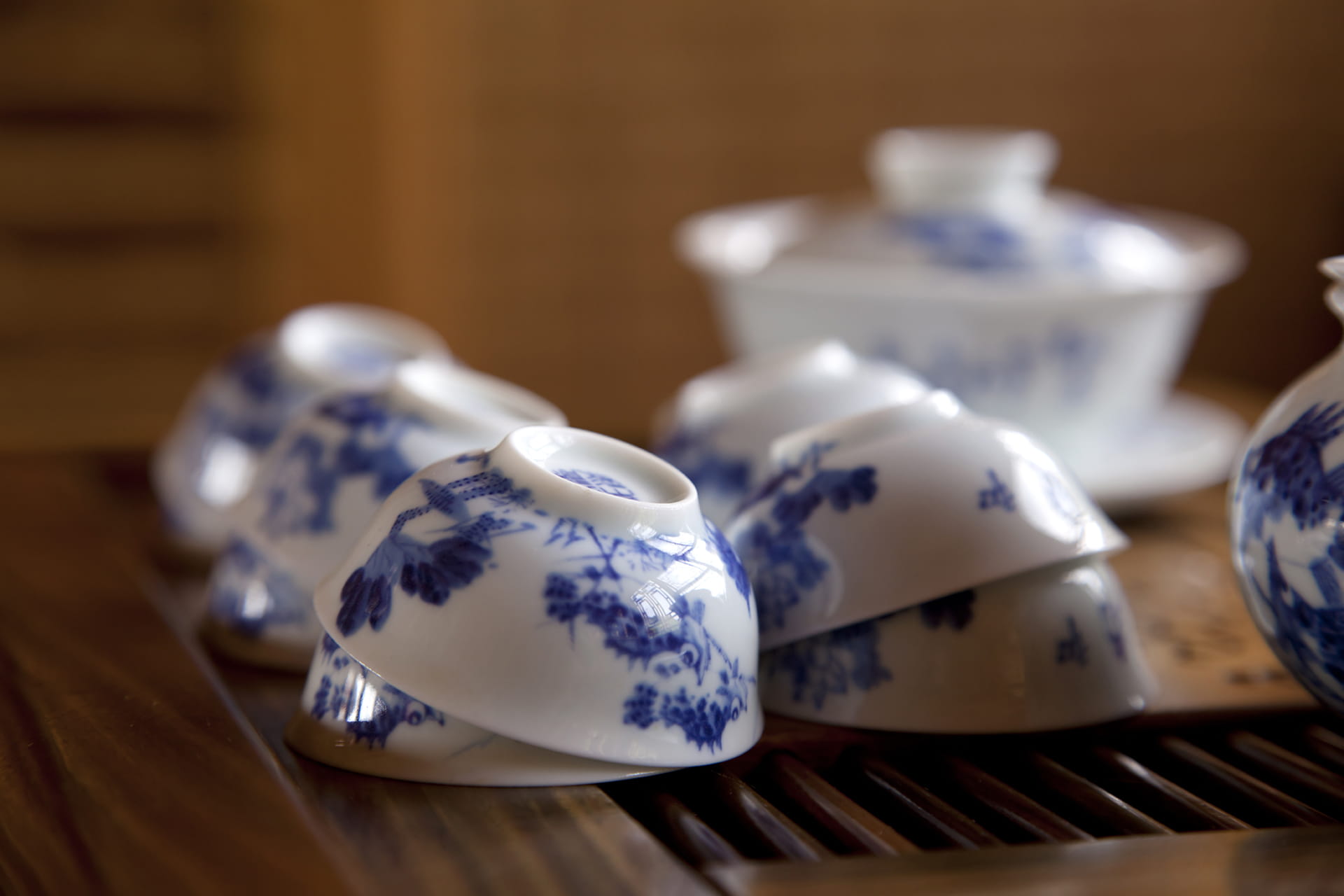
Porcelain industry sites in Jingdezhen, a city in Jiangxi, China, have been added to the UNESCO World Heritage List, raising hopes that the designation will boost its profile at home and abroad.
Local artisans and entrepreneurs are now seeking to build brands that can one day stand alongside some of Europe’s and Japan’s best-known names in ceramics.
Nestled among rolling hills, Jingdezhen has historically had abundant supplies of the clay used to make porcelain and the fuel for firing it, making the area well suited to ceramics production.
In 1004, the first year of the Jingde era of China’s Song dynasty, the emperor dispatched officials to the area to oversee ceramics production. The city takes its name from the emperor’s reign era.
In the years that followed, a supply chain developed around the porcelain industry, encompassing sources of raw materials, kilns, workshops and transportation hubs.
In July, UNESCO inscribed areas associated with the city’s porcelain industry on its World Heritage List under the name “Jingdezhen Handicraft Porcelain Industry Sites.”
Zhao Lei, founder of porcelain brand Lanyin Dongfang, has big ambitions for the company.
“I want to make it the most influential Chinese porcelain brand in the world,” he said.
At the company’s factory, automation is combined with skilled handcraftsmanship. Pieces are shaped and fired at temperatures above 1,300 degrees Celsius. The porcelain is remarkably thin, allowing patterns to emerge when held up to a light.
Zhao started the business in 2009, when he was a second-year student at Jingdezhen Ceramic University, beginning with a small workshop. Today, the company handles everything from product development and design to manufacturing and sales and employs more than 200 people, including retail staff.
“Jingdezhen has been the ‘porcelain capital’ for 1,000 years, yet it still doesn’t have a porcelain brand that represents the region and is known around the world,” Zhao said.
Germany has Meissen, Denmark has Royal Copenhagen, and Japan has Noritake, Zhao noted, but China has yet to produce a comparable brand.
A Meissen cup and saucer set sits in Zhao’s office. He paid about RMB 2,000 (USD 299) for it, while a similar set from a Jingdezhen brand might sell for only 100 to RMB 500 (USD 74.9), he said.
Zhao wants to close that gap.
Jingdezhen excels at producing distinctive pieces in small batches but has traditionally been less adept at standardizing production and scaling it up. As a result, producers have struggled to achieve the scale needed to establish global brands.
Domestic demand was another obstacle. Before China’s rapid economic growth, few households could afford to spend heavily on tableware, leaving the market dominated by inexpensive products.
Lanyin Dongfang is seeking to add value by making its products more functional.
The company has reworked its materials and glazes to create smoother surfaces that are easier to clean and less likely to retain greasy residue. It is also designing bowls that remain stable even when stacked high in a kitchen.
The World Heritage designation could give such efforts a boost.
“If more people use artistic, standardized tableware from Jingdezhen in their daily lives, its appeal should spread,” Zhao said.
“Why is Jingdezhen worth investing in for the long term?”
Tu Ruiming asked that question in a video posted on Douyin, the Chinese version of TikTok. Tu runs Yundianhui, a sales platform specializing in high-end porcelain, and posts videos introducing Jingdezhen’s history and culture.
A porcelain designer himself, Tu said, “Jingdezhen has considerable value in its history, culture and craftsmanship, but remains weak when it comes to commercialization.”
Most workshops in Jingdezhen with their own kilns invest relatively little in building their brands or promoting their products, he said.
Tu also promotes Jingdezhen’s appeal and sees the World Heritage designation as a boost to the city’s visibility. “In the future, I want to attract more outside capital and businesses,” he said.
He envisions Jingdezhen becoming like Switzerland, where skilled craftsmanship supports a host of luxury watch brands.
Some brands in Jingdezhen continue to make porcelain using almost entirely traditional methods.
At Wuchen Gegu, a workshop in the city, an artisan held a brush perpendicular to the surface of a large jar as he painted a decorative pattern. Much of the production process is done by hand, including regulating the heat of the kilns.
Owner Chen Jian said the workshop sticks to traditional methods because “if we stop doing it, it will die out.”
Traditional techniques add value to the workshop’s products, with some pieces selling for tens of thousands of yuan. Chen said strengthening the brand is also essential to increasing sales.
World Heritage sites often bring to mind buildings and ruins from the past. Jingdezhen, however, continues to evolve. Chinese brands in industries ranging from electric vehicles to home appliances have often expanded globally by offering good value for money.
Jingdezhen, however, could give rise to a luxury brand built on its history, culture and artisanal craftsmanship.
This article first appeared on Nikkei Asia. It has been republished here as part of 36Kr’s ongoing partnership with Nikkei.
Note: RMB figures are converted to USD at rates of RMB 6.68 = USD 1 based on estimates as of November 16, 2026, unless otherwise stated. USD conversions are presented for ease of reference and may not fully match prevailing exchange rates.
...


Read the fullstory
It's better on the More. News app
✅ It’s fast
✅ It’s easy to use
✅ It’s free