Chinese suppliers set to gain from global AI boom despite trade tensions
14 小时前
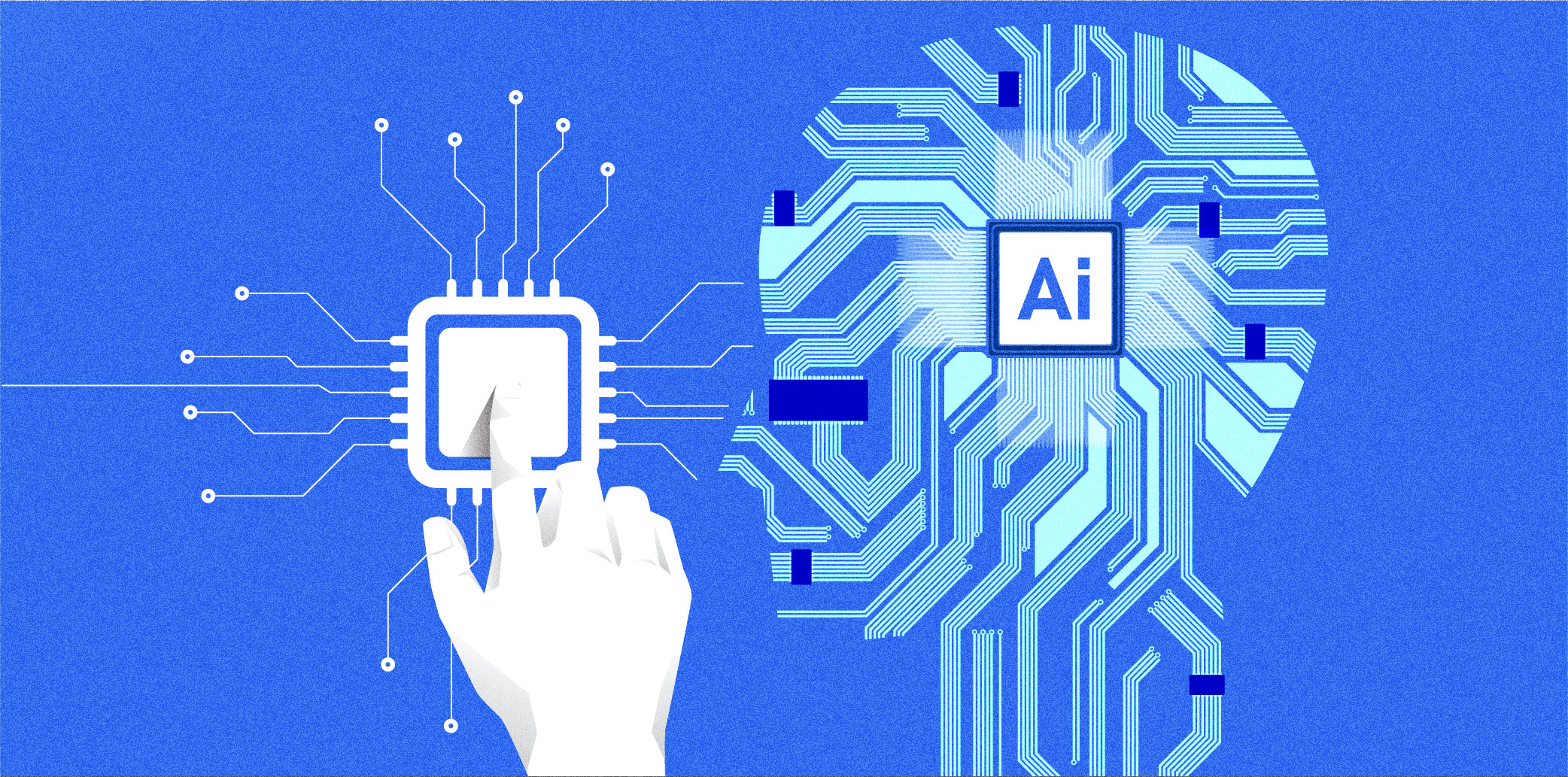
With spending on artificial intelligence continuing to surge, Chinese suppliers of everything from power equipment to cooling systems are enjoying a boom in exports, despite geopolitical tensions and tariff uncertainty.
Unlike traditional data centers, AI data centers consume enormous amounts of electricity because they run on more energy-hungry servers and cooling systems. This, in turn, often requires grid updates. Since 2022, investment in power grids has accelerated across the US, Europe, and the Middle East, but supplies of power equipment have remained tight worldwide.
Transformers play a key role in power-grid upgrades. However, around 80% of the US power transformer supply and 50% of its distribution transformer supply are imported, with a supply deficit of 30% and 10%, respectively, in 2025, according to an August 2025 report by consultancy Wood Mackenzie.
Against this backdrop, Sieyuan Electric, a Shenzhen-listed grid-equipment maker, set up a US subsidiary in 2024 to capitalize on the transformer shortage in the country, despite the tensions and uncertainty sparked by President Donald Trump’s tariff policy. Since the start of the year, the company has seen its share price more than double, and it announced plans last month for a secondary listing in Hong Kong.
The transformer industry is labor intensive and requires specialized winding machines that take years to source. It also takes years to build a new factory and train workers in the skills to operate it, making it hard to expand capacity as rapidly as, for example, the solar panel industry.
For the first 11 months of the year, China’s transformer exports reached nearly RMB 58 billion (USD 8.1 billion) , up 36.3% year-on-year (YoY), according to China Customs.
Amid the booming demand, export growth at China’s major power equipment makers broadly exceeded their domestic expansion in the first half of 2025. For instance, Tebian Electric Apparatus, the world’s largest transformer producer by capacity, reported a 65.91% YoY increase in international contract value, far outpacing the 14.08% growth recorded in its home market.
Analysts say that speed is one of China’s major strengths in this area.
“It takes less than a year from placing an order to receive the products from Chinese suppliers, while it takes two to three years for US, European, Japanese, or [South] Korean suppliers,” said Matty Zhao, co-head of China equity research at Bank of America Securities.
Huang Chao, a marketing manager at Jiangsu Dishin Electrical, told Nikkei Asia that China’s transformer industry is highly competitive, as the silicon steel sheets required for transformer production, which previously relied on imports, have now been fully localized.
His company already exports a small portion of its products to the US and Middle East, and Huang sees an opportunity to export more amid the global shortage of transformers.
“China’s transformer exporters have been making sustained efforts to expand overseas. Intense competition at home and a weak domestic market have slowed cash flows, putting pressure on companies across the sector,” he said.
Huang noted, however, that the current export surge is being driven by the industry’s leading players, and that big challenges await smaller players like Dishin, which has around 150 employees.
“Standards vary from country to country, requiring technical adjustments and certification from local authorities. In addition, transformers are primarily sold to power utilities, which means companies need established sales channels—product quality and price advantages alone are not enough,” he said.
Global spending on AI is accelerating rapidly. UBS estimates AI capital expenditure reached USD 423 billion in 2025 and will hit USD 571 billion in 2026, with several investment banks projecting total AI spending to surpass USD 1 trillion by 2030.
US hyperscalers including Alphabet, Meta, Microsoft, Amazon, and Oracle are among those investing heavily in AI, fueling a wave of data center construction and putting pressure on power grids. Hyperscalers are companies that operate massive data centers to provide cloud computing and other services for clients.
By comparison, China’s AI capex remains smaller, with spending forecast at RMB 600–700 billion (USD 84–98 billion) in 2025, largely driven by the government and major internet firms, and rising to RMB 2.0–2.5 trillion (USD 280–350 billion) by 2030, Bank of America estimates, with about one-third allocated to AI infrastructure.
Energy storage systems (ESS) is another area where China currently has an edge. JP Morgan said in a recent report that it expects the global rollout of AI data centers to boost demand for such systems, although AI-driven ESS demand currently represents only around 2% of global shipments.
ESS can absorb excess grid power when data centers are operating below full capacity. In the first ten months of 2025, global ESS battery shipments surged about 70% from the same period the year before, driven by a 61% jump in China’s exports to major markets, according to JP Morgan.
The investment bank expects ESS shipments to grow roughly 80% in 2025 and 30% in 2026, warning that tight supply could push prices higher into the new year.
BofA’s Zhao said that although LG in South Korea has been building up its ESS capacity, its expansion remains well behind the real demand growth, meaning “manufacturers need to keep importing from China.”
The global battery market is dominated by Chinese players such as CATL (Contemporary Amperex Technology), EVE Energy, and BYD. Hefei-based Sungrow, a leading maker of battery ESS and inverters, said in its third-quarter results that it began receiving order inquiries from US cloud companies for data center energy storage systems starting in October 2025.
The industry as a whole is keen to seize the export opportunity. At an industry forum held in Shenzhen last month, state media reported, speakers from companies including CATL and EVE Energy shared the same message: “Global energy storage belongs to China, and China’s energy storage also belongs to the world.”
Duan Bing, a telecom and technology analyst at Nomura, said that while he expects component shortages to persist through 2026 as demand remains strong and technical barriers rise, AI networking equipment, including switches, routers, optical cables, and transceivers, as well as copper cabling, will become increasingly critical to data center buildouts, a trend that could favor leading suppliers by pushing up prices and improving margins in the global AI networking market.
BofA’s Zhao expects exports by China’s cooling equipment makers to grow, too. In Southeast Asia, where a flurry of data center construction is fueling demand for cooling systems, the supply of key components such as cooling distribution units and unitized quick disconnects remain dominated by non-Chinese brands, but Chinese suppliers play a major role in providing secondary side piping and manifolds.
“As Chinese internet companies are increasingly building AI data centers in Southeast Asia due to restrictions on advanced chip imports and lower electricity costs compared with China’s top-tier cities, Chinese cooling equipment makers are expected to have more export opportunities with better pricing and relationships with Chinese internet firms,” she said.
This article first appeared on Nikkei Asia. It has been republished here as part of 36Kr’s ongoing partnership with Nikkei.
...


Read the fullstory
It's better on the More. News app
✅ It’s fast
✅ It’s easy to use
✅ It’s free