Former OEM Ilife offers a blueprint for China’s next manufacturing phase
16 小时前
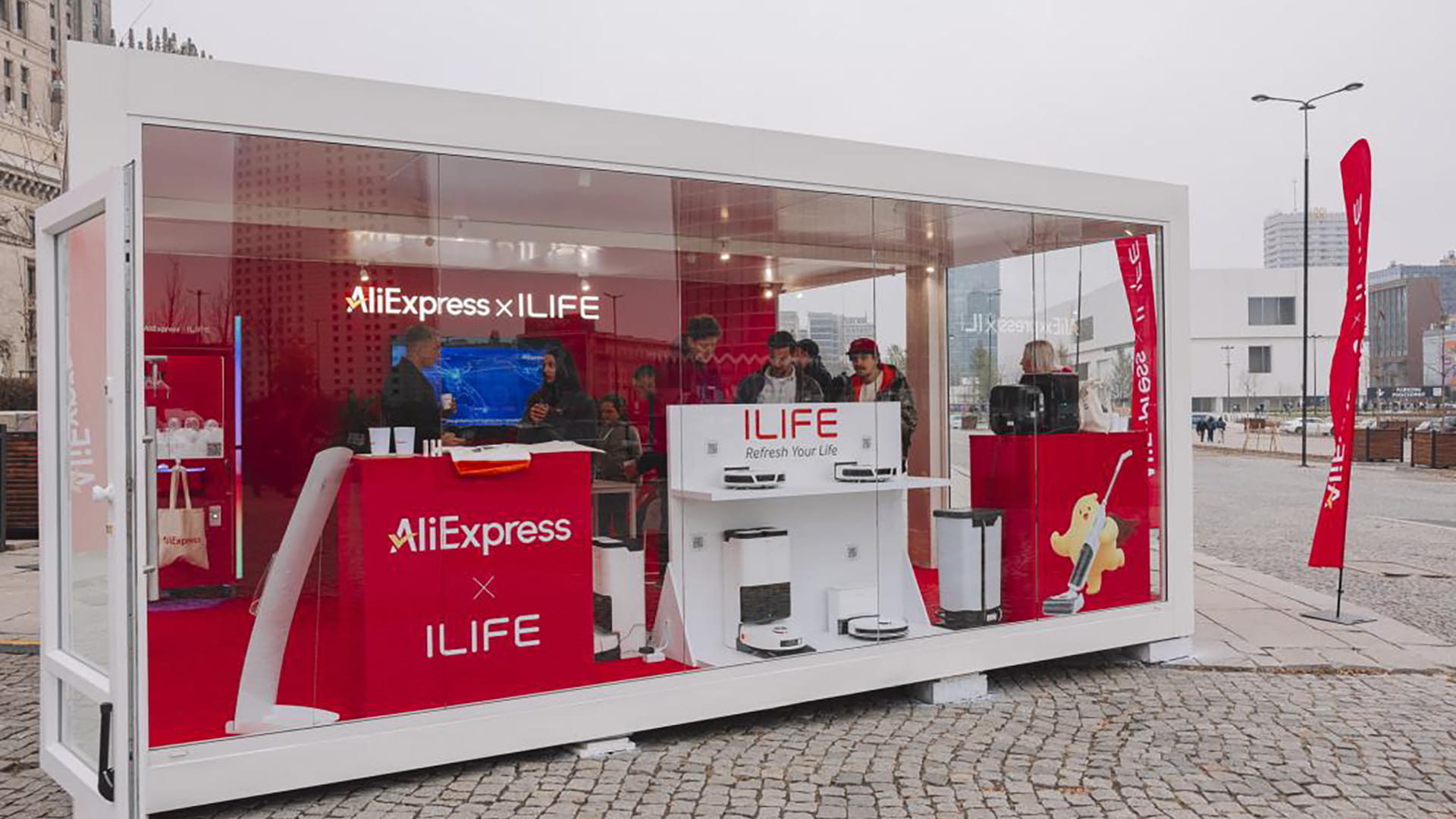
In Poland, one in every ten households uses a robot vacuum cleaner made by the Chinese brand Ilife.
In 2025, Ilife’s sales on Alibaba’s cross-border e-commerce platform AliExpress rose more than 300% year-on-year. Poland alone contributed more than USD 10 million in revenue. During that year’s overseas Singles’ Day shopping festival, Ilife’s sales on AliExpress surpassed those on Amazon for the first time, signaling a shift in its channel mix.
Behind the growth was a noteworthy gambit.
Ilife began as an OEM (original equipment manufacturer), with a factory in Shenzhen producing robot vacuum cleaners for more than a dozen domestic and overseas brands, including Ecovacs and Germany’s Lukas. At its peak, annual shipments exceeded two million units. Then management made a decisive break. The company would exit OEM production entirely and commit fully to building its own brand.
“A decision that leaves you torn is usually the wrong one,” said Miao Qunyi, Ilife’s general manager, in an interview with 36Kr. “The simplest approach is to stop doing it. Once you cut it off, everything becomes clear.”
The shift from private-label manufacturing to selling directly to consumers mirrors a broader transition in Chinese manufacturing, from exporting products to exporting brands.
The technologies and supply chains behind robot vacuum cleaners are heavily concentrated in China. From Hangzhou’s robotics companies to Shenzhen’s dense hardware clusters, the country has built an ecosystem spanning algorithms, hardware, and manufacturing. AliExpress data shows that from January to November 2025, sales in the platform’s cleaning appliances category grew 85% year-on-year, with Chinese brands driving most of the increase.
“This is an age of exploration,” Miao said, adding that Chinese companies are now intent on climbing both ends of the smile curve.
Before Ilife existed as a consumer brand, operating an ODM (original design manufacturing) factory was a punishing business. At its height, the factory served more than ten brand clients and shipped more than two million units annually. Production lines rarely stopped.
The risks, however, were already accumulating.
As competition in the robot vacuum market intensified, leading brands such as Ecovacs, Roborock, and Dreame began building their own supply chain systems, steadily compressing margins on OEM orders.
“Profits were as thin as paper, and we still had to provide extensive service,” Miao said. A deeper problem was distorted feedback. Market signals reached the factory only after being filtered by brand owners, rather than coming directly from users.
Under the OEM model, Ilife remained separated from end consumers. R&D centered on fulfilling customized requirements from clients, not on responding to market demand. “Ten clients meant ten different demands. R&D was busy satisfying buyers, but had no idea where it should really be heading.”
The turning point came in 2024. As AliExpress rolled out its brand globalization initiative, Ilife was engaged in internal debate. Management ultimately decided to shut down OEM operations and focus entirely on its own brand.
“When you try to do OEM and branding at the same time, and still balance both sides, you inevitably end up conflicted,” Miao said. “And anything that puts you in that position is usually wrong.”
The decision came with short-term costs. Annual revenue fell from more than RMB 1 billion (USD 140 million) at its peak to under RMB 500 million (USD 70 million). Miao said he has no regrets. “We only need to think about what users actually like. If even we find the product acceptable, users won’t think it’s bad.”
The shift also gave Ilife direct access to market insight. Using platform tools, customer service teams began communicating directly with overseas buyers, learning where products failed or why they struggled to return to charging docks. That information fed directly into R&D, tightening the iteration cycle.
“In the past, it might take two or three months for user feedback to turn into an improvement,” Miao said. “Now we can identify the problem within days and fix it in the next generation.” In one case, after users complained about hair tangling around side brushes, the team replaced a rotating design with a two-pronged brush, eliminating the issue.
Within a year, the strategy began to pay off. In 2025, Ilife’s sales on AliExpress tripled. Poland alone generated more than USD 10 million in revenue, turning Ilife into a widely recognized household cleaning brand locally.
The broader robot vacuum market, however, is locked in a cycle of feature inflation. Fragrance modules, drying functions, voice interaction, and artificial intelligence-powered recognition are continually added. In China, high-end models with integrated base stations have become mainstream, with Roborock, Ecovacs, and Dreame competing on algorithms, obstacle avoidance, and navigation.
Ilife has taken a different approach. It avoids feature stacking and focuses on cleaning fundamentals and value.
The company targets the middle and lower tiers of the market. Miao compares global demand to a pyramid, with premium users at the top willing to pay for advanced technology, and the much larger middle prioritizing practicality, cleaning performance, and price.
Rather than competing directly with top-tier brands, Ilife focuses on midrange users. Its strategy is to bring navigation and obstacle-avoidance systems typically found in USD 300–400 models into products priced between USD 100–200.
That philosophy extends to product design. While competitors often emphasize peak suction power, higher suction drains batteries quickly. Ilife instead focuses on airflow efficiency and one-pass dust pickup, metrics it says better reflect real-world performance. The products may lack headline specifications, but they emphasize reliability.
Cost control plays a central role. From R&D and mold development to manufacturing, warehousing, and logistics, Ilife handles most operations in-house, reducing intermediaries and external costs.
According to 36Kr, those savings are reflected in pricing. Comparable Ilife products are typically USD 10–20 cheaper than competing models.
The company’s channel strategy is equally deliberate. On AliExpress, Ilife promotes more vacuum-and-mop combination models with additional features. On Amazon, it lists simpler, value-focused products. AliExpress has lower return rates and built-in messaging tools, allowing direct communication with customers and faster issue resolution for more complex devices.
That direct feedback loop has also helped Ilife anticipate demand. Seven years ago, European and US users were already requesting clean water mopping. Ilife launched a continuous clean water mopping robot six years ago, nearly a year ahead of many competitors. For pet-owning households, ongoing improvements in anti-tangle brushes and haircutting functions have also been driven by user input.
From OEM production lines to living rooms in Polish homes, Ilife’s decade-long shift reflects a broader upgrade in China’s manufacturing sector. With disciplined positioning and direct access to consumers, Chinese manufacturers are increasingly building brands that stand on their own overseas.
KrASIA Connection features translated and adapted content that was originally published by 36Kr. This article was written by Ou Xue for 36Kr.
...


Read the fullstory
It's better on the More. News app
✅ It’s fast
✅ It’s easy to use
✅ It’s free