'Honey Bunch' Movie Ending Explained & Summary: What Does The Final Scene Suggest?

3 天前
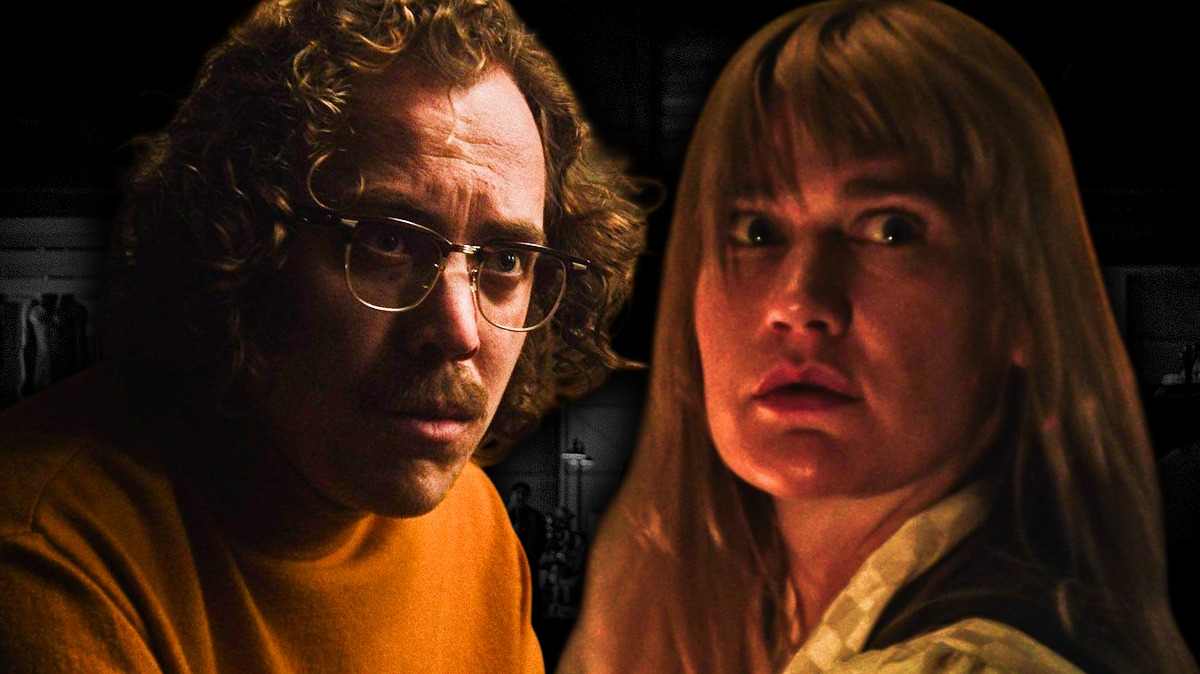
Madeleine Sims-Fewer and Dusty Mancinelli’s horror sci-fi thriller Honey Bunch, starring Grace Glowicki and Ben Petrie, poses the question, “How far will you go for love?” I think this is just the perfect Valentine’s Day watch for those into horror. The film teases the thin line between passionate and terrifying when it comes to love. Diana couldn’t recall some crucial memories from her past after a traumatic accident. Her husband, Homer, brought her to an experimental trauma center, and he hoped the unconventional methods employed there would help her recover. The center was surrounded by wilderness, and although there was something eerie about the place, she couldn’t really put a finger on it. So, how did the treatment work? Did Diana get back her memories? Let’s get into the details!
Spoiler Alert
What was the purpose of the clones?In Honey Bunch’s ending, we discover that the experimental treatment involved making clones of the deceased. After the car crash eighteen months ago, Diana went into a coma, and one fine day she took her last breath. Homer couldn’t accept her demise; someone at the hospital had told him about ‘Retrouvailles,’ the medical center that not only produced clones but also, with its advanced technology, performed memory transplants. They didn’t just offer a clone that looked like the deceased, but someone who retained the memories as well, so that their loved ones would never feel they were a different person. The version of Diana that we see from the beginning of “Hunch Bunch” is the fifth clone, and she was the one who’d made the most progress. She retained some of the memories from before the crash; for example, she knew who Homer was, and at the trauma center, she remembered more and more details, and, well, not all of them were very pleasant.
If a character is named Homer, you would expect a reference to ‘The Odyssey,’ especially when it happens to be quite significant to the protagonist as well. Diana’s journey from her accident to death to revival and to being is an obvious reference to the King of Ithaca’s long, arduous journey back home. Homer’s goal was to be by Diana’s side throughout the journey so that one day, she too could go back to society and live as if nothing had changed. He didn’t have the courage to confess the truth to Diana; he knew he would have to come clean since one day Diana would have likely figured out that she didn’t make it after the accident.
Diana came across a medical report with a Retrouvailles letterhead. The report was based on Diana’s progress, and she came across the words ‘anomalies,’ ‘unsuccessful,’ ‘procedure,’ and ‘controlled environment.’ She started to suspect Homer, because he’d never mentioned these ‘procedures’ before. In one of her visions (discussed in detail in the next segment), she’d seen a doctor drill into her head, so she decided to check her scalp for a scar, and she immediately found one. She wondered if he’d done something to her, and she figured that she had to escape from him. She mixed a sleep-inducing sedative in his drink, and as soon as he dozed off, she managed to hop into his car, and she took off. Suddenly, a young woman stepped in front of her car, and to Diana’s surprise, she looked just like her. She had short hair and some infection on her arms, and she could barely speak. She had escaped from a facility as well, and instead of driving away, Diana decided to follow her.
They walked through the woods and arrived at another facility where Diana noticed the ‘Retrouvailles’ sign. They managed to slyly climb into the facility through a window, and Diana was shocked to see various versions of herself in the room. One of the clones was short-tempered, and she had to be tied to the bed; one was physically deformed, and the other was the woman she’d followed who clearly didn’t have any recollection of the past. She was the one who looked after the two clones. The short-tempered one screamed for help, and a nurse stormed into the room and injected her with a sedative. Since everyone in the room looked the same, the nurse didn’t suspect Diana. After the nurse left, the clone in the blue dress showed Diana around the facility, and she realized that every other patient she’d crossed paths with also had clones living there. Every patient was assigned a room where their clones lived together. These clones were rejects, the ones who didn’t fulfill all the parameters. Diana caught a glimpse of Dr. Trephine at the facility, and her clone asked her to run immediately. Dr. Trephine was the one who had invented the memory transplantation technology, and Diana had obviously heard a lot about her. Diana managed to make it back to her car, and immediately she recalled the final moments she’d spent with Homer before the accident.
What did the strange dreams/visions Diana had signify?When Diana made it back to the car, she remembered the last conversation she had with Homer. She had asked if he would love her even if her beauty faded and if passion was inevitably lost in romantic relationships. Homer believed that long-term relationships were often devoid of passion, but they were rooted in something far more integral: devotion. He termed devotion as ‘sublimely romantic,’ and he believed that if one was devoted, they were essentially signing up to jump into the abyss for someone, and he thought that was extremely romantic. Diana didn’t agree with his opinion; she preferred passion over devotion. As they joyfully argued over fading beauty, passion, and devotion, a vehicle rammed into their car. The traumatic memory left Diana in shock and tears. Homer and Farah, the woman who worked at the facility, approached the car and helped Diana step out. She was asked to rest, and immediately after she woke up, she confronted Homer.
When Diana was resting, Dr. Trephine shared good news with Homer. The scans showed that ‘Diana 5’ had made drastic progress, and her rehabilitation was completely successful. The doctor mentioned that Diana 5 was one of her rare creations who retained memories from even before the transplantation. This was why Diana had strange dreams and visions. She’d seen the doctor as well as Joan’s face in her visions. Her clone in blue dressed exactly like Joan, so in her dreams and visions she often mistook her clone for Joan; she evidently admired her and tried to copy her style from the portraits at the facility. Diana 5, too, was deeply intrigued by Joan’s story; she was Dr. Trephine’s wife, who had killed herself in the nearby water body. In a letter Diana found among Joan’s belongings, she’d mentioned how the doctor had changed drastically over the years. She barely saw her anymore, and she looked forward to doing her tests because that was the only time she got to see her partner. Joan had started to lose her memories, and in the letter, she expressed how lonely she felt. She hated being constantly monitored, and she feared she wasn’t the same person as before. Joan was scared of the experiments the doctor performed at her lab, and she believed they had drastically affected her and had made her ruthless. In the letter she’d confessed that she planned on ending her life because she felt that was the only way she could free herself and her partner. It can be assumed that Dr. Trephine had wanted to perform the experiment on her wife. Maybe she even did it but had failed? We don’t know what resulted in Joan’s death, but out of the five clones, perhaps the one that made maximum progress felt caged at the facility and had lost her faith in love and life. So, she chose to die, and the doctor had no option but to give up on reviving her partner. Now, if we consider the possibility that Joan didn’t die (the first time), then presumably Dr. Trephine started working on the experiment after Joan was diagnosed with early dementia so she could bring back Joan, a clone who didn’t suffer from memory loss, and they could reimagine their relationship all over again. But she didn’t take into account the fact that Joan was already slipping away. She was so occupied with finding a cure that she missed out on the opportunity to spend time with Joan. The experiment was designed to bypass grief; those who couldn’t/refused to cope with the death were offered a solution. At first it always was a ray of hope for the clients, but eventually, with every failing experiment, it resulted in more agony and grief.
Did Diana forgive Homer?Homer was in tears when Diana asked him why he chose to bring her back to life. He tried to explain how the decision he’d made was rooted in love. She didn’t feel the same way; she thought he’d disrespected the natural course of things by choosing to defy death by paying a hefty price. Homer had sold their house, furniture, and pretty much everything they had to their name, just to have Diana back in his life. Diana refused to sympathize with him, and she’d made up her mind to not leave the facility alone. She was determined to free her clones and take them with her. Homer stated that they wouldn’t survive outside the facility, but Diana refused to just accept defeat. It was only after Diana witnessed Homer care for the ‘invalids’ that she realized how deeply he loved every version of her. Dr. Trephine had given Homer the option to either terminate the invalids or care for them as long as they lived, and Homer chose the latter. He’d grown deeply attached to the clones; he’d lost Diana twice—the first time when she actually died and the next when her first clone passed away. Diana realized that Homer truly had been devoted to her. He loved her in every form, and although she didn’t agree with his decision to bring her back to life, she came to accept the fact that Homer couldn’t imagine his life without her in it, and this was his expression of love. The clones (except the short-tempered one, who had only retained the bad memories) loved Homer, and they begged Diana to be with him, because only then would the pain they’d had to endure be worth something. Diana 2 told Diana 5 that they had asked Homer to not give up, because they hoped that in the end, one of the clones would make it and experience the joy of a happy relationship that they craved.
Honey Bunch presents us a moral dilemma: given a choice, people would go to any length to bring back their loved ones, but what if the condition was that you might have to watch various versions of your loved one die before you do? Would you accept it? Would you convince yourself that their deaths were ‘worth it’? They too were human beings with an emotional quotient, and their only fault was that they weren’t the perfect copy. Isn’t it inhumane to bring them into the world, only to let them suffer and perish? But at the same time, if you love someone so passionately, won’t you justify it all just to be with them again?
What happened to the facility?Joseph, the father of one of the patients at the facility, couldn’t accept the death of his daughter. Josephina had undergone the experiment, but according to Dr. Trephine, none of the clones had the potential to heal completely. The one that had shown maximum progress had experienced a seizure, and the doctor had already declared that she wouldn’t make it. He wanted to keep on trying, but the doctor had bluntly stated that the chances of success were very low, and therefore she wouldn’t continue. Joseph decided to burn down the place, because it had failed to serve his purpose. He was furious, heartbroken, and extremely emotional, and he did it out of sheer pain. When the only remaining clone of Josephina took her last breath, Joseph curled up beside her and waited for the fire to consume him.
Meanwhile, the short-tempered Diana had grabbed a pair of scissors that was left on the side table and freed herself. Just when Diana 5 had started to accept Homer, she stabbed him repeatedly. The remaining two clones begged Diana 5 to protect Homer and take him out of the facility. Homer begged Diana 5 to stay with Diana 2, since she was having trouble breathing because of the smoke. Short-tempered Diana attacked Homer again, this time with the end of the oxygen stand. She hated Homer because she strongly believed that what he’d done with her was an abomination, and he deserved to be punished. She stabbed Homer with a rod and attempted to asphyxiate Diana 2. Diana 5 managed to pull the rod out of Homer’s body; meanwhile, Diana 4 repeatedly struck short-tempered Diana to stop her from killing Diana 2. Diana 4 and short-tempered Diana attempted to choke each other to death. Meanwhile, Diana 5 put Homer in a wheelchair, and they made it out of the facility. It is safe to assume that the rest of the clones died in the fire. Also, we find out that Joan was right; Dr. Trephine was a heartless woman who only cared about her technology. The moment there was a fire, she grabbed her academic papers and left. Farah and her partner, Delwyn, tried to save lives. When Farah requested the doctor to help, she asked her to leave those stuck at the facility and save herself. The facility burned down, and lives were lost. We witness one of the recently produced clones (a man) walk out of the facility, clueless. His memory transplantation was unsuccessful; therefore, he had no idea who he was or what he was doing there. Dr. Trephine had produced Frankensteins, and we can only imagine that the man would struggle to survive.
What does the final scene suggest?Surprisingly, during the ending of Honey Bunch, we discover that Homer was still alive. He was stabbed, but his heart didn’t give up. Diana 5 was glad that she could save him, although she didn’t agree with certain decisions he had taken; when she was about to lose him, she realized how difficult the decision must have been. I’d assumed that Homer would also die, and Diana 5 would ask the doctor to perform the experiment on him as well, and in the strangest way, she would go through every emotion Homer had been through, enough to realize that she would have made all the same sacrifices he had just to be with him. But the film chose not to drag on that long, instead the final scene implies that she too will perhaps do the same if Homer died. For now, Diana 5 and Homer lived a happy life.
Homer was still recovering; he couldn’t walk after the incident, so Diana carried him into the sea when they visited the beach. The roles had reversed (cue the first scene: Homer was carrying Diana). For a moment when Diana didn’t pull him out of the water, Homer doubted her. Did she actually forgive him, or was it an act? Was it really Diana 5 and not the short-tempered one? Did Diana wait for the right time to seek revenge? Presumably all these thoughts crossed his mind, but thankfully Diana pulled him out of the water and laughed. She teased him a little; they both had come to realize that they would move mountains for each other, and it was just Diana’s little test to see if Homer trusted her with his life.
...


Read the fullstory
It's better on the More. News app
✅ It’s fast
✅ It’s easy to use
✅ It’s free