Malaysia's Abrupt U-Turn on EVs: What Are They Thinking?

10 小时前
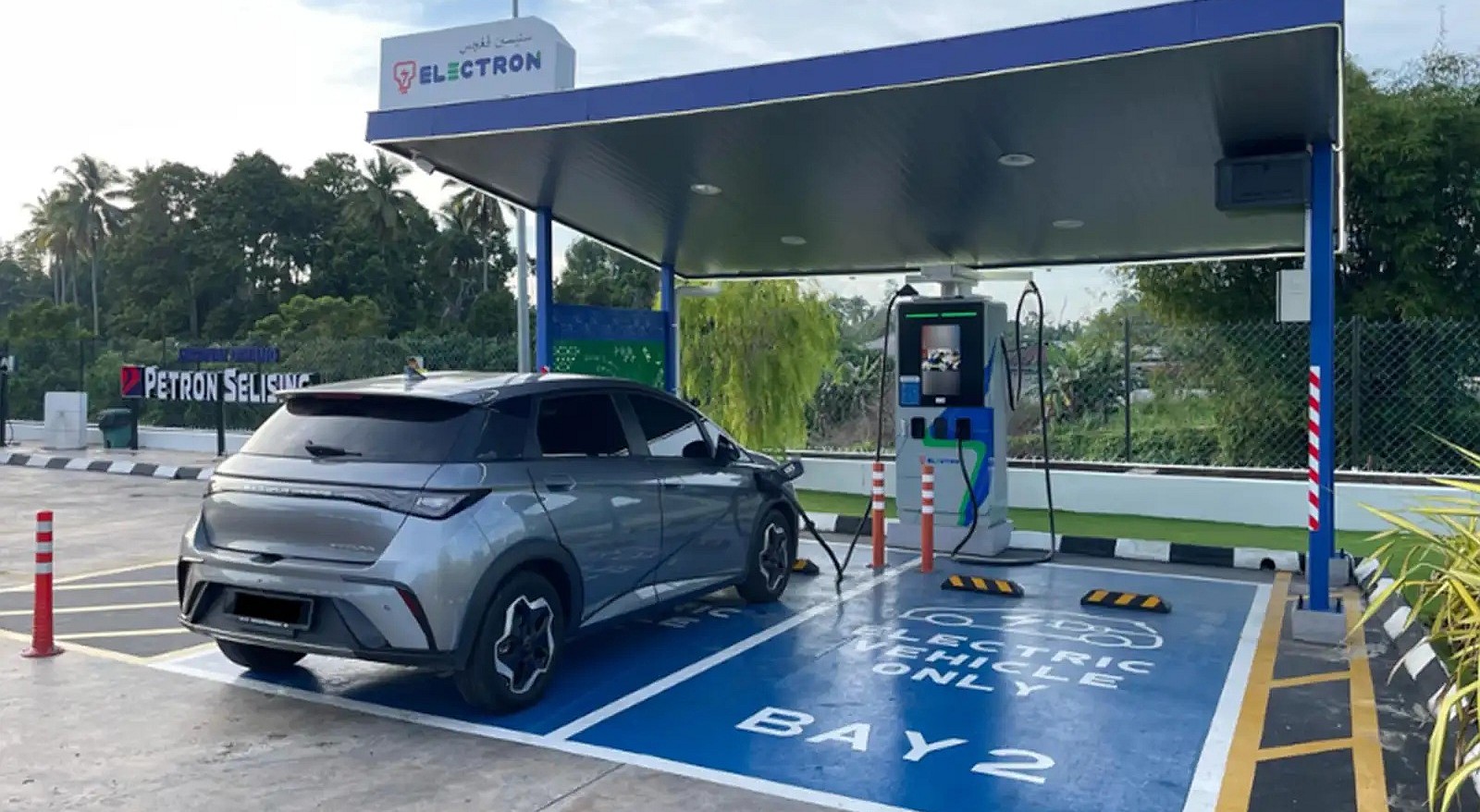
For the past few years, Malaysia has been loudly and enthusiastically selling an electric future.
Government agencies rolled out policy frameworks. Charging stations began appearing in shopping malls, office towers, hotels, and petrol stations. Carmakers from China, Europe, Korea, and beyond poured into the market. Consumers were encouraged to “go green,” while buyers who moved early were rewarded with tax exemptions and lower ownership costs.
And now?
Well, just as ordinary Malaysians were finally beginning to warm to EVs, the government has abruptly slammed on the brakes.
Starting July 1, 2026, fully imported EVs (CBU – completely built up) entering Malaysia must meet two major criteria: a minimum CIF value of RM200,000 and a minimum power output of 180kW. In practical terms, this effectively pushes many imported EVs well beyond the RM300,000 on-the-road mark.
Translation: affordable imported EVs are, for all intents and purposes, gone.
And Malaysians are understandably asking: What the hell happened? Just browse through chat threads on automotive sites or Reddit, and you will get a clear sense of consumer frustration and confusion.
The optics here are honestly terrible.
After years of encouraging EV adoption, Malaysia now appears to be retreating into its old comfort zone – protecting local automotive interests through policy barriers rather than allowing open-market competition. It feels deeply familiar to anyone who has watched the country’s automotive landscape over the past four decades.
Once upon a time, Malaysia protected Proton and Perodua by taxing imported cars heavily. Today, it seems the strategy has evolved. Instead of simply making imported EVs expensive through taxation, the government is now effectively restricting the market itself.
The frustration among consumers has been immediate and fierce. On Malaysian Reddit threads discussing the new rules, commenters openly accused the government of “protecting Proton and Perodua” yet again, with many arguing that ordinary buyers are losing access to affordable choices.
And honestly, it is difficult not to sympathize with that reaction. Malaysia was finally beginning to enjoy a genuinely competitive EV market. Brands like BYD, MG, Dongfeng, GWM, Chery, Tesla, Ora, and others had injected something the local industry desperately needed: pressure.
That pressure was especially important because Malaysian buyers are already burdened by some of the highest vehicle pricing structures in the region relative to income levels. The arrival of affordable Chinese EVs finally gave middle-class buyers a chance to access modern electric vehicles without venturing into luxury pricing territory. There was finally a competitive landscape.
As we all know, competition improves products. Competition improves pricing. Competition improves service. Consumers benefit and industries mature and progress faster.
Now, many of those options may disappear unless manufacturers commit to local assembly operations.
And here is where things become more complicated. Because while the criticism is understandable, the government’s logic is not entirely irrational.
Malaysia is trying to avoid becoming merely a dumping ground for imported EVs while local manufacturing gets wiped out before it has a chance to mature. While that rationale may not fly with the average car buyer, the reality is genuinely more complex than most of us understand. MITI (Malaysia’s Ministry of Investment, Trade, and Industry) has repeatedly stated that the policy is intended to strengthen domestic assembly capabilities, protect local supply chains, and encourage long-term automotive investment.
Thailand became an EV manufacturing powerhouse partly because it aggressively pushed localization. Indonesia leveraged its nickel reserves and battery ambitions to attract production investment. Malaysia, meanwhile, fears becoming little more than a consumer market for foreign-built vehicles.
Viewed from that angle, the move begins to make at least some strategic sense. The government likely wants automakers to build cars here, not merely sell cars here.
And to be fair, some manufacturers are responding exactly as intended. Several Chinese brands are already moving toward CKD (completely knocked down) local assembly operations in Malaysia. In theory, this could create jobs, grow supplier networks, increase technical expertise, and spur industrial growth. (And remember, the policy restrictions target CBU models only, so by right, a foreign carmaker could sell a CKD EV that’s assembled locally for its chosen market price.)
All of that, however, is the optimistic interpretation.
The problem is that ordinary consumers are being asked to absorb the pain during the transition, which could take years. And Malaysians have most definitely heard versions of this promise before.
For decades, consumers paid more for vehicles under the argument that local industry needed “time to mature.” Yet many would argue that Malaysia’s automotive sector still remains dependent on protectionism even after nearly 40 years.
That historical baggage and the cynicism that accompanies it surely colours the public perception of the latest shift in EV policies. Indeed, when the government introduces another restrictive automotive policy, particularly one that disfavours consumers, many Malaysians no longer hear “industrial strategy.” They just think “here we go again.”
There is also an uncomfortable contradiction at the heart of this policy – one that’s driving a lot of the discussion and criticism online: If Malaysia genuinely wants widespread EV adoption, then why make EVs less accessible?
The country is still heavily dependent on fuel subsidies – the last few weeks have made that much abundantly clear as the government scrambles to ensure petrol remains artificially cheap. Charging infrastructure, while improving rapidly, still has gaps. Convincing Malaysians to switch to EVs already requires overcoming practical and psychological barriers. But now?
Removing affordable imported EVs from the equation risks slowing or stalling widespread adoption just as momentum was building. It might ultimately be the right move, but for now, at a glance, it certainly seems like a major step backwards.
And then there is the irony that many of the “local” EVs likely to benefit from the new restrictions are themselves heavily reliant on Chinese platforms, batteries, and EV technology. Some online critics pointed out that this policy may not really be about protecting Malaysian technology so much as choosing which foreign partnerships receive government shelter.
That criticism may sting, critics contend, because there is some truth in it.
Ultimately, Malaysia faces a legitimate balancing act. A completely open market could, as MITI argues, weaken domestic assembly ambitions and reduce industrial investment. But excessive protectionism risks punishing consumers, limiting competition, and slowing EV adoption.
The government appears to believe it can engineer both outcomes simultaneously: attract local assembly investment while maintaining EV momentum.
Perhaps it can, although history suggests mixed results at best. Right now, however, the public mood suggests many Malaysians are unhappy, viewing the policy less as a thoughtfully calibrated industrial plan and more as another reminder that when it comes to cars in Malaysia, the market is never really allowed to be… a market.
Sources: Paul Tan Automotive News, The Star, Carlist.my, The Sun, Reuters, and public discussions on Reddit/r/malaysia.
...


Read the fullstory
It's better on the More. News app
✅ It’s fast
✅ It’s easy to use
✅ It’s free