The Aidiladha irony: Trump-style hatred against migrants marks Muslim season of sacrifice in Malaysia

21 天前
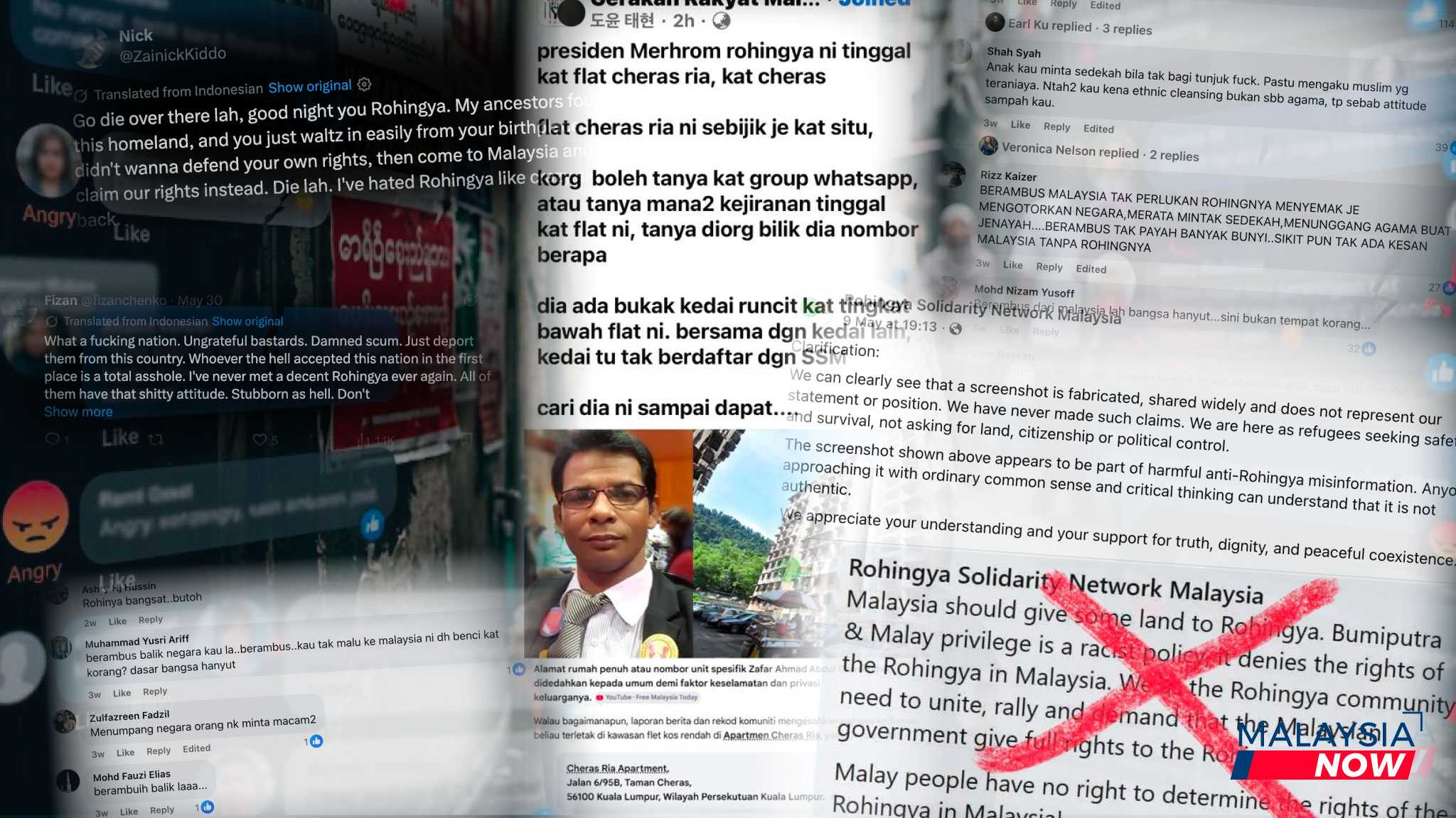
An alarming number of comments from Malaysians ranting about refugees and migrants despite their misfortune has led a prominent social worker to express quiet outrage over how hate is increasingly peddled as patriotism, despite clear injunctions in the Quran to open one's home to the needy who have fled their lands.
Hartini Zainuddin, a prominent child rights advocate whose work has placed her directly on the streets to care for, and sometimes save the lives of, abandoned children, wrote a moving piece expressing sorrow over an avalanche of attacks on her social media feed, all because of her efforts to prevent migrant and homeless children from dying due to red tape that prevents them from receiving urgent medical attention.
Despite the taunts and name-calling, Hartini, who co-founded Yayasan Chow Kit, the first 24-hour one-stop child crisis centre to help marginalised and displaced children, insists she will not be forced to turn away any child needing medical attention and shelter.
What was more shocking to her is that the comments came in the same week as the theme of sacrifice reverberated across the country as Muslims celebrated Aidiladha.
"We just celebrated Hari Raya Aidiladha. The feast of sacrifice. The day we remember that what is most precious we give. The day we share with neighbours, with strangers, with those who have nothing," said Hartini, who has dedicated three decades of her life to the welfare of marginalised children. "And in the same week, we were sharing posts designed to make people fear and hate families like the ones I just described."
She related how on May 31, just four days into the Aidiladha festivities, she made a trip to Melaka to bring two babies – who were being paraded by their father – to their adoptive parents.
"He doesn’t want them nor can afford to raise them and the biological mum knows they need more than she can give right now. I didn’t stop to ask if they were Rohingya. They’re Malay Malaysian babies, as it happens. But I didn’t check first," she wrote.
"I never check first. That is the point. You want me to ask for papers before I cover a deposit? What kind of person would that make me? What kind of country would that make us?"
A week earlier, Hartini was horrified when she found out that a hospital could not admit a 15-month-old infant suffering from meningitis, as there was no deposit.
"I was there to cover it. Because if I didn’t, he would die. Not metaphorically. Actually die, on the street, in the rain, because of a deposit."
Earlier, she withdrew her EPF savings to save the life of a six-month-old premature baby who was suffering from a heart defect.
"His father earns RM1,500 a month. His mother is home with two babies under two. No UNHCR card. No way in. No deposit, no admission, no child. Does his forehead say undocumented? Undeserving? Rohingya? It says six months old. It says his heart has a hole in it. It says he needs help!" wrote a helpless Hartini amid a random but worrying online campaign targeting people like her.
Trump-style anti-migrant hate
A casual scroll through social media comments on refugees and migrants shows a worrying amplification of race-based hate, with many urging the public to drive them out by launching petition campaigns.
There also appears to be a coordinated campaign of incitement led by anti-migrant individuals, with calls to flood UNHCR social media pages.
"So here's what we do, flood their emails, Facebook messages with all the issues we face. Let's do our best," said Threads user Catheeja, whose posts not only focus on accusing refugees of committing crime, but also urge the public to give charity only to Malaysians.
The rise in anti-migrant sentiment led to calls to locate a prominent Rohingya rights activist.
Zafar Ahmad Abdul Ghani, president of the Myanmar Ethnic Rohingya Human Rights Organization (Mehrom), expressed fear of being targeted after social media posts inquired about his home address.
"I don't know what happened. Malaysians are searching for my location again. They asked many Rohingya where my house is," said Zafar, whose wife and children are Malaysian citizens, to MalaysiaNow.
'Caution from Suhakam'
The anti-refugee diatribe also finds its way into news reports quoting lesser-known "activists" who raise the spectre of "Rohingyas taking over the country".
One such person was unhappy that the Rohingyas were able to earn money and could afford to make sacrificial slaughter.
"People see refugees who freely conduct business, work and drive vehicles, so much so that during Aidiladha this year in Selayang, they were able to buy 70 sacrificial cows, estimated to be worth more than RM700,000 in total. Where did they get the money?" asked Mohd Sophian Mohd Zain, identified by Harian Metro as the chairman of an organisation called "Persatuan Kebajikan Surplus Pulau Pinang".
Sophian is also frustrated that refugees were given UNHCR cards, even though such documents help authorities identify genuine refugees.
On X, a user called "Seluang Melaut" did not attempt to hide his racism.
"The government lets them roam freely in our community, where we have to live among these filthy Rohingya," he wrote, echoing US President Donald Trump's Islamophobic campaign against the Somali community, whom he repeatedly labelled as "filthy".
Meanwhile, Ishak Muslim justifies a mass expulsion of refugees in the name of tourism, while portraying all Rohingyas as street beggars.
"Should chase away all these Rohingya people. KL is full of these troublemaking groups forcing tourists to give alms, and embarrassing Malaysians whom tourists mistake for locals."
Such comments drew immediate condemnation from the country's Human Rights Commission (Suhakam).
"The circulation of abusive comments and hateful narratives targeting Rohingya refugees during their religious observances is deeply troubling and reflects a dangerous trend of dehumanisation," Suhakam said in a statement on June 3.
It reminded the public that the fate of the Rohingya community falls under the category of genocide, the same fate suffered by Palestinians who have evoked sympathy among Malaysians.
"The international community has rightly expressed outrage over the devastation and loss of civilian lives in Gaza. That same commitment to human dignity and justice must extend to all peoples facing persecution, including the Rohingya, who have endured decades of systemic discrimination, statelessness, forced displacement, and mass atrocities in Myanmar," it added.
The forgotten spirit of hijrah
Many of the comments appeared to come from Muslims. For Hartini, the irony is staggering, and she drew attention to the early Muslims' struggle to survive in Mecca, which forced them to undertake more than 400 km of arduous journey across the harsh Arabian desert to Medina – the hijrah – where they were welcomed by the Ansar.
"The Ansar did not ask for documents before they opened their doors. That is not a footnote in our history. That is the foundation.
"The Rohingya were persecuted because they are Muslim. They fled because they are Muslim. And some of us, also Muslim, look at them across that shared faith and find reasons to look away. Why? Because they’re not blond and blued eyed? Let’s be frank here," said Hartini.
"I don’t know what we think we are doing. But it is not Islam."
She reminded those who question people like her of the Quranic position on protecting people fleeing persecution.
"Surah Al-Hashr (59:9) praises those who open their homes to refugees even when they themselves are in need. Quran 9:6 is plain: it is a Muslim duty to protect the displaced."
Hartini warns that the hate campaign intensifies as elections loom, adding that some politicians could benefit from "a population frightened and united against a target that cannot fight back".
"The Rohingya cannot vote. They cannot organise. They have no MP, no lobby, no platform. They are, in the cold language of politics, perfectly safe to attack.
"The oldest political trick is to point struggling people at someone even more powerless, so the anger moves sideways instead of upwards – away from the people actually making decisions about your life."
She hoped the public would pause to think before sharing social media posts designed to stoke anger against migrants and refugees.
"When you share that post, ask yourself who made it. What do they gain from your anger tonight?"
...


Read the fullstory
It's better on the More. News app
✅ It’s fast
✅ It’s easy to use
✅ It’s free