Hungary’s Hidden Wine Treasures: Beyond Tokaji and Into a World of Remarkable Wines

10 小时前
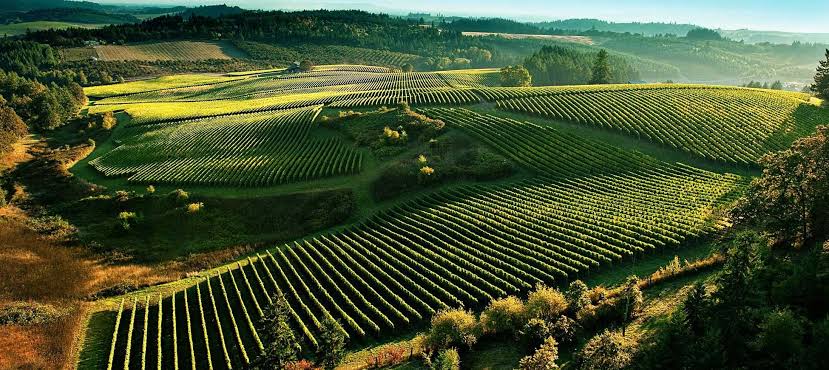
Hungary and wine have enjoyed a relationship spanning more than a thousand years. Yet for many wine enthusiasts outside Europe, mention Hungarian wine and if there’s even a flicker of familiarity at all, it’s likely that only one name might come to mind: Tokaji.
Indeed, the legendary sweet wine from the Tokaj region has long enjoyed an almost mythical status among connoisseurs. Interestingly, Tokaj (the region) and Tokaji (its wines) are widely considered the first officially demarcated wine regions in Europe – and the world – having been officially classified in 1730 and further established in 1737 by Emperor Charles VI, who officially demarcated the region, defined its boundaries, and established a strict appellation control system. Famously described by King Louis XIV of France as “the wine of kings and the king of wines,” Tokaji remains one of the world’s most celebrated dessert wines.
However, during a recent exclusive tasting hosted by the Embassy of Hungary in Kuala Lumpur and H.E. Dr. Sándor Sipos, the Hungarian Ambassador to Malaysia, we were reminded that Hungary’s wine story extends far beyond Tokaji. The tasting presented a fascinating array of wines that are seldom encountered internationally and even more rarely seen on Malaysian wine shelves.
The event showcased wines from several acclaimed Hungarian producers and highlighted a remarkable diversity of styles, grape varieties, and regional expressions. It was a delightful opportunity to explore a wine culture that, despite its rich history and impressive pedigree, remains something of a hidden gem in this part of the world.
A TAPESTRY OF UNIQUE VARIETIESHungary is home to more than 20 distinct wine regions and numerous indigenous grape varieties that have been cultivated for centuries. Several of these grapes are virtually unknown outside their homeland, making the tasting at the Embassy particularly intriguing.
Among the standouts was the St. Donat Marga Furmint 2023, produced in the Csopak region near the northern shores of Lake Balaton. Furmint is perhaps Hungary’s most important white grape and serves as the backbone of Tokaji wines. Yet when vinified as a dry wine, it reveals an entirely different personality.
The wine displayed impressive freshness and structure, with vibrant citrus notes accompanied by green apple, pear, and a subtle mineral edge. A touch of salinity and crisp acidity gave it remarkable precision and length. It was easy to see why dry Furmint has been gaining international attention among sommeliers and wine professionals. (We of course couldn’t help but notice the irony of the variety’s name – “Furmint” – for a beverage that indeed has to ferment!)
Equally enjoyable was the St. Donat Slikker Olaszrizling 2023. Despite the name, Olaszrizling has no relation to Riesling (we asked) and is considered one of Hungary’s signature white grape varieties. Its closest relative is Elbling, an ancient grape predominantly grown in Germany’s Mosel region and Luxembourg, known for producing crisp, high-acidity still and sparkling wines. We found the lovely acidity notes of the Olaszrizling to be a shared trait with Elbling, though quite nicely restrained. The St. Donat Slikker presented inviting aromas of white flowers and stone fruit, followed by flavours of crisp green apple, citrus peel, and a gentle almond-like finish. This was a truly lovely wine.
Perhaps what impressed us most was its fine balance, that elusive goal of winemakers that is aspired to by many and achieved by… well, probably not quite enough. There was a softness and elegance to the Olaszrizling that made it immediately approachable while still offering enough complexity to hold one’s attention. It felt perfectly suited to Malaysia’s warm climate and we felt it would pair beautifully with seafood dishes and lighter Asian cuisine.
FROM LAKE BALATON TO TOKAJThe tasting also featured wines from several other notable producers. The Jakab Badacsony estate, situated on protected hillsides overlooking Lake Balaton, presented a fascinating Kéknyelű 2024 and Pinot Noir Easy 2023. The winery cultivates varieties that thrive in the volcanic soils of the Badacsony region, producing wines that beautifully express their distinctive terroir.
Among the red wines, however, it was the St. Donat Kékfrankos 2023 that truly captured our attention.
Known as Blaufränkisch in neighbouring Austria – another wine-producing country with which we find plenty of favour – Kékfrankos is one of Central Europe’s most important red grape varieties. The Hungarian version proved wonderfully expressive, offering aromas of red cherries, raspberries, black pepper, and subtle earthy undertones.
On the palate, we found it to be medium-bodied, lively, and elegant rather than heavy or overpowering. Bright acidity and soft tannins made us think it would be a particularly food-friendly wine, while hints of spice and mineral complexity added depth. It was a wine that seemed capable of appealing equally to seasoned enthusiasts and casual wine drinkers alike.
The tasting also revisited Hungary’s most internationally recognized wine region through wines from Barta Winery in Tokaj. Founded in 2003, the estate restored the historic Öreg Király vineyard, whose origins date back to 1280. Today, the winery produces a range of wines, including Furmint, Hárslevelű, and the renowned Tokaji styles, from organically managed vineyards surrounding a beautifully restored château.
Its Öreg Király Dűlő Furmint 2023 offered another fascinating expression of Hungary’s flagship grape, while the Öreg Király Dűlő Szamorodni 2021 provided a reminder of why the Tokaj region remains so revered among wine lovers.
Perhaps the greatest takeaway from the evening was simply this: Hungarian wine deserves far more recognition than it currently receives outside Europe.
While Tokaji may remain its most famous variety, wines such as Furmint, Olaszrizling, and Kékfrankos demonstrate the extraordinary breadth and diversity of Hungary’s winemaking tradition. They are wines that offer authenticity, individuality, and a strong sense of place. There were several others, but these were the ones that caught our attention in the best way. With a concerted marketing push, we wouldn’t be at all surprised if Furmint becomes the wine world’s “next big thing” at some point. It’s that impressive a variety.
For Malaysian wine enthusiasts, they also represent an exciting opportunity to venture beyond the familiar and discover something genuinely different.
After one memorable afternoon at the Embassy of Hungary, we left with a renewed appreciation for one of Europe’s oldest wine cultures and the firm belief that Hungary’s hidden wine treasures deserve a much larger audience. We hope to be able to do a proper review with a more structured tasting approach, in the hopes of enticing wine lovers in Malaysia to branch out and embrace other regions and other varieties beyond those that have the most shelf space here.
For now, to learn more about these wines, you can check out the importer’s Instagram page, www.instagram.com/winewinewine_by_hanareyagroup. The group imports a delightful range of less-common wines and their catalogue of wines is certainly worth a look!
...


Read the fullstory
It's better on the More. News app
✅ It’s fast
✅ It’s easy to use
✅ It’s free