Memorable Glasgow outing for Malaysia, but questions remain over Commonwealth Games' relevance

2 天前
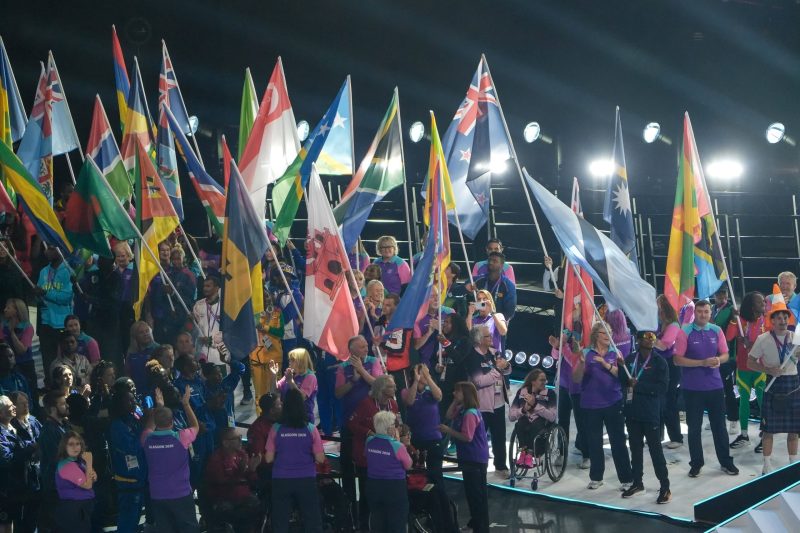
Malaysia exceeded expectations at the Glasgow Commonwealth Games, but the event's declining profile and uncertain future raise fresh questions about its long-term relevance in an increasingly crowded sporting landscape.
KUALA LUMPUR: “The Commonwealth Games has ended? When did it even begin? Was it shown live in Malaysia?”
These were among the questions this writer received from sports fans as the Glasgow Commonwealth Games concluded over the weekend.
On the surface, Malaysia’s campaign was a memorable one, with RTM providing live coverage throughout the Games.
The national weightlifting team emerged as the standout performer, returning with five gold medals and earning a special team award. Ironically, the sport’s current success can be traced to the Jaya ’98 programme – a six-year national development plan ahead of the 1998 Commonwealth Games in Kuala Lumpur.
Disciplines such as shooting, diving, and archery also benefited from the said programme, including the recruitment of naturalised athletes to strengthen national squads. Today, Malaysian athletes in these sports continue to compete at major multi-sport events, including the Asian Games and Olympics.
National cycling icon Datuk Azizulhasni Awang capped his final Commonwealth Games appearance in style by winning gold in the men’s keirin.
Overall, Malaysia finished with eight gold, three silver and five bronze medals, comfortably surpassing its target of five gold medals despite competing at a significantly scaled-down Games.
Beyond the celebrations, however, the Commonwealth Games continues to face fundamental questions about its long-term relevance.
Glasgow stepped in to rescue the Commonwealth Games Federation (CGF) after Victoria, Australia, withdrew as host because of escalating costs. Several other prospective hosts also declined despite financial incentives from the CGF. The compromise was a reduced programme featuring only 10 sports, with traditional events such as badminton and hockey omitted.
While rising hosting costs remain a major concern, the broader issue is whether the investment can still be justified. Claims that major sporting events generate economic benefits through sports tourism should be supported by publicly available data rather than political rhetoric.
Having worked on the Routledge Handbook of Sports Diplomacy,the first book to explore the full breadth and depth of the emerging discipline of sports diplomacy, this writer, alongside world renowened sport diplomacy experts Prof Dr J. Simon Rofe, Dr Lindsay Sarah Krasnoff, Dr Thierry Zintz, and Dr Richard Parrish, edited the publication and authored a chapter examining the structural weaknesses and declining prestige of the Commonwealth Games.
A central finding was the CGF’s failure to articulate a compelling narrative, particularly for younger generations, on why the Commonwealth movement remains relevant.
High-level meetings and diplomatic engagements conducted in the name of sport carry limited value if Commonwealth citizens see little benefit in continually revisiting a colonial legacy associated with the extraction of resources and cultural artefacts by Britain.
Geopolitical realities have also exposed divisions among Commonwealth members. Differing positions on issues such as the Israel-Palestine conflict and debates over the British monarchy’s continuing role across former colonies illustrate the absence of a common political outlook.
Athletes and sports administrators also recognise that competitive standards vary significantly across the Games. Without diminishing Malaysia’s achievements in weightlifting, the level of competition at the SEA Games and Asian Games is generally stronger. The same applies to badminton.
For elite athletes managing increasingly congested competition schedules, another multi-sport event marketed around friendship alone may not be sufficiently compelling. They need confidence that participation justifies the time, effort and physical demands involved.
The Commonwealth Games, therefore, faces a defining moment. Understanding its history remains important, but history alone cannot sustain the movement. The CGF must demonstrate to former colonies why the Games continue to matter in the modern era, particularly with Ahmedabad, India set to host the next edition in 2030.
Otherwise, more member nations may choose to prioritise sporting events that offer greater competitive value and international significance.
Image: National Sports Council Malaysia
...


Read the fullstory
It's better on the More. News app
✅ It’s fast
✅ It’s easy to use
✅ It’s free