BYD sets sights on Japan outside urban hot spots with Racco mini EV

16 小时前
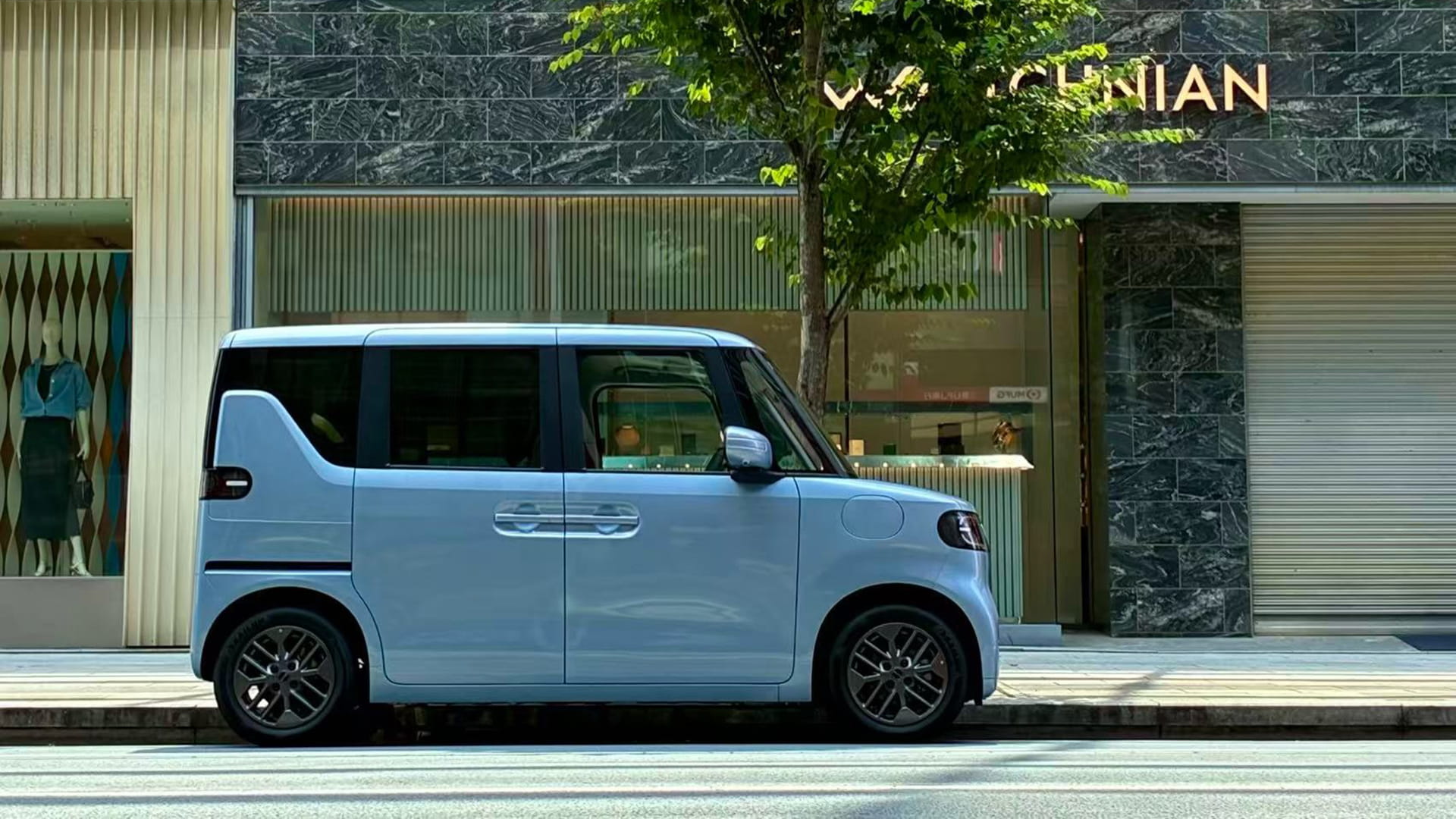
Chinese electric vehicle powerhouse BYD is betting that its new Racco electric minicar will be a hit in Japanese communities outside the largest cities.
In the city of Kanazawa on July 30, two days after the Racco’s launch in Japan, a stream of people came to a BYD dealership to test-drive the kei minicar despite it being a weekday.
“It looks like a kei car, but the quality of the drive is like that of the Vellfire,” a 52-year-old resident said, referring to a Toyota Motor luxury minivan. “I was surprised by the solid feel and lack of vibration, so much that it’s hard to believe it’s a kei car.”
Almost no one who came to the dealership, BYD Auto Kanazawa, compared the Racco with the Sakura, a Nissan Motor electric vehicle, according to an official with the shop’s operator, EV Hokuriku. Most were deciding between the Racco and a kei gasoline car, the official said.
Five or six customers had already decided to purchase the Racco, and the test drives were expected to add to this, according to an EV Hokuriku official. 30 sets of customers had visited the shop as of July 30, and the ensuing weekend was fully booked for sales appointments and test drives.
Although Kanazawa is the capital of Ishikawa, the city still lies outside Japan’s major metropolitan areas. Public transportation is lacking in such communities, meaning that people mostly use cars to shop and go to work.
In a 2025 survey by Kanazawa, around 70% of 197 respondents said they never used public transportation or that they had their own cars. Some said a car was essential for traveling outside the city or that car-free living was unrealistic.
In Ishikawa, kei cars account for 40.9% of all vehicles, according to the Japan Light Motor Vehicle and Motorcycle Association. This figure is nearly identical to the national average of 40.6%.
In multi-vehicle households, kei cars normally serve as accessories to the main vehicles. This has made kei cars a cultural fixture, especially in outlying areas.
BYD developed the Racco with the Japanese market in mind.
“When you go to outlying areas, kei cars are a common sight in those towns,” BYD Vice President Liu Xueliang said.
At an Aeon Mall in Kobe on July 12, families young and old came to touch the driver’s seats and steering wheels of Racco units on display. Some commented on how nice and modern the EV is.
That event was part of a nationwide road show held by BYD Auto Japan ahead of the Racco’s release.
“It’s pretty big for a kei car,” a 40-something man there said. “Since I have a solar power system at home, I’d prefer an EV if I’m going to get one anyway.”
Around half of the visitors spoken to at the event said they had outdoor outlets or similar fixtures.
“Recently, many new homes are being built with outlets specifically for charging EVs,” a BYD representative said.
“With gas stations disappearing, kei cars, which serve as the main mode of transportation in rural areas, are likely to sell well if they’re EVs,” said Itochu Research Institute executive fellow Sanshiro Fukao, who specializes in automotives.
Government statistics show gas stations in Japan numbering 27,000 or so at the end of fiscal 2024, down by half from the peak of roughly 60,000 in fiscal 1994. A series of closings occurred over a lack of successors, aging facilities and population decline.
The government has identified 381 municipalities with three or fewer gas stations, accounting for more than 20% of all municipalities.
On the other hand, EVs can basically be charged wherever there is electricity. A standard dedicated EV charger can be had for around JPY 100,000 (USD 636.3), and overnight charging is enough for most daily driving needs.
In areas outside big metro regions, with their many single-family homes and plenty of space to park vehicles, home charging is a good fit.
BYD Auto Japan is focusing its store expansion strategy on outlying areas. The company is moving forward with opening small locations specializing in the Racco, targeting areas with addressable populations of 500,000 or smaller.
The goal is to expand the current network of roughly 80 stores to a total of 100 by the end of 2026 and 120 by the end of 2027.
BYD still has a long way to go to establish a network like the big automakers. Suzuki Motor has some 50,000 subdealers in Japan—locations that also serve as repair shops and sell used vehicles. Daihatsu Motor has roughly 30,000.
The head of a Suzuki dealership in the greater Tokyo area dismissed BYD’s goal of selling 10,000 Racco units as “unrealistic.”
“It’s inconceivable that a single dealership could sell more than 20 units a month,” the executive said. “Even with Suzuki’s Spacia, we’d consider it a strong month if sales exceeded ten units,” referring to the popular Suzuki Motor kei microvan.
A man in his 30s who attended BYD’s event in Kobe expressed concerns about customer support.
“I’m worried about what the after-sales service will be like,” he said. “When it comes to Japanese kei cars, there are dealerships in all kinds of places.”
BYD is attempting to address those concerns by offering more generous new-car warranties. Its free standard warranty covers six years or 150,000 kilometers, more than double what the competition offers. BYD also provides an on-site charging service.
This article first appeared on Nikkei Asia. It has been republished here as part of 36Kr’s ongoing partnership with Nikkei.
Note: JPY figures are converted to USD at rates of JPY 157.16 = USD 1 based on estimates as of August 4, 2026, unless otherwise stated. USD conversions are presented for ease of reference and may not fully match prevailing exchange rates.
...


Read the fullstory
It's better on the More. News app
✅ It’s fast
✅ It’s easy to use
✅ It’s free