Lessons from Germany's sports diplomacy initiatives

12 小时前
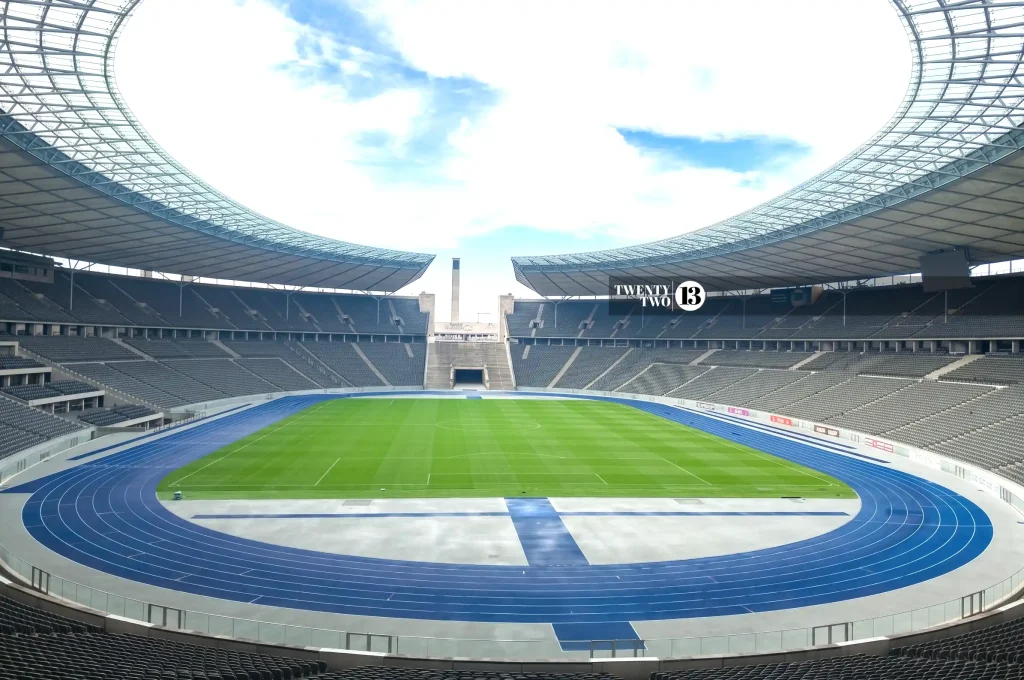
Germany's fledgling sports diplomacy model offers Malaysia lessons in using sport to build integration, strengthen international ties and advance wider national interests.
FRANKFURT: Germany is widely recognised for its global sporting prowess. Despite recent early exits from the Fifa World Cup, the football-loving nation boasts an impressive track record, with the men’s team winning four World Cups (1954, 1974, 1990 and 2014) and the women’s team two (2003 and 2007), in addition to regional titles.
Beyond football, Germany consistently ranks among the world’s top sporting powers across multiple disciplines. It holds top-tier rankings in basketball, handball, rowing and bobsleigh, among others.
Before football, Germany’s main sport was turnen (group gymnastics).
The nation also has extensive experience hosting major global sporting events, including the 1936 and 1972 Olympic Games, as well as the 1974 and 2006 Fifa World Cups.
It is home to the renowned 79-year-old German Sport University Cologne, which offers specialised programmes ranging from sports science to international relations. The nation is now eyeing a bid to host the Summer Games and Paralympics between 2036 and 2044.
Yet, it was only recently that the country saw the need to formalise its international outreach by establishing a dedicated sports diplomacy unit under its Federal Foreign Office.
Public support remains the ultimate prerequisite for any host nation. As a sporting nation, Germany is somewhat blessed in gaining public support for hosting major sporting events.
For Germany, securing the right to host a future Olympic Games carries complex historical and cultural resonance. The 1936 Berlin Games were exploited by Adolf Hitler’s Nazi regime, a dark era that Germany continues to navigate transparently and apologetically.
The 1972 Munich Games, held in a divided Germany, were marred by a terror attack that claimed the lives of 11 Israeli team members.
Today, a unified Germany possesses the infrastructure and capability to host the Games as one nation. However, it faces internal questions over identity, integration and social cohesion amid evolving demographic landscapes.
There is also growing domestic concern over the rise of the extreme-right, pro-Russia political party AfD. Over the weekend, thousands of protesters took to the streets in major cities against the AfD, despite its electoral success in the recent state election in Saxony-Anhalt.
While “German precision” was long considered an unquestioned national brand, modern domestic discussions frequently point to immigration woes, infrastructure delays, economic concerns and the national men’s football team’s inconsistencies on the pitch.
This raises broader questions for policymakers: How effective have sports-based integration initiatives been over the long term, and how do they fit into Germany’s societal evolution?
Sport remains a mirror of society.
However, Germany has, over the decades, demonstrated how sport can serve as a potent soft-power tool to unite people. It retains a vast international audience, from global fans of its football legacy and automotive engineering to those drawn to its distinct cultural exports.
Looking ahead, it is cementing a narrative of togetherness and a united Germany. This is reflected in its “Together We Rise” campaign (WE ’29) as the nation hosts the UEFA Women’s Euro 2029.
Closer to home, Malaysia’s consideration of hosting the 2026 Commonwealth Games – despite financial backing offered by the Commonwealth Games Federation did not materialise, largely due to public scepticism over economic costs and social priorities.
The powers-that-be then failed to justify the need to host the event, catering to sentiments on social media instead of developing a strategy and compelling narrative to win the hearts of Malaysians.
For nations like Malaysia, Germany’s model offers clear operational lessons. For starters, strategic partnerships can see both nations leverage bilateral sporting exchanges to build broader diplomatic goodwill.
After all, Malaysia and Germany have enjoyed historical sporting links. Karl-Heinz Weigang guided the Malaysian men’s football team to the 1980 Moscow Olympics, but the country boycotted the event following the Soviet Union’s invasion of Afghanistan.
German athletics coach Jan May has worked with some of Malaysia’s finest athletes, including former hurdler Rayzam Shah Wan Sofian.
Malaysian athletes and officials have also benefited from Germany’s technical expertise, with former athletes and Olympians such as hurdler Noraseela Khalid, hurdler Moh Siew Wei, decathlete Malik Tobias and high jumper Nauraj Singh being based in Leipzig.
Joerg Teichmann is no stranger to Malaysian sports. The sports therapist has helped many Malaysian athletes bounce back after suffering injuries.
Such relationships can open doors to economic development. Sport initiatives can be a catalyst for deeper conversations on trade, technology and cultural cooperation.
Since hosting the Asean Summit last year, Malaysia has been branding itself as the gateway to Southeast Asia, offering numerous economic opportunities across various industries. This should naturally encourage governments worldwide to consider expanding their presence in the country.
The Youth and Sports Ministry must work closely with the Foreign Ministry and other stakeholders in Putrajaya to develop a proactive sports diplomacy unit that can oversee Malaysia’s sports diplomacy initiatives and ensure they have common goals and clear potential outcomes.
Rather than looking backward, Germany has an opportunity to redefine what makes its institutions resilient. Sports diplomacy offers a structured framework to project values, promote integration and build international bridgeheads.
Despite its rich history, its “three-and-a-half-men” sports diplomacy division, set up barely two months ago, is eager to get the ball rolling consistently and in the right direction.
This is where Malaysia should take its cue and streamline its conversations when it comes to nation-building initiatives, including in sports diplomacy.
Often, the most complex diplomatic conversations can start over a sporting match. And this is a game Malaysia ought to take seriously.
Editor’s note: Haresh Deol was among 15 individuals worldwide invited by Germany’s Foreign Office to Berlin, Koln and Frankfurt to discuss sports diplomacy. He was the sole representative from Southeast Asia. He also recently co-edited the first Routledge Handbook of Sports Diplomacy and contributed a chapter, “Commonwealth Games – Losing Glory: The Fallacy of Sports Diplomacy?”
...


Read the fullstory
It's better on the More. News app
✅ It’s fast
✅ It’s easy to use
✅ It’s free