'Regardless of who wins, system must change for football to progress'
8 小时前
Election matters. The person elected matters. But a different name at the top, operating within the same institutional weaknesses, would not amount to meaningful reform. It would amount to succession.
GENEVA: The future of football cannot depend only on who occupies the presidency, but on the kind of institution an elected president is required to lead.
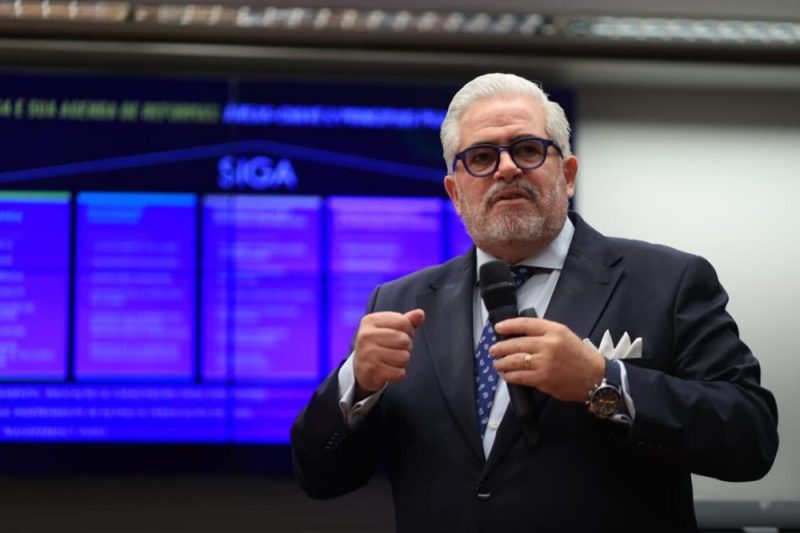
This was the view of Sport Integrity Global Alliance (SIGA) global chief executive officer Emanuel Macedo de Medeiros ahead of Fifa’s next presidential election.
“The debate over the future leadership of Fifa is gathering pace. Inevitably, much of the attention is focused on personalities, alliances, candidacies and the next presidential election,” de Medeiros said in his latest thought-leadership article.
“That is understandable. Leadership matters. Elections matter. The character, judgment, competence, independence of mind and sense of responsibility of the person entrusted with leading world football matter enormously.
“But if the present crisis teaches us anything, it is that the future of Fifa cannot depend only on who occupies the presidency. The deeper question is this: what kind of institution should any Fifa president, present or future, be required to lead?”
He added that if the credibility and stability of world football depended excessively on the personality, restraint or judgment of one individual, the problem was not simply the individual but “the system around the office.”
Fifa recently confirmed that Gianni Infantino will stand in its presidential election next March, despite continued backlash over his now-abandoned plan to bring private investment into the men’s and women’s World Cups.
Closer to home, the FA of Malaysia will hold its elections on Sept 17 after the committee resigned en bloc following the doctored documentation saga involving seven players that made international headlines last year.
“Fifa is one of the most powerful organisations in global sports. It regulates, organises, commercialises, distributes, invests and decides. It manages immense financial resources, oversees competitions of extraordinary global reach, engages with governments, broadcasters, sponsors and investors, and exercises influence across 211 national associations.”
Power of that magnitude requires institutions capable of matching it. Strong leadership should never require weak institutions. Quite the contrary. The greater the power, the stronger the safeguards must be. That is where reform begins.
De Medeiros pointed out the need for separation between political leadership, institutional oversight and executive management.
“In many mature governance systems, the responsibilities of the chair and the chief executive officer are deliberately distinct. One leads the governing body and ensures effective oversight; the other manages the organisation and is accountable for executive delivery.
“Fifa is not a listed company. But the specificity and autonomy of sport cannot become an argument against basic governance principles. Who leads? Who governs? Who manages? Who holds each of them to account?
“These questions are not theoretical. They are fundamental.”
He added that under Fifa’s current structure and nomenclature, the principle should be clear – the president should provide political and institutional leadership; the Council should exercise genuine governance and oversight; and the secretary-general and the administration should manage the organisation under a clear, credible and sufficiently autonomous mandate.
“The purpose is not to create bureaucracy. It is to ensure balance. Because separation written into statutes means little if, in practice, one centre of power dominates the others.”
The current crisis, according to de Medeiros, must not be reduced to whether one individual stays or another takes his place.
“The election matters. The person elected matters. But a different name at the top, operating within the same institutional weaknesses, would not amount to meaningful reform. It would amount to succession.
“Equally, continuity in leadership without structural reform would leave the fundamental questions unanswered.
“Whoever leads Fifa after the next election should therefore be judged not only by the electoral result, but by whether Fifa becomes stronger, more balanced, more transparent, more accountable and more independently scrutinised.
“And this is where the discussion must leave the realm of declarations and enter the realm of proof.”
He added there was no shortage of codes, principles or statements about good governance in sports.
“The real test is whether the institutions exercising the greatest power are prepared to be measured against serious, fit-for-purpose universal standards – and whether they are prepared to have that compliance independently assessed.”
“Compliance should not be presumed. It must be demonstrated,” he added.
...


Read the fullstory
It's better on the More. News app
✅ It’s fast
✅ It’s easy to use
✅ It’s free