A government of decisions, a public of doubts

1 天前
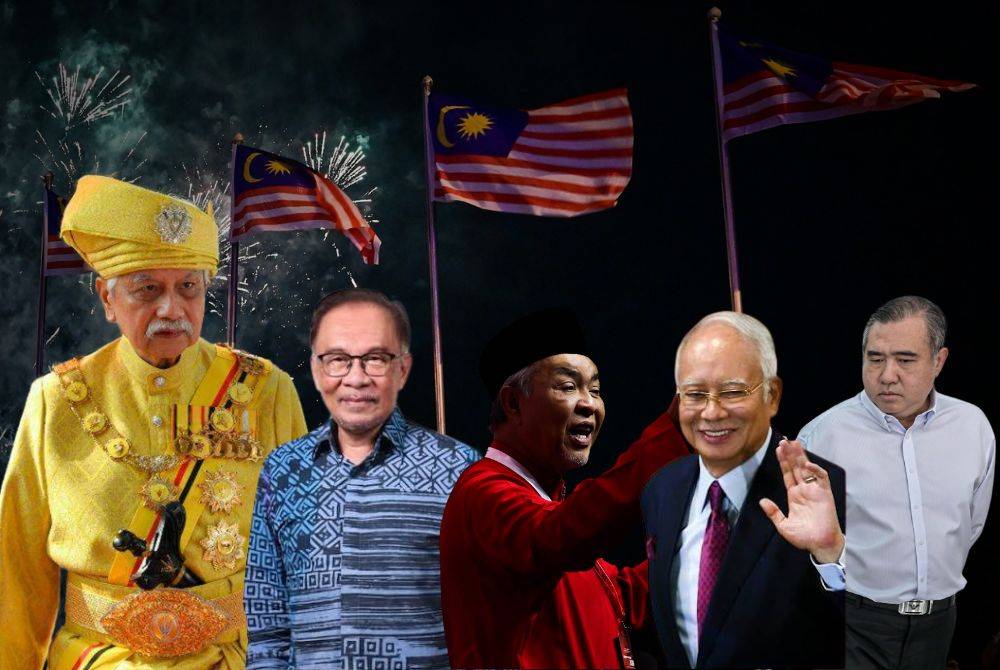
PARDON. Resignation. Political threats. A subsidy reversal.
Malaysia has had a week in which almost every major decision came with a political aftershock.
Former prime minister Datuk Seri Najib Razak was granted a conditional pardon, allowing him to serve the remainder of his sentence under house arrest, subject to a RM50 million fine.
DAP secretary-general Anthony Loke resigned as Transport Minister in protest, while DAP’s other ministers stayed in government in the interest of political stability.
Umno then turned up the heat, with party president Datuk Seri Ahmad Zahid Hamidi calling for an early general election and challenging Prime Minister Datuk Seri Anwar Ibrahim to dissolve Parliament.
And BUDI95 was adjusted again, with the government restoring the monthly subsidised RON95 quota from 200 litres to 300 litres after public concern over living costs.
Different decisions. Different actors. Different justifications. But the same audience: the rakyat.
And they are not merely watching what their leaders decide. They are asking why.
Why this decision? Why now? Who benefits? And, increasingly, is this about the country or about political survival?
That is the uncomfortable question running through all four developments.
Because Malaysians can accept difficult decisions. What they are less willing to accept is the suspicion that principles, policies and even political positions shift when circumstances demand it.
And that is where the real danger lies for the Madani Government.
Not necessarily in one decision but in what all these decisions, taken together, are doing to public confidence.
The Najib decision exposed the deepest fault line. For his supporters, the conditional pardon is a long-awaited act of mercy. For others, the uncomfortable question is what house arrest for a convicted former prime minister says about equality before the law.
The King’s constitutional power to grant clemency is not in question. Anwar himself
acknowledged that constitutional reality while maintaining that the government must continue its fight against corruption and abuse of power.
But constitutional authority and public confidence are two different things.
The public can accept that a power exists and still question how its exercise affects confidence in the system.
That is the difficult conversation facing the government.
Malaysians have not forgotten 1MDB. Nor have they forgotten the promises made after 2018 about accountability, institutional reform and ending a culture of impunity.
Which is why Loke’s resignation carries significance beyond one minister leaving one ministry.
DAP has long defined itself in opposition to corruption and the Najib-era scandals. Loke’s decision allows the party to register its protest without pulling its other ministers out of government.
But it leaves an obvious question: If this is a matter of principle, why only one minister? And if government stability must be preserved, what happens when stability and principle collide?
Then there is Umno. Zahid’s challenge to Anwar was not subtle. Umno wants its political weight recognised, and its recent electoral performance has given the party greater confidence.
But while politicians debate mandates and alliances, ordinary Malaysians remain preoccupied with more immediate matters — prices, wages, housing, transport, healthcare and the cost of raising a family.
This is where the political class risks losing the plot.
The government can debate mandates. Parties can debate alliances. Ministers can debate principles.
The rakyat are asking a simpler question: What does any of this change for me?
Even BUDI95 tells that story. When the quota was reduced, Malaysians complained. When it was restored to 300 litres, the government could point to its willingness to listen.
But the reversal also feeds another perception: that policy can bend under political pressure.
That perception, whether fair or not, is precisely what the Madani Government cannot afford.
Because its bigger problem is no longer simply popularity. It is credibility.
A government can survive an unpopular decision if it explains why it is necessary. It can push through a difficult reform if people believe the burden is fairly shared.
What is harder to survive is the perception that principles become flexible when political circumstances change.
That is why the past week is about more than Najib, Loke, Zahid or BUDI95. It is about confidence — that decisions are made for the right reasons, that political parties are not putting survival ahead of governance, that constitutional powers, executive decisions and institutional processes remain transparent enough for the public to understand and scrutinise.
And confidence that when politicians invoke “stability”, they mean stability for the country, not simply stability for the government of the day.
Malaysians are no longer passive spectators. They are watching, questioning, arguing and keeping score.
And perhaps the most telling sentiment emerging from this extraordinary week is neither anger nor support for any single decision.
It is cynicism. When people begin to believe every decision has a political price tag, every principle has a negotiable value and every crisis is another opportunity for political positioning, rebuilding confidence becomes much harder.
The question facing Anwar is therefore no longer simply whether he can keep this coalition together. It is whether, amid all the political calculations, he can still convince Malaysians of one fundamental thing: that the country — not the coalition — comes first.
...


Read the fullstory
It's better on the More. News app
✅ It’s fast
✅ It’s easy to use
✅ It’s free