Solar Industry Grows Rapidly with Imported Technology

8 小时前
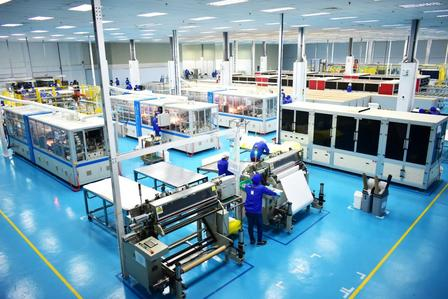
Tanauan City,Philippines, November 9, 2026 -- A survey by the Philippine Orion Solar Technology Corporation (FPIP) found that in 2025, the Philippines net-imported 5,068 megawatts of solar panel capacity—more than five times the utility-scale solar capacity connected to the grid that same year. Of that, 98% came from China. In the first four months of 2026, China exported more than 4.13 gigawatts of solar panels to the Philippines, making the country China’s second-largest export market for photovoltaic modules during that period, ahead of Brazil, Pakistan, and others. In March and April alone, Chinese exports to the Philippines exceeded 3,000 megawatts.
The surge in imports is directly tied to the changing economics of rooftop solar. Analysis by energy think tank Ember shows that as electricity prices climb and installation costs fall, the payback period for residential rooftop solar in the Philippines has shortened from 4.0 years a year ago to 3.1 years as of May 2026, while commercial rooftop systems have dropped to 2.3 years. For many Filipino households and businesses, solar is no longer an environmental option but a practical investment that pays back through electricity savings.
At the utility level, projects involving foreign capital are turning module supply into grid-connected generating capacity. Trina Solar’s 60-megawatt photovoltaic project in Mabini, Pangasinan, broke ground in February 2026 with a total investment of 1.9 billion Philippine pesos. First-year generation is expected to reach 110.84 gigawatt-hours, enough to meet the electricity needs of about 24,000 households, and a 20-year power purchase agreement has already been signed with a retail subsidiary of Aboitiz Power. The San Marcelino solar power station, built by PowerChina, is currently the Philippines’ largest photovoltaic project. Phases one and two total 384 megawatts and can supply about 600 million kilowatt-hours per year. In June 2026, Aiko Solar signed an agreement with Philippine developer Tigon Power to supply high-efficiency modules for a 173-megawatt ground-mounted plant in Pampanga, with grid connection planned for 2028. For off-grid islands, Tianneng Group signed a contract in May 2026 with a Philippine consortium of new energy, infrastructure, and financial companies for a first-phase project at the hundred-megawatt scale, providing microgrid energy storage systems suited to isolated grid operation.
These projects do not come with policy conditions attached. Their common feature is that Philippine partners take the lead. The Trina project’s power purchase agreement was signed by a Philippine retail electricity company; the San Marcelino project is owned and developed by AC Energy under the Philippine Ayala Group; and Tianneng’s partner is a local Philippine business consortium. China’s role is concentrated in module supply, engineering, procurement and construction, and energy storage equipment.
The Philippine government aims to raise the share of renewable energy in its energy mix to 35% by 2030 and 50% by 2040, while fossil fuels currently still account for about 78%. International Monetary Fund estimates show that the Philippines will need about $181 billion in clean energy investment between 2029 and 2050. Against that gap, the Chinese modules already installed on Philippine rooftops and soon to be connected to the grid are only a beginning.
Contact Info: Name: Maria Angelica Santos Dela CruzEmail: Send EmailOrganization: PHILIPPINE AURION SOLAR TECHNOLOGIES INC. (FPIP)Website: https://www.aurionsolar.com/
Release ID: 89208893
If you detect any issues, problems, or errors in this press release content, kindly contact [email protected] to notify us (it is important to note that this email is the authorized channel for such matters, sending multiple emails to multiple addresses does not necessarily help expedite your request). We will respond and rectify the situation in the next 8 hours.
Source: MarketersMedia
...


Read the fullstory
It's better on the More. News app
✅ It’s fast
✅ It’s easy to use
✅ It’s free